
J.D. Power is sharing the results of its 2026 U.S. Automotive Performance, Execution and Layout (APEAL) Study. This year's big story: new-vehicle appeal sees its biggest improvement since 2018. J.D. Power says new-vehicle owners are feeling more excitement behind the wheel as automakers deliver vehicles that are more satisfying to own and drive. According to the study, owner satisfaction is up 7 points, thanks to improved interiors, storage, exterior styling and accessibility. As for the highest-ranking brands, Porsche and MINI top this year's study for the third year in a row.
For 2026, overall satisfaction among new-vehicle owners reaches 858 (on a 1,000-point scale), rising 7 index points for a third consecutive annual increase. Not only is this year’s gain is the largest since 2018, it's also the fifth largest in study history. J.D. Power says this highlights how improvements in quality and vehicle experience are translating into stronger owner enthusiasm.
J.D. Power says the results from this year’s APEAL Study closely align with findings from the J.D. Power 2026 U.S. Initial Quality Study (IQS): As problems experienced by new-vehicle owners decline, satisfaction with how vehicles look, feel and perform rises. Together, researchers say the studies show that the strongest owner advocacy comes from delivering on the total experience: quality, emotional appeal, sales and service.
“Automakers have made real progress in reducing problems, but JD Power data makes it clear that quality alone isn’t enough,” said Frank Hanley, senior director of auto benchmarking at JD Power. “Owners are most enthusiastic when their vehicle not only works reliably but also feels thoughtfully designed and offers comfortable interiors, useful storage and technology that’s easy to live with. The brands that get both sides of that equation right see the strongest advocacy from their customers.”
Following are some key findings of the 2026 APEAL Study:
- Interior improvements drive the biggest gains in the ownership experience: In the study nearly every category improves year over year, with interior posting the largest increase (+11 points). Researchers say owners are responding positively to more functional storage solutions, including better cupholders, phone placement and center console design. Gains in exterior styling and ease of getting in and out (+10 points each) highlight the growing importance of everyday usability.
- New models are delivering less of a “wow” factor: For a fifth consecutive year, newly launched models perform similarly to their carryover counterparts, scoring just 2 index points higher overall in the study. New premium models perform 3 index points below carryover models, while new mass market models outperform carryover models by 12 points. J.D. Power says challenges with infotainment systems, vehicle setup and technology features continue to dampen owner satisfaction, suggesting that many new models are not delivering the visceral excitement owners expect.
- The gap between premium and mass market brands continues to narrow: The emotional satisfaction gap between premium (excluding Tesla) and mass market brands has shrunk to just 29 points, down from 66 points since 2008, as mass market vehicles continue to close the gap on features that once set premium models apart. Premium vehicles no longer hold outsized advantages in areas such as infotainment, exterior, driver-assistance systems, headlight performance and door-closing sound, suggesting owners increasingly define a premium ownership experience by overall execution rather than brand alone.
- Battery electric vehicles (BEVs) post the biggest gains in owner affinity: While overall APEAL index scores improve across every powertrain type this year, BEVs see the largest year-over-year increase (+22 points). BEVs outperform internal combustion engine (ICE) vehicles in nearly every category in APEAL, with the biggest advantage in powertrain satisfaction (+109 points).
Highest-Ranking Brands
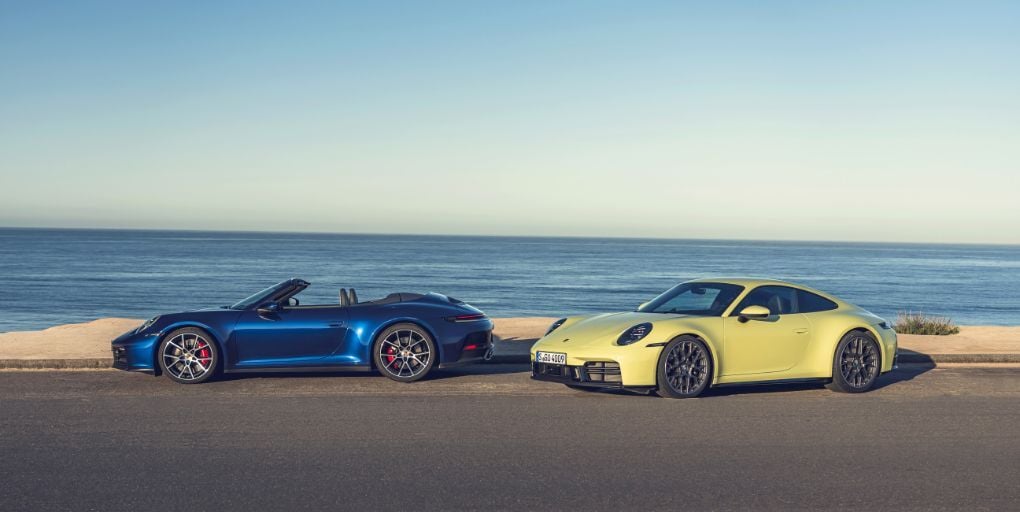
Porsche ranks highest among premium brands for a third consecutive year and is the only brand to rank above the segment average, with a score of 896.
MINI ranks highest among mass market brands for a third consecutive year, with a score of 875. Hyundai (858) ranks second and Kia (857) ranks third.
Model-Level APEAL Awards
The corporation receiving the most model-level awards (for models ranking highest in their respective segment) is BMW AG (six segment awards and highest-ranking models), followed by Hyundai Motor Group (five segment awards), and General Motors Company (three segment awards).
The complete list of award recipients is:
-
Ford Motor Company: Ford Super Duty and Ford Mustang
-
JLR: Jaguar F-Pace and Land Rover Defender
-
Nissan Motor Co., Ltd: Nissan Murano and Nissan Armada
-
Mercedes-Benz Group AG: Mercedes-Benz C-Class
-
Stellantis NV: Ram 1500
-
Volkswagen AG: Porsche 911
BMW X6 (for a second consecutive year) and BMW 7 Series are the highest-ranking individual models, in a tie. Kia K5 receives a model-level award for a sixth consecutive year. MINI Countryman receives a model-level award for a fourth consecutive year. Ford Super Duty receives a model-level award for a third consecutive year. BMW X6, Ford Mustang, Hyundai Santa Cruz, Kia K4, Nissan Murano and Porsche 911each receive model-level awards for a second consecutive year.
About the Study
Now in its 31st year, the APEAL Study complements the annual JD Power U.S. Initial Quality Study (IQS) and the JD Power U.S. Tech Experience Index (TXI) Study by measuring owners’ emotional attachment and level of excitement with their new vehicle after 90 days of ownership. The APEAL Study asks owners to consider 37 attributes, ranging from the sense of comfort they feel when climbing into the driver’s seat to their exhilaration when they step on the accelerator. The APEAL dataset allows automakers to immediately identify the specific features, driving characteristics and styling cues that are resonating most and helping to drive brand loyalty among new-vehicle buyers.
The 2026 U.S. APEAL Study is based on responses from 78,514 owners of new 2026 model-year vehicles who were surveyed after 90 days of ownership. The study was fielded from June 2025 through May 2026 based on vehicles registered from March 2025 through February 2026.