
We brought you the story in September: Dallas-Based Tricolor Auto Files For Chapter 7 Bankruptcy, but now in this update you’ll learn that is now involving the Feds. I knew there had to more to this story, the used car dealer went out of business way too fast.
Now we know the bankruptcy of Tricolor Holdings, once one of North Texas’ largest used-vehicle retailers and subprime auto lenders, has deepened into a sweeping federal fraud case that prosecutors say explains both the company’s rapid rise and its sudden collapse.
Tricolor abruptly shut down operations and filed for Chapter 7 liquidation in September 2025, listing between $1 billion and $10 billion in assets and liabilities and more than 25,000 creditors. The filing stunned employees, customers and lenders, many of whom received little warning before dealerships closed and payroll stopped.
Since then, federal investigators have alleged the bankruptcy was the end result of a years-long scheme designed to conceal mounting financial problems. In December 2025, a federal grand jury unsealed indictments charging Tricolor founder and former chief executive Daniel Chu and former chief operating officer David Goodgame with conspiracy, bank fraud and wire fraud. Prosecutors say the misconduct stretched back to at least 2018.
According to court filings, Tricolor executives repeatedly misrepresented the performance and ownership of auto loans used as collateral for financing. Investigators allege the company engaged in “double-pledging,” using the same vehicle loans to secure multiple lines of credit from different lenders. By mid-2025, prosecutors say Tricolor had pledged roughly $2.2 billion in collateral while holding only about $1.4 billion in actual assets, leaving hundreds of millions of dollars unsupported.
Two former senior executives, including the company’s chief financial officer, have pleaded guilty and are cooperating with authorities. Prosecutors say recorded conversations captured senior leaders discussing ways to explain discrepancies to lenders, including blaming software issues and creating misleading narratives about loan deferments.
The first public cracks appeared in August 2025, when Fifth Third Bancorp disclosed potential irregularities tied to a large Tricolor loan portfolio and warned investors of a significant impairment charge. Other major financial institutions later acknowledged exposure, helping trigger a liquidity crisis that led to the liquidation filing weeks later.
The fallout has rippled through the auto finance industry. Banks and private credit firms that funded Tricolor’s loan portfolios are bracing for substantial losses, while investors in securities backed by those loans have seen values plunge. Analysts say the case has intensified scrutiny of subprime auto lending practices, particularly among companies that rely heavily on complex financing structures and securitization.
For customers, the collapse created confusion that has yet to fully clear. Borrowers who financed vehicles through Tricolor have reported uncertainty about where to send payments and how their accounts will be serviced. A court-appointed trustee is overseeing the liquidation and sorting through loan portfolios and dealership assets for eventual distribution to creditors.
Former employees also remain in limbo. Many were placed on unpaid leave when operations halted and are now unsecured creditors in the bankruptcy case, competing with lenders and vendors for any remaining proceeds.
If convicted, Chu faces potentially severe penalties. Prosecutors have said one charge carries a mandatory minimum sentence of 10 years in prison, with other counts allowing for significantly longer terms. Goodgame and other defendants also face multiple felony charges.
As the case moves through both bankruptcy court and federal criminal court in 2026, Tricolor’s collapse is increasingly viewed as a cautionary tale for the auto retail and lending industries. What was once promoted as a fast-growing, technology-driven approach to subprime financing is now cited by regulators and lenders as an example of what can happen when growth outpaces controls.
For Dallas-area car buyers and employees caught in the wreckage, the legal proceedings offer little immediate relief. But for an industry already under pressure from tighter credit, higher interest rates and increased regulatory scrutiny, the Tricolor case stands as a stark reminder that aggressive lending models can unravel quickly — and expensively — when transparency and oversight fail.

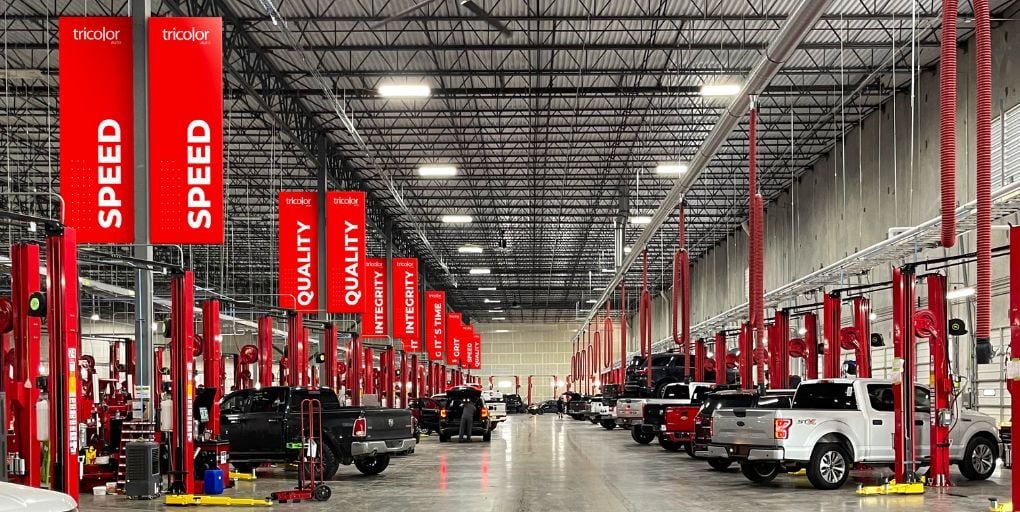
Photo Credit: Tricolor reconditioning facility near Dallas, TX. Credit: Tricolor/GlobeNewswire (2022).
.jpg?width=150&name=jerry-headshot.jpg%20(1).jpg)