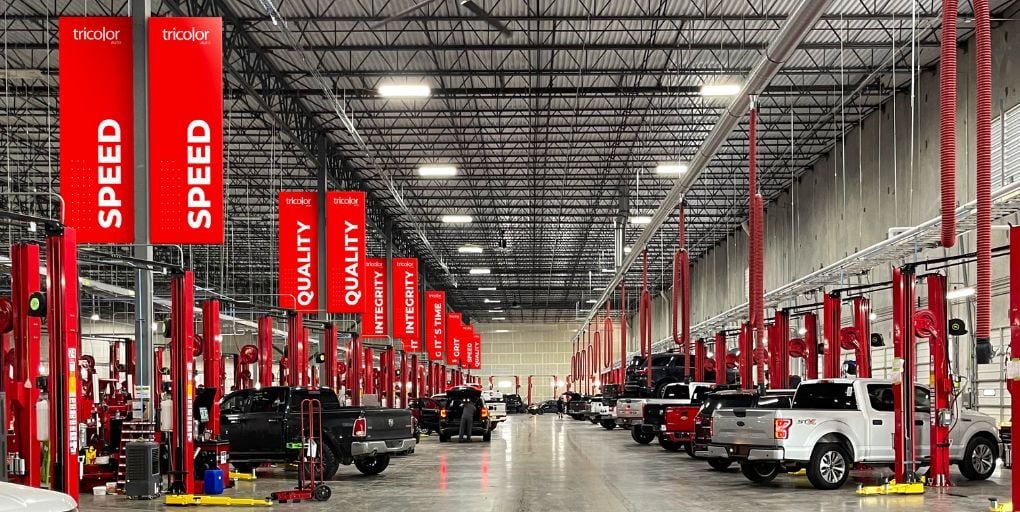

Tricolor Auto Holdings, a Dallas-based chain of used-car dealerships and a major subprime auto lender, has filed for Chapter 7 bankruptcy and will liquidate its assets, ending operations that once spanned multiple states and served tens of thousands of customers. I had a Car Pro Show caller last Saturday ask about this and I promised to look into it.
The Sept. 10 filing in U.S. Bankruptcy Court in Texas listed between $1 billion and $10 billion in both assets and liabilities and named more than 25,000 creditors. The move marks one of the largest failures in the subprime auto lending space in years and has left employees, customers and financial institutions scrambling.
Trouble Comes to Light
Concerns about Tricolor’s stability surfaced in late August when Fifth Third Bank disclosed alleged fraudulent activity connected to a $200 million asset-backed loan. The Cincinnati-based bank said it expected a $170 million to $200 million impairment charge from its exposure, triggering broader scrutiny of Tricolor’s finances. Other large lenders, including JPMorgan Chase and Barclays, soon revealed that they too had significant exposure.
By early September, regulators and the U.S. Justice Department had begun investigating possible misrepresentations in Tricolor’s loan portfolios. Investors in Tricolor’s asset-backed securities — bundles of subprime car loans that were sold into the financial markets — also grew concerned. Rating agencies placed several of the company’s securitizations on watch for potential downgrades, signaling mounting risk.
A Business Model Under Pressure
Tricolor was founded with the mission of expanding car ownership to underserved Hispanic and immigrant communities, particularly those with limited or no credit histories. Its dealerships sold used vehicles while its financing arm provided in-house loans to customers unable to qualify elsewhere. Those loans, often at higher interest rates, were later pooled into securities and sold to investors, generating capital for more lending.
The model worked as long as customers made payments and loan performance matched expectations. But higher used car prices, rising interest rates and inflation created financial stress for many borrowers. Defaults and repossessions rose, adding to Tricolor’s risk profile. Fifth Third’s fraud allegations centered on whether Tricolor accurately represented the quality and performance of its loan portfolios to secure credit.
Timeline of Collapse
- Late August 2025: Fifth Third Bank notifies investors of alleged irregularities in a $200 million loan to Tricolor and warns of potential losses.
- Early September 2025: Investigations are launched by federal regulators and the Justice Department. Other banks, including JPMorgan and Barclays, acknowledge exposure.
- Sept. 4, 2025: Tricolor abruptly shuts down many dealership operations, leaving employees and customers locked out with little explanation.
- Sept. 10, 2025: Tricolor files for Chapter 7 bankruptcy in Texas, listing billions in assets and liabilities and more than 25,000 creditors.
Fallout for Customers and Employees
The company’s sudden closure left thousands of workers without jobs and many customers in confusion. Families reported arriving at dealerships in Texas and other states only to find locked doors and unanswered phones. Some customers who had purchased vehicles on credit worried about where to send payments or how to retrieve cars in service bays. Others said they were unable to access their loan records.
Consumer advocates warn that borrowers could face lasting financial harm if their loans are transferred to third-party collectors without clear documentation. The uncertainty has already prompted complaints to state attorneys general offices.
Ripple Effects in the Industry
Tricolor’s collapse reverberates beyond its own operations. Subprime auto lending has been a fast-growing segment of the car market, as many consumers struggle with affordability in an era of record-high vehicle prices. Lenders that focus on borrowers with limited credit histories are expected to come under greater regulatory scrutiny, especially regarding how loan performance is reported and securitized.
Fifth Third is preparing for one of its largest single write-offs in recent years, and investors fear wider fallout. Analysts note that while Tricolor was a unique player with a heavy concentration in Hispanic markets, its downfall highlights systemic vulnerabilities in subprime lending and asset-backed securities tied to auto loans.
Who knows what effect all these used cars coming onto the market will have on prices, but it will likely be negligible. Dealers are always looking for vehicles in the $15,000 and under price range, and this will likely open that market up as the liquidation goes into process.
Looking Ahead
Tricolor has not admitted wrongdoing in its filings, instead blaming a combination of market pressures and disputes with lenders for its collapse. Still, investigators are examining whether company executives overstated loan performance or failed to properly disclose defaults. The liquidation process will likely take years, with uncertain recoveries for creditors and investors.
For customers, the immediate future is murky. Payments may be redirected to bankruptcy trustees or third-party loan servicers, and repossession actions could accelerate if accounts fall behind. Employees, meanwhile, face unpaid wages and benefits claims that may or may not be fully recovered in court.
The case underscores the fragile balance of subprime auto lending — a sector designed to expand access but often vulnerable to economic downturns and high-risk practices. For Tricolor, once promoted as a socially conscious lender with a mission to serve overlooked communities, the fall has been swift and unforgiving, and for those of us in the auto industry, we were somewhat blindsided by this.
In the meantime, a bankruptcy trustee has moved to appoint Vervent Inc. as the new servicer of Tricolor’s loan portfolio. Vervent had previously been listed as a backup servicer on the company’s securitizations, and if the court approves, it will take over collecting payments, managing delinquencies and handling customer accounts going forward, offering at least some clarity to borrowers left in limbo.
.jpg?width=150&name=jerry-headshot.jpg%20(1).jpg)