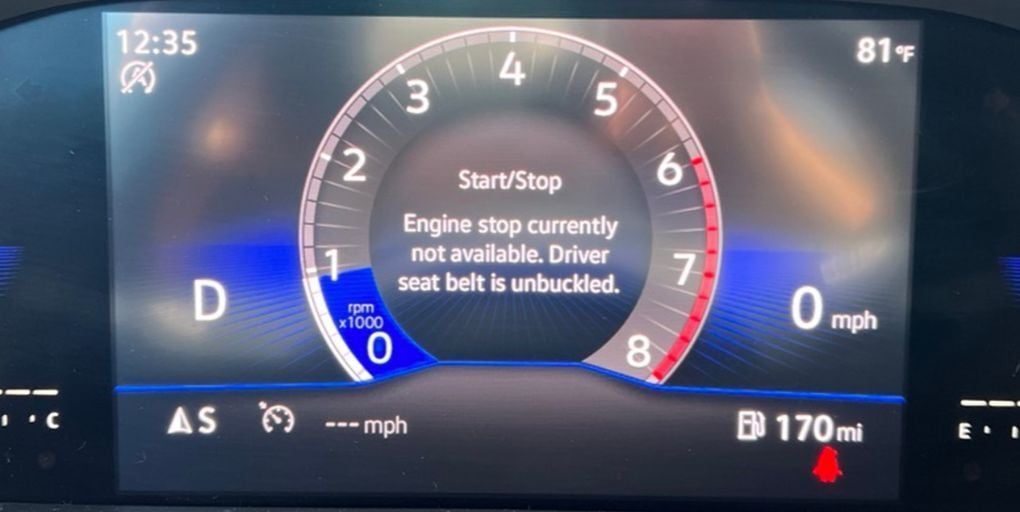

We were on a hard newsletter deadline last week when the news broke that the Trump administration had announced what it calls the single largest deregulatory action in U.S. history. The action essentially puts an end to the stop/start feature in cars, a feature that our own Car Pro Show host Jerry Reynolds isn't a fan of as you'll read here. So, today we’ll go into more detail and try to explain exactly what this means.
The Trump administration's recent action is one of the most sweeping steps yet to roll back U.S. auto emissions rules, dismantling the framework that has guided how vehicles are regulated for greenhouse gases for more than a decade. In practical terms for drivers, one of the most noticeable results could be the gradual disappearance of automatic start/stop systems, the feature that shuts the engine off at red lights to save fuel. Federal regulators are eliminating the emissions credits automakers received for installing the technology, which removes a key reason manufacturers adopted it so widely in the first place.
.jpg?width=750&height=563&name=zeldin-epa-start-stop-credit-flickr-white-house-official-daniel-torok%20(1).jpg)
The broader move goes far beyond start/stop. The administration has targeted the long-standing scientific and legal foundation that allowed the federal government to regulate greenhouse gas emissions from vehicles under the Clean Air Act. That foundation had been in place since 2009 and supported years of increasingly strict rules designed to reduce carbon dioxide output and improve fuel economy. By removing it, federal regulators are dramatically reshaping how emissions are handled and how automakers meet environmental requirements.
To understand the impact, it helps to know how the system worked. For years, automakers were required to meet tighter fuel-economy and emissions targets. To hit those numbers, companies relied on a combination of strategies, including building more hybrids and electric vehicles, improving engine efficiency, and adding features like start/stop technology. The government rewarded some of these efforts by giving compliance credits that helped manufacturers meet federal standards.
Start/stop systems became extremely common because they were a relatively inexpensive way to reduce fuel consumption and emissions without redesigning engines. The technology automatically shuts off the engine when a vehicle is stopped and restarts it when the driver releases the brake. It can improve fuel economy in city driving and has been installed in a large share of modern vehicles. Still, many drivers find the momentary restart delay annoying, and most vehicles include a button that allows the feature to be turned off. I always doubted that fuel economy was actually improved.
With those credits going away, automakers will no longer get regulatory benefits for installing the systems. That means some manufacturers could begin phasing them out over time, especially if they believe customers would prefer vehicles without the feature. While changes will not happen overnight, future models could slowly return to more traditional engine behavior at stoplights.
Supporters of the rollback say the previous rules added cost and complexity to vehicles and pushed the industry toward expensive technologies. They argue that removing the regulatory pressure will give automakers more flexibility and allow them to focus on what customers actually want. Critics say the changes could increase emissions and slow progress on improving fuel economy nationwide.
This shift is part of a broader effort to rethink federal emissions policy and reduce regulation tied to vehicle efficiency and greenhouse gases. For more than a decade, national standards steadily tightened, encouraging automakers to invest heavily in electrification, hybrid systems, and fuel-saving technologies. The new direction signals a move away from that approach and toward giving manufacturers more freedom in how they design and power vehicles.
For consumers, the short-term impact may be subtle. Vehicles already on the market will not suddenly change, and many of the technologies developed to meet past requirements are likely to stick around for a while. Over time, however, the mix of features in new vehicles could shift. Start/stop systems are the most visible example, and they could become less common if there is no longer a regulatory advantage to installing them.
In the bigger picture, the policy change marks a major turning point for the auto industry. For years, federal rules drove automakers toward better fuel economy and lower emissions. Now the focus is shifting toward flexibility and reduced oversight. How far the changes go — and how quickly they affect what shows up on dealer lots — will depend on how automakers respond and whether future administrations revisit the issue.