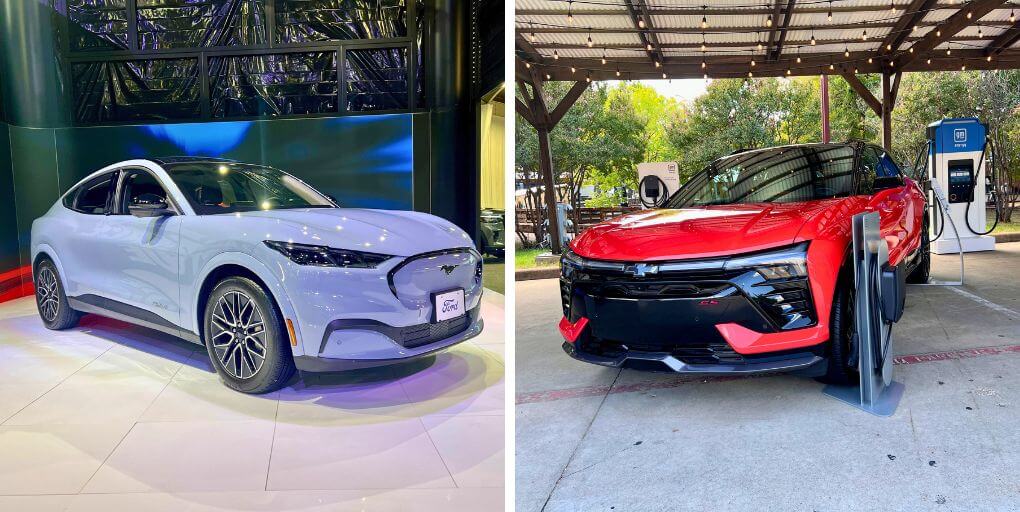

I have to hand it to them, this is pretty brilliant. Ford Motor Co. and General Motors Co. have rolled out new dealer programs designed to keep the $7,500 federal electric vehicle lease credit alive for several more months, even after the subsidy expired Sept. 30 under the nation’s new tax law. Since when someone leases a car, the lease company is in actuality the owner, the finance arms of Ford and GM are eligible as lease customers, therefore they can claim the $7,500 incentive and pass it on to the consumer.
The two Detroit automakers disclosed the initiatives in recent days to their retail networks, according to dealers and company documents. Each plan relies on the financing arm of the automaker purchasing EVs in dealer inventory by making down payments that qualify for the federal lease credit. Once booked that way, the vehicles can be leased to retail customers as usual, with the $7,500 benefit applied to monthly payments.
The programs arrive just as the 15-year-old federal credit, long considered a cornerstone of U.S. EV adoption, is set to lapse. Dealers and analysts have predicted that sales and leases of EVs will fall sharply without the incentive, noting that many buyers rushed to close deals in September to capture the subsidy before it disappeared.
GM said it worked with its dealers “on an extended offer for customers to benefit from the tax credit for leases” of EVs. Ford said its financing arm, Ford Credit, will support competitive lease rates for retail customers through the end of the year.
The moves could blunt the immediate blow to showroom traffic, at least temporarily, as the industry adjusts to the loss of a tool that has helped make EVs more affordable. Analysts expect the credit’s absence to weigh on consumer demand until vehicle prices come down or state-level subsidies fill some of the gap.
The extension efforts emerged after discussions between the automakers and the Internal Revenue Service, according to people familiar with the matter. The IRS said in August that only vehicles purchased by Sept. 30 would be eligible for the credit, with a binding contract and payment required by that date. Automakers’ financing arms, by making the required purchases ahead of the deadline, are able to preserve access to the credit for leases signed later.
The programs are viewed as a stopgap. Ford said its offer will run until Dec. 31. GM did not specify an end date but said the intent is to continue providing some measure of price relief as the industry transitions away from federal support.
The credit, introduced in 2009, has been credited with accelerating EV adoption in the United States. President Donald Trump’s tax overhaul, passed in July, ended the incentive effective Sept. 30. White House officials argued the subsidy was costly and no longer necessary given the progress automakers have made in electrification.
Industry groups and environmental advocates had urged Congress to maintain the credit, warning that EV demand would falter without it. California Governor Gavin Newsom has floated the idea of reviving a state-level EV subsidy next year, but as we reported here, California didn’t have the funding to do so.
The decision leaves the U.S. without a broad federal incentive even as Europe, China and several other major markets continue to offer consumer subsidies for EVs. Analysts say that could put U.S. automakers at a disadvantage in the near term.
Dealers say the temporary lease workaround is welcome, but they remain concerned about what happens when even those programs expire, as reported by Reuters. “This buys us some time,” said one franchise dealer briefed on the plans. “But if nothing else replaces the credit, EV sales are going to take a big hit.”
It was not immediately clear whether other automakers are pursuing similar strategies to extend access to the subsidy.
.jpg?width=150&name=jerry-headshot.jpg%20(1).jpg)