
Since last Friday, the auto industry received both a new trade deal and fresh regulatory actions that could reshape supply chains, vehicle pricing and sourcing strategies.
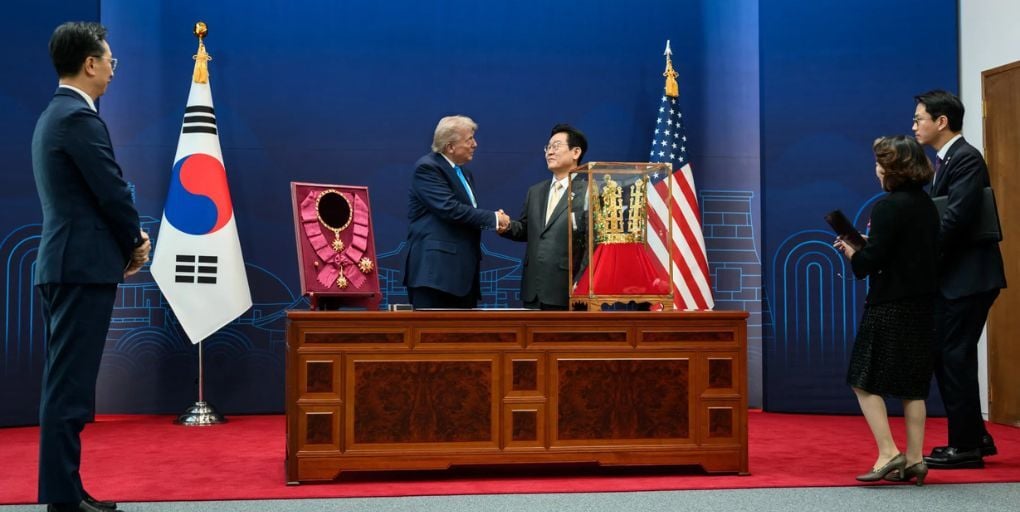
The headline development: the United States and South Korea have finalized a major auto trade agreement under which U.S. tariffs on South Korean vehicle exports will drop from 25 percent to 15 percent. In return, South Korea has committed to invest approximately $350 billion in U.S. industry and infrastructure, including a $20 billion annual cap on direct cash investment and a $150 billion shipbuilding partnership. The deal still requires ratification by South Korea’s national assembly but marks a clear shift in Washington’s trade posture toward vehicle imports.
At the same time, U.S. authorities have implemented key provisions from an earlier proclamation, set to take effect November 1, that impose a 25 percent tariff on imported medium- and heavy-duty trucks (Classes 3-8) and certain parts, and a 10 percent tariff on imported buses. The measure is justified on national security grounds and applies to any value of imports not made in the U.S. or compliant with regional content rules. As part of the same package, the administration extended an offset credit equal to 3.75 percent of the value of qualifying U.S.-assembled vehicles and trucks through October 2030, enabling automakers to reduce their effective duty burden if they increase domestic production and import fewer foreign-content vehicles.
Industry groups are already reacting. Major automakers and trade associations have urged caution against further tariffs on factory equipment and production machinery, warning that such levies—though not yet imposed—would raise costs, delay investments and ultimately push vehicle prices higher for consumers already stretched. Vehicle pricing data reflects the pressure: average new-car prices in the U.S. now exceed $50,000, and manufacturers report tariff-related cost exposure measured in the billions.
For automakers and suppliers the implications are wide-ranging. Import-dependent brands and companies with large heavy-truck exposure face higher duty risk and must adapt sourcing strategies or relocate production. Firms with strong U.S. assembly footprints gain clearer advantage through the offset credit and content-based tariffs. Suppliers of parts and modules must re-evaluate classification, origin documentation and tariff exposure, since more components are now swept into expanded heavy-vehicle duty categories.
In a market already defined by supply-chain disruptions, labor challenges and inflationary pressures, trade policy is adding a new variable. The sum of the developments makes one thing clear: where a vehicle is built and how much foreign content it uses matter as much as ever. Imports face steeper scrutiny and cost, while U.S. assembly now offers measurable benefit. As the next round of tariff moves looms, auto executives and supply-chain teams will need to stay agile, because in the trade arena, change happens by decree—and disruption follows fast.

Credit: Official White House Photo.
.jpg?width=150&name=jerry-headshot.jpg%20(1).jpg)