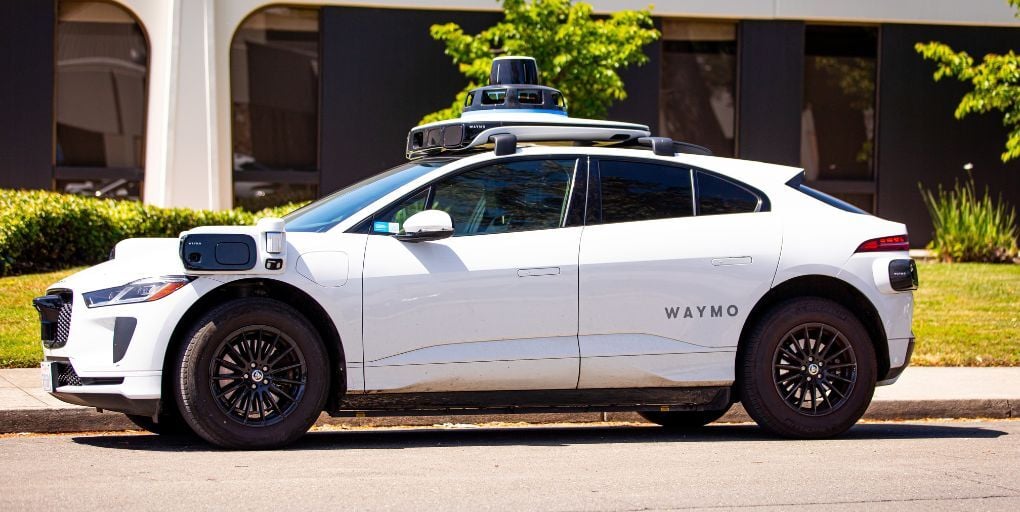

Two weekends ago, a Waymo driverless taxi was pulled over in San Bruno, California after making an illegal U-turn, leaving police officers baffled when they discovered there was no one behind the wheel to ticket. The San Bruno Police Department posted about the unusual traffic stop on its Facebook page.
The viral incident sparked heated debate online, with many questioning how safe autonomous vehicles really are. Now, new data shared with us by iSelect, a car insurance comparison service, shows this skepticism isn’t limited to social media reactions, most Americans remain uneasy about the rise of driverless cars. Results from its U.S. Self-Driving Worries study was sent us via email.
Key findings include:
- Maine tops the list as the most concerned state, scoring 97.2/100, with 43% of conversations expressing fear.
- Arkansas (96.0) and Montana (95.8) follow closely behind, reflecting similar levels of caution.
- Rural states in particular, such as New Hampshire, Oregon, and Kansas, rank highly for skepticism, suggesting lower exposure to autonomous fleets may fuel public doubt.
- Across the U.S., more than a third of all conversations (34%) show negative sentiment toward self-driving technology.
Most Americans Skeptical of Driverless Cars Amid New U.S. Safety Rules
In April this year, iSelect says the United States Department of Transportation revealed major updates to the nation’s driverless car regulations, aiming to streamline crash reporting. The changes affect driver-assistance vehicles and automated driving systems (Levels two to five). To reduce reporting requirements for minor incidents, it says the move is only to require detailed reports for serious incidents, a change that has raised concerns about transparency among safety researchers.
iSelect says it conducted a comprehensive analysis of Americans’ Self-Driving Trust, examining over 600,000 online conversations across 50 states to gauge public sentiment towards driverless cars. Its researchers say the analysis revealed a range of emotional reactions, including fear, anger, and sadness, to demonstrate their overall positive and negative attitude towards a driverless future.
iSelect says against this backdrop, Americans remain cautious about driverless technology. While there are autonomous driving technology companies, currently operating fleets across the U.S., primarily in San Francisco, Los Angeles, Phoenix, and Austin, iSelect says public sentiment shows that fear and skepticism remain significant barriers to adoption.
Top 10 U.S. States displaying negative sentiment about self-driving cars
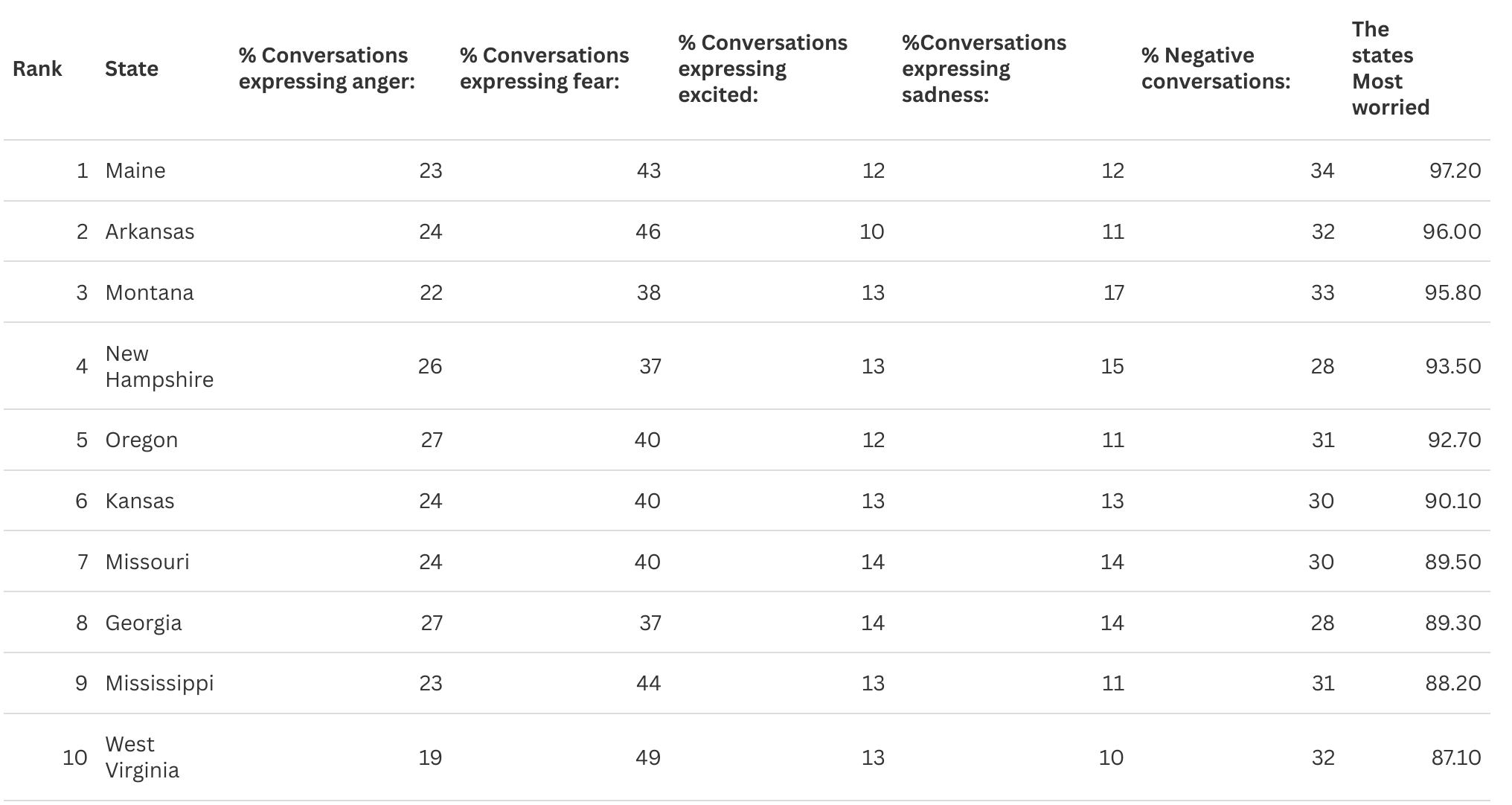
Source: iSelect.
(If you are wondering, California ranks 46th on the list. The full U.S. state rankings can be found here.)
Maine tops the list of states expressing the most concern about driverless cars, scoring 97.2 out of 100 on iSelect’s Self-Driving Worries Index. More than a third of online conversations (34%) show negative sentiment, with fear featuring prominently in 43% of discussions.
Following Maine, Arkansas and Montana also rank highly, reflecting similarly cautious attitudes among residents. Arkansas scored 96.0, with online conversations frequently expressing fear and doubt about autonomous technology.
Montana comes in at 95.8, demonstrating a comparable level of concern, particularly around the safety of self-driving systems in less urbanized areas.
New Hampshire and Oregon round out the top five, scoring 93.5 and 92.7, respectively, indicating that residents in smaller or more rural states tend to be more wary of driverless vehicles. These findings suggest that exposure—or lack thereof—to autonomous fleets plays a significant role in shaping public sentiment, with states less familiar with the technology showing higher levels of caution.