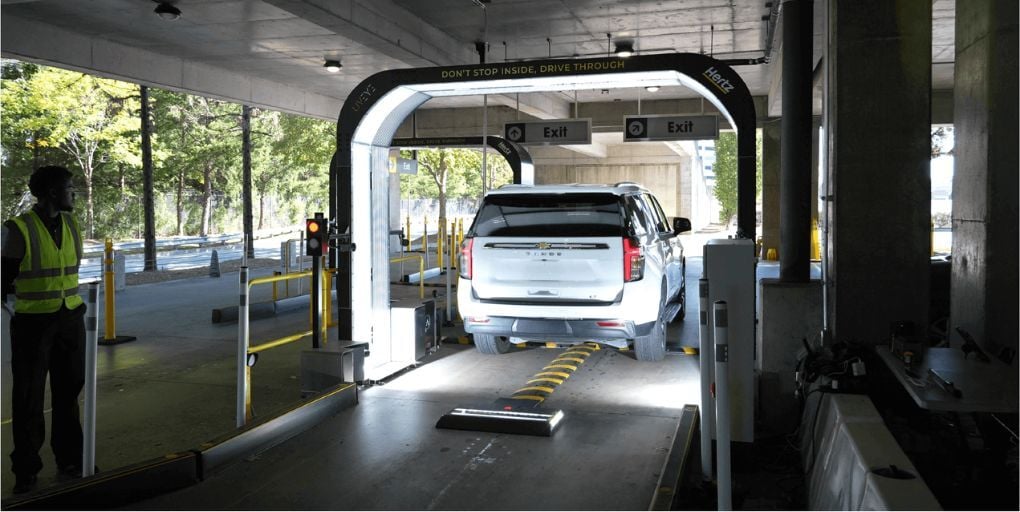

There’s a fine line between innovation and irritation, and if you’ve rented a car lately, you may already know which side of that line this story falls on. As technology continues to reshape the automotive landscape, it’s not just what we drive that’s changing—it’s how we’re treated as consumers along the way. From digital retailing to over-the-air updates, automation has promised speed and convenience. But when it comes to your wallet, faster isn’t always better.
A new report from The Dallas Express—where I contribute automotive stories—dives into a growing controversy involving Hertz and its use of artificial intelligence to automatically assess vehicle damage and charge customers. The concept sounds efficient on paper: scan a vehicle before and after a rental, identify any new damage, and bill accordingly. No arguments, no guesswork, no waiting. But as is often the case, the real world isn’t quite that tidy.
What’s raising eyebrows isn’t just the technology itself, but how it’s being used—and whether consumers are being given a fair shot to challenge the results. That concern has now reached Washington, with congressional candidate Jack Schlossberg, the only living male heir of former President John F. Kennedy, calling on the Federal Trade Commission to take a closer look. The FTC, for its part, isn’t exactly rushing to the microphone.
If all of this sounds familiar, it should. We’ve seen versions of this story before in other industries and in the Car Pro Newsletter: a shiny new system designed to eliminate human error that ends up eliminating human judgment, too. And when that happens, the burden often shifts to the consumer to prove the machine got it wrong.
The article that follows lays out the details, the players, and the broader implications. It’s worth your time—especially if you’ve ever handed over a set of rental keys and hoped for the best. By the way, if you are looking for up-to-date, accurate news, with no pop-ups, and no cost to you, give DallasExpress.com a try.
Read the Dallas Express Report →

Photo Credit: UVeye.
.jpg?width=150&name=jerry-headshot.jpg%20(1).jpg)