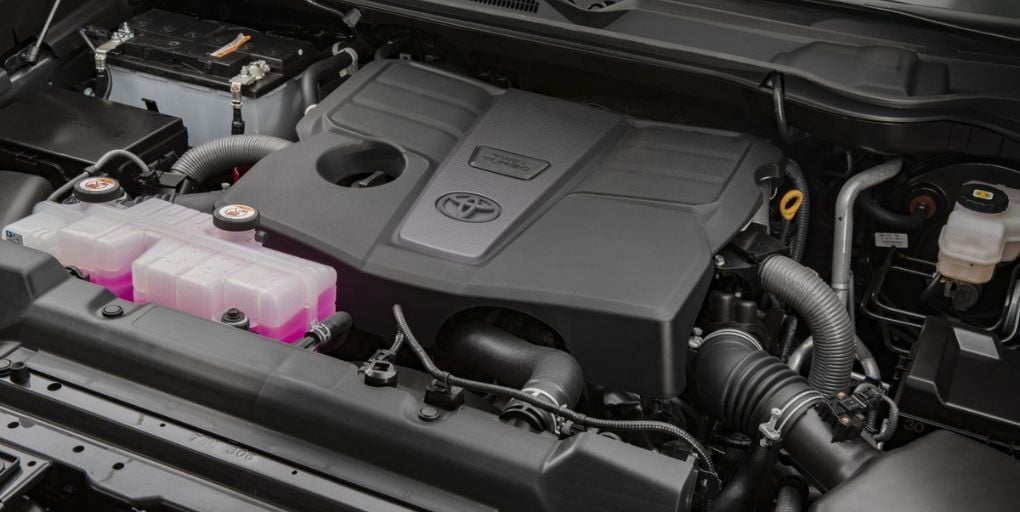

Many of you have asked me to report on this expanding recall. We now know Toyota has widened the net on its ongoing V35A 3.4-liter twin-turbo V6 problem, adding more than 127,000 vehicles to a recall involving potential engine failure. The campaign now includes the 2022-24 Toyota Tundra, 2022-24 Lexus LX, and for the first time the 2024 Lexus GX. The issue stems from machining debris that may not have been fully cleared during engine assembly. Under load, that debris can stick to the main bearings, eventually leading to bearing wear, knocking, power loss and, in the worst cases, a stall.
The new recall builds on Toyota’s earlier recall filed in mid-2024, which covered about 102,000 Tundra and LX models. Toyota says the newly added vehicles fall within production windows where improved machining processes and bearing designs had not yet been implemented. According to NHTSA documents, the latest group includes more than 113,000 Tundras produced between November 2021 and February 2024, nearly 10,000 LX units built between February 2022 and April 2024, and just under 4,000 GX units built between May 2023 and April 2024. Toyota says customers will be notified about this issue by early January 2026. Hybrid versions that use the i-Force MAX powertrain are not included.
The bigger concern is that Toyota admits it still doesn’t know how many of the affected engines actually contain the debris. For now, the company is “developing the remedy,” a phrase that usually translates into full engine replacement when main bearings are involved, like it did last time. This engine family has produced a noticeable number of warranty claims and reports in the field, according to publicly available NHTSA filings and coverage from Autoevolution, which noted more than 800 warranty claims tied to this issue. As one might expect, the problem tends to show up first in trucks that tow or see higher thermal load.
Some observers have wondered whether the deeper issue is design-related rather than purely a machining oversight, which is very doubtful knowing Toyota. This engine is heavily boosted, built to make big torque at low RPM and live its life in vehicles that commonly see hard work. That combination raises the stress level, and it doesn’t take much residual material to cause trouble when you’re talking about the bottom end of an engine. Toyota, for its part, continues to say the defect is linked to incomplete cleaning during production rather than a fundamental design flaw, and Toyota is generally a straight-shooter about issues like this.
Owners of any affected Toyota or Lexus model should check their VIN with the NHTSA database or Toyota’s recall lookup. This was listed in our recall section last week. Even if your engine sounds perfectly healthy today, the risk here is long-term. The debris doesn’t create an immediate failure; it’s cumulative and can take time to show up. When the remedy is officially released, it’s smart to have it performed promptly and keep the paperwork. Anyone planning to sell or trade one of these models in the coming year will want that proof on hand.
It’s never good news when a manufacturer has to expand a recall on a truck engine, especially one as central to a brand’s reputation as Toyota. This won’t sink resale values, but it will make some shoppers more cautious until Toyota finalizes the fix. Trucks and big SUVs carry heavier expectations than commuter cars, and owners understandably want to know that the powertrain is rock solid before they hitch up a trailer or head out on a long trip.
Toyota deserves credit for putting out the information and acknowledging the scope, something not every carmaker is quick to do when the problem sits deep inside the engine block. But this is also a reminder that even long-established names can stumble when they push new technology into high-demand vehicles. Complexity has its price, but as I say on the Car Pro Show, things like this happen to ALL car companies, even Toyota.

.jpg?width=150&name=jerry-headshot.jpg%20(1).jpg)