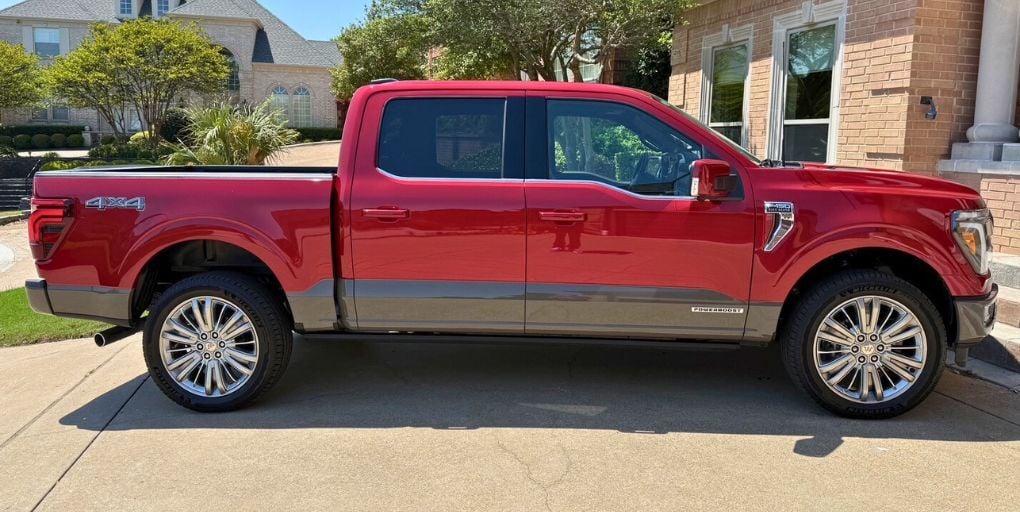

American car buyers made their preferences unmistakably clear in 2025, continuing a long-running shift toward pickups and sport utility vehicles while leaving traditional passenger cars with only a shrinking foothold in the market. The year’s best-selling vehicles were overwhelmingly trucks and SUVs, reflecting buyers’ emphasis on utility, versatility and perceived value in an environment shaped by higher prices, elevated interest rates and changing technology.
Pickup trucks once again anchored the top of the sales charts, with full-size models accounting for enormous volume across both retail and commercial buyers. Compact and midsize SUVs followed closely behind, filling dealership lots as family haulers, commuter vehicles and all-purpose transportation. Sedans, once the backbone of the U.S. auto market, were largely absent from the top tier, with only a handful managing to remain competitive.
Compact crossovers proved especially resilient in 2025, striking a balance between affordability, fuel economy and interior space. Models offering hybrid options gained traction, though gasoline-powered versions still accounted for the bulk of sales. Electric vehicles maintained a visible but limited presence, underscoring continued consumer interest while highlighting that EVs remain far from dominant in total volume.
Several brands benefited from breadth rather than novelty. Vehicles that offered incremental improvements, competitive pricing and familiar designs consistently outperformed newer or more experimental offerings. Buyers gravitated toward models with established reputations for reliability, resale value and everyday usability, even as advanced driver-assist features and larger infotainment screens became increasingly standard.
Commercial-oriented vehicles also played a notable role. Vans and compact pickups designed for work and fleet use secured places among the year’s top sellers, reinforcing the idea that practicality continues to drive purchasing decisions across a wide range of buyers.
The 2025 sales rankings underscore a market that values flexibility above all else. While the industry continues to invest heavily in electrification and new propulsion technologies, the vehicles Americans bought in the greatest numbers last year were those that could haul cargo, move families and adapt to multiple roles without compromise.
As automakers move into 2026, the lesson from 2025 is clear: innovation matters, but utility still wins.
Here's a look at the best-selling vehicles in the U.S. last year according to data analyzed by Car and Driver.
25 Best-Selling Vehicles in the United States — 2025
- Ford F-Series — 828,000
- Chevrolet Silverado — 558,709
- Toyota RAV4 — 479,288
- Honda CR-V — 403,768
- Ram Pickup — 374,059
- GMC Sierra — 356,218
- Toyota Camry — 316,185
- Toyota Tacoma — 274,638
- Chevrolet Equinox — 274,356
- Toyota Corolla — 248,088
- Honda Civic — 238,661
- Hyundai Tucson — 234,230
- Ford Explorer — 222,706
- Nissan Rogue — 217,896
- Jeep Grand Cherokee — 210,082
- Chevrolet Trax — 206,339
- Subaru Crosstrek — 191,724
- Kia Sportage — 182,823
- Subaru Forester — 175,070
- Tesla Model 3 — 172,800
- Jeep Wrangler — 167,322
- Subaru Outback — 157,716
- Ford Transit — 156,611
- Ford Maverick — 155,051
- Nissan Sentra — 151,621