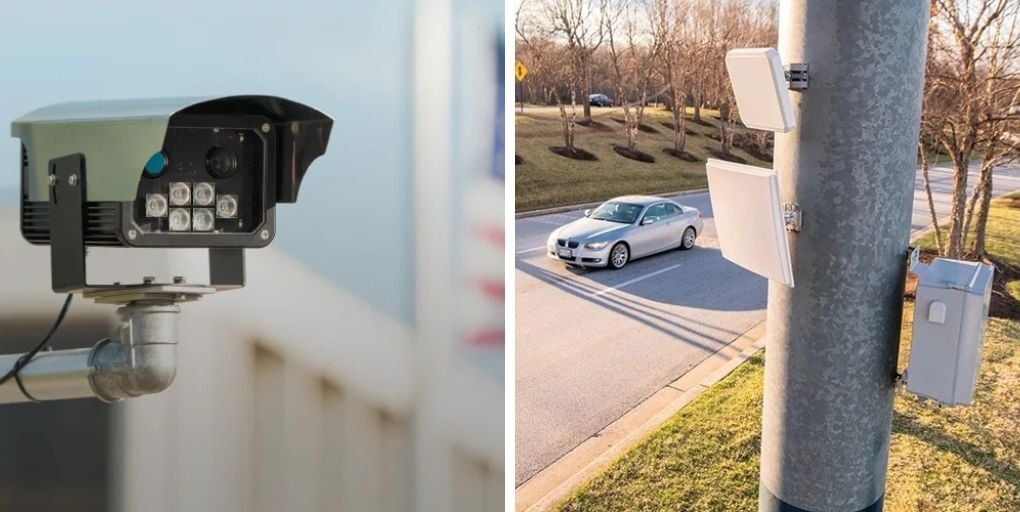

Automatic license plate readers already make a lot of drivers uneasy. Now, according to 404 Media, a surveillance technology company wants to expand those systems so they can collect identifiers from the electronic devices traveling inside or near a vehicle, including phones, smartwatches, wireless headphones and other Bluetooth-enabled devices.
The technology is called SignalTrace, and it is being marketed by Leonardo US Cyber and Security Solutions, a company already in the license plate reader business through its ELSAG systems. According to 404 Media’s Joseph Cox, SignalTrace is designed to add sensors to automatic license plate readers, or ALPRs, so the systems do more than capture the plate number of a passing vehicle. They could also collect unique identifiers from mobile phones, wearables and other devices, potentially allowing law enforcement to connect specific people or passengers with specific vehicles.
That is a big leap from a camera simply recording a license plate.
Traditional ALPR systems generally capture a vehicle’s license plate, location, date and time. Law enforcement agencies use them to search for stolen vehicles, wanted vehicles or vehicles connected to investigations. SignalTrace would add another layer by collecting signals from electronic devices that commonly travel with the vehicle. Leonardo’s own product material says SignalTrace enhances traditional ALPR capability by detecting and correlating nearby electronic devices with vehicles of interest.
In other words, it is not just “this car was here at 10:15.” It could become “this car was here at 10:15, and the same cluster of devices was there, too.”
According to Leonardo’s SignalTrace materials, the system can connect license plate recognition data with sensor-captured device identifiers from mobile phones, Bluetooth wearables and vehicle systems to create what the company calls a unique, trackable “electronic fingerprint” for investigative use. Leonardo says that when multiple devices consistently move together with a vehicle, SignalTrace’s algorithms can link those devices to the vehicle’s license plate and time-stamped location data.
The company says this could help investigators even if someone changes, removes, obscures or uses an incorrect plate. That is the key point. SignalTrace is being promoted as a way to identify a vehicle or person of interest not only by the plate, but by the electronic signature created by the devices traveling together.
Leonardo says the system does not decrypt devices, read messages or store the contents of communications. Its materials say SignalTrace captures publicly broadcast device-frequency activity and identifiers, not message content. That is an important distinction. There is no claim in the company’s material that SignalTrace reads text messages, listens to phone calls or opens data stored on a phone.
Still, the privacy concern is obvious. Even if a system does not read what is on your phone, it may still be able to associate your phone, smartwatch, wireless earbuds and vehicle systems with a specific car and location pattern. That means the issue is not just content. It is correlation.
Leonardo’s own product sheet lists several types of devices SignalTrace can track or correlate with license plates. The categories include RFID tags, Bluetooth devices, vehicle components and Wi-Fi sources. The examples include key cards, asset tags, pallet transmitters, pet microchips, mobile phones, wearables such as watches and fitness trackers, wireless headphones, tire-pressure sensors, security and safety sensors, infotainment systems, vehicle hotspots, tablets, smartphones and laptops.
Yes, pet microchips are on the list. Apparently, even the family dog may someday need to check the privacy settings on his collar, although good luck getting him to remember the password.
Leonardo says SignalTrace data can be stored in its ELSAG Enterprise Operations Center for future queries and analysis. The company also says the system can identify movements of electronic devices, individuals and vehicles; reveal signatures frequently traveling together; and help discover convoy or movement patterns. Leonardo’s materials also say SignalTrace can operate in non-traffic environments such as rail stations, event venues and shopping centers, and can work with or without license plate readers at every collection site.
That broadens the discussion beyond vehicles. If the same technology can be used away from roads, then the system is not merely about cars or license plates. It is about identifying groups of devices moving together through public spaces.
Supporters of the technology will point to law enforcement uses. Leonardo markets SignalTrace as an investigative tool to help identify suspects, witnesses, vehicles of interest, trafficking patterns and convoys. Used narrowly, with proper oversight, that could be useful in certain criminal investigations.
The problem is that license plate reader data has already raised major civil-liberties questions. Privacy advocates have long warned that ALPR systems can create detailed location histories. If a vehicle is scanned repeatedly over time, the data can reveal where someone lives, works, shops, worships, receives medical care and whom they may associate with. SignalTrace adds personal-device identifiers to that equation.
That is why 404 Media’s reporting matters. The concern is not just that police may know where a car has been. The concern is that technology like SignalTrace may make it easier to associate a car with the people and devices inside it.
For consumers, the takeaway is simple: modern vehicles are not traveling alone. They are surrounded by phones, watches, earbuds, hotspots, infotainment systems, sensors and other connected devices. SignalTrace is designed to make use of those signals.
The technology may help solve crimes. It may also make a lot of law-abiding people feel like every trip to the grocery store is turning into a digital lineup. Both things can be true.

.jpg?width=150&name=jerry-headshot.jpg%20(1).jpg)