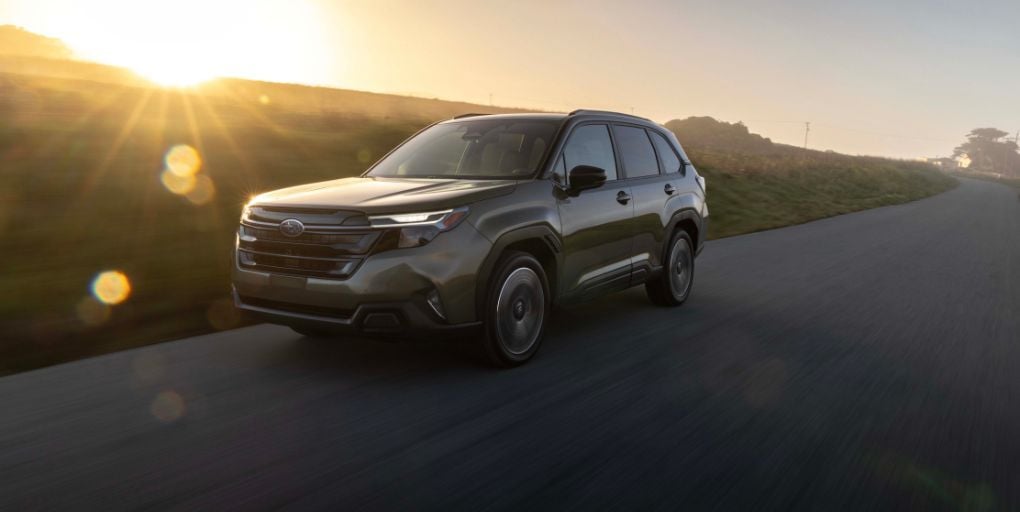

Subaru is lowering prices across the 2026 Forester Hybrid lineup in a move aimed at making the fuel-efficient compact SUV more competitive in one of the industry’s most crowded segments. The adjustments, first reported by Car and Driver, reduce the cost of several trims by as much as nearly $2,000, helping narrow the gap between hybrid and gasoline models and potentially attracting more buyers who want better fuel economy without paying a steep premium.
For 2026, the Forester Hybrid now starts at $34,730, according to Subaru pricing information and company materials. The updated pricing reflects Subaru’s ongoing effort to keep its vehicles attainable as it expands its electrified offerings. Hybrid versions of compact SUVs have grown in popularity, but rising prices across the industry have often made them less accessible. Subaru’s move appears designed to change that equation.
Car and Driver reported that the Sport trim drops by $1,635 to $39,380, while the Limited trim falls by $1,985 to $40,445, marking the largest reduction in the lineup. The top Touring trim sees a $1,720 decrease, bringing its price to $42,995. These changes make the hybrid versions more closely aligned with comparable gasoline models and competitive with rival hybrid SUVs.
The price cuts come as Subaru continues rolling out the sixth-generation Forester platform, which recently debuted with refreshed exterior styling, an updated interior, and improved technology. The hybrid model is positioned as the most fuel-efficient version of the Forester and is part of Subaru’s broader push toward electrification while maintaining its long-standing reputation for practicality and standard all-wheel drive capability.
Under the hood, the 2026 Forester Hybrid pairs a 2.5-liter four-cylinder engine with an electric motor, producing a combined 194 horsepower. The system works through a continuously variable transmission and includes Subaru’s standard Symmetrical All-Wheel Drive, which remains a defining feature across the brand’s lineup. The hybrid system not only improves efficiency but also provides a modest boost in overall performance compared with the base gasoline engine.
Subaru says the hybrid delivers significantly better fuel economy than the standard Forester, with city efficiency improvements of up to about 40 percent and a total driving range estimated at as much as 581 miles on a full tank. That combination of range and capability is intended to appeal to buyers who want to cut fuel costs while keeping the utility and versatility that have long made the Forester popular.
Like the gasoline version, the Forester Hybrid retains the core attributes that have made the nameplate one of Subaru’s top sellers for decades. The compact SUV offers a roomy cabin, seating for five, and generous cargo space. It also comes equipped with a wide array of technology and safety features that mirror the rest of the Forester lineup, helping it compete directly with segment leaders such as the Toyota RAV4 Hybrid and Honda CR-V Hybrid.
Subaru’s decision to reduce prices stands out at a time when many automakers have been steadily increasing vehicle costs due to inflation, higher material expenses and the investment required to develop electrified powertrains. By lowering the entry point for the Forester Hybrid, Subaru appears to be focusing on driving sales volume and making hybrid technology more mainstream within its lineup.
The standard 2026 Forester continues to start at just under $30,000 for gasoline models, while the hybrid now carries a smaller premium than before. That narrower gap could make it easier for buyers to justify stepping up to the electrified version, especially as improved fuel economy helps offset the purchase price over time.
The Forester remains one of Subaru’s most important models, and the hybrid variant is expected to play a growing role in the company’s future product strategy. By making it more affordable, Subaru is signaling that electrification is becoming a central part of its lineup rather than a niche offering, giving consumers another practical option in a segment where efficiency and value are key priorities.
Photo: Subaru.