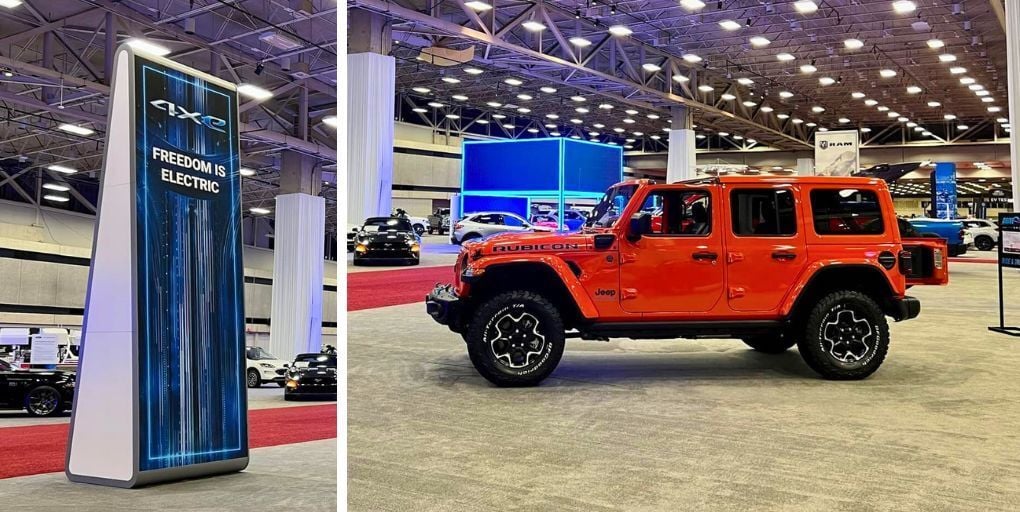

Stellantis has quietly but decisively ended the plug-in hybrid chapter for Jeep and Chrysler in the U.S., confirming that every PHEV model from the two brands has been discontinued. The move closes the book on a strategy that once positioned plug-in hybrids as a bridge between internal combustion engines and fully electric vehicles, and it signals another recalibration in an industry still struggling to match electrification plans with real-world demand.
The company confirmed to me that production of the Jeep Wrangler 4xe, Jeep Grand Cherokee 4xe and Chrysler Pacifica plug-in hybrid has ended, with no direct replacements planned for the 2026 model year. While the vehicles had already disappeared from online configurators, Stellantis said the decision is final rather than a temporary pause tied to recalls or inventory issues.
I got this statement from Megan Soule, part of the Stellantis Brand and Tech Communications team:
Stellantis continually evaluates its product strategy to meet evolving customer needs and regulatory requirements. With customer demand shifting, Stellantis will phase out plugin hybrid (PHEV) programs in North America beginning with the 2026 model year, and focus on more competitive electrified solutions, including hybrid and range-extended vehicles where they best meet customer needs. This approach reinforces the company’s commitment to offering advanced propulsion systems that maximize efficiency and provide options from internal combustion to hybrid, range-extended, and fully electric solutions.
At their peak, Jeep’s 4xe models were central to the brand’s electrification push. The Wrangler 4xe, in particular, briefly became the best-selling plug-in hybrid in the United States, benefiting from federal tax credits and strong early interest from buyers drawn to the idea of limited electric driving without giving up off-road capability. The Pacifica plug-in hybrid also carved out a niche as the only electrified minivan on the market for several years.
That momentum, however, proved difficult to sustain. As incentives tightened, charging habits failed to materialize for many owners, and pricing pressures mounted, plug-in hybrids began losing favor with U.S. buyers. Stellantis said consumer preferences have shifted toward either conventional hybrids, which do not require plugging in, or full battery-electric vehicles for those ready to commit to charging.
Ms. Soule said Stellantis will redirect resources toward powertrains it believes are better aligned with current market realities, including traditional hybrids and so-called range-extended electric vehicles. Those systems rely primarily on electric propulsion but use a gasoline engine as a generator rather than a direct drive source, an approach Stellantis believes could address range anxiety without the complexity and cost associated with plug-in hybrid systems.
The decision also reflects broader challenges facing plug-in hybrids across the industry. While the technology promises lower emissions and short electric-only driving ranges, it depends heavily on consistent charging behavior to deliver real environmental benefits. Multiple studies and owner surveys have shown that a significant portion of PHEV drivers rarely plug in, effectively carrying around unused battery weight while operating mostly on gasoline.
For Stellantis, the move comes as the company reassesses its North American product and electrification strategy amid slower EV adoption and mounting cost pressures. Like many automakers, it is attempting to balance long-term regulatory requirements with short-term consumer demand and profitability.
The end of the 4xe lineup marks a notable retreat from what was once portrayed as a cornerstone of Jeep’s future. For Chrysler, it leaves the brand without an electrified option in the near term, at a time when its product lineup is already limited.
The collapse of Stellantis’ plug-in hybrid offerings underscores a growing reality in the U.S. market: electrification is not following a straight line. Automakers are increasingly discovering that consumer behavior, infrastructure limitations and cost concerns matter just as much as regulatory targets. For now, plug-in hybrids appear to be another detour on the industry’s long and uneven road toward electrification.

.jpg?width=150&name=jerry-headshot.jpg%20(1).jpg)