
Each week I bring you the top stories in the auto industry along with my commentary or sometimes amusing thoughts about the craziness that goes on in the world of cars.
Stories you’ll find today:
- Speed Camera Hall of Fame
- Game Show “Free” Car
- Turns Out “Wipers On, Lights On” Is Actually the Law
- Florida License Plate Frame Arrest Sparks Lawsuit
Speed Camera Hall of Fame. A driver in Brooklyn apparently thinks school-zone speed cameras are just part of the scenery. According to a report from transportation advocacy groups Transportation Alternatives and Families for Safe Streets, the owner of a 2023 Audi A6 has racked up more than 1,000 speed-camera tickets since buying the car in mid-2023, making it New York State’s most prolific “super speeder.” The driver added 259 more tickets in 2025 alone, all in Brooklyn school zones where the speed limit is typically 25 mph or less. New York’s automated cameras issue a $50 ticket each time they catch a vehicle speeding in those areas, meaning this particular Audi has reportedly generated more than $60,000 in fines so far. For most people, one or two camera tickets is enough to trigger the “maybe I should slow down” thought process. For this driver, apparently it’s just the cost of doing business. The report also found the top 10 repeat offenders in the state averaged 179 speed-camera tickets each last year, driving through neighborhoods where more than 2.5 million residents live within a short walk of those intersections. At some point, the issue stops being about speeding and starts being about basic disregard for public safety. Also worth noting: when your Audi racks up four digits worth of tickets, you’re no longer a driver. You’re a frequent flyer in the municipal revenue program.
Game Show “Free” Car. Winning a brand-new car on a television game show sounds like one of those once-in-a-lifetime moments. The host is smiling, the crowd is cheering, confetti is flying, and suddenly you’re the proud owner of a shiny new vehicle you didn’t have to pay a dime for. Or so it seems. A woman who won a Kia on the CBS game show Let’s Make a Deal later shared that the experience turned out to be a lot less “free” than it looked on television. According to her account, she won the vehicle during a segment where contestants toss a small ball into a cup, which earned her the grand prize of a new car. The show was taped in September of 2014, but it didn’t air until January of the following year, and she didn’t actually receive the car until March. By the time everything was finalized, roughly six months had passed before she could even drive the prize home. Then came the financial reality. Game show winnings in the United States are treated as taxable income, meaning winners must pay income taxes based on the value of the prize. Add in registration, licensing, and other fees, and the “free” car wound up costing her thousands of dollars. It turns out that when you win a car on a game show, the applause is free, but the car definitely isn’t.
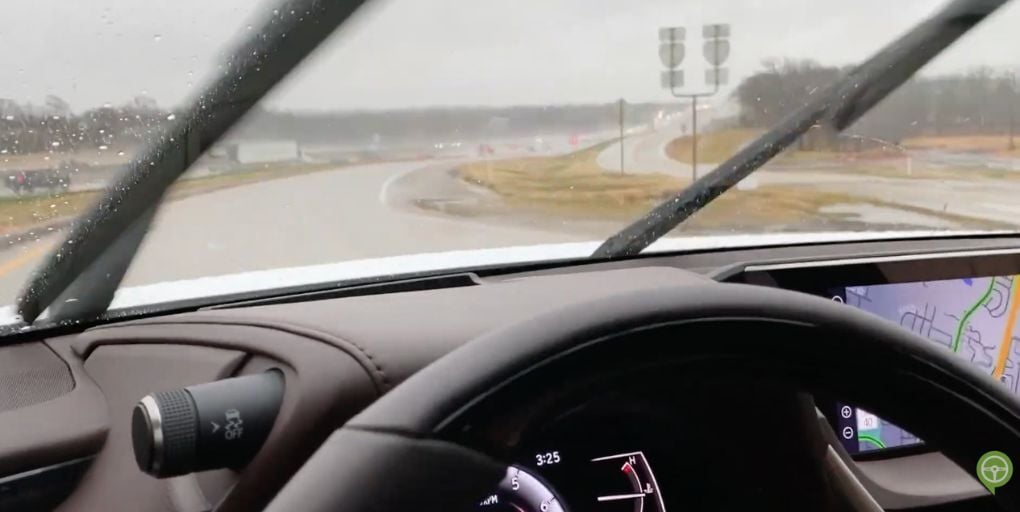
Turns Out “Wipers On, Lights On” Is Actually the Law. Here’s a driving rule that a surprising number of Americans apparently missed in driver’s education: if your windshield wipers are on, your headlights probably should be too. At least 23 U.S. states have laws requiring drivers to turn on their headlights whenever windshield wipers are in use because of rain, snow, or sleet. The rule is often summarized by a simple phrase safety advocates like to repeat: “Wipers on, lights on.” States with specific laws tying headlights to windshield wiper use include California, New York, Pennsylvania, Ohio, North Carolina, Tennessee, and Virginia, among others. In those places, driving through a rainstorm with your lights off isn’t just questionable judgment — it can actually result in a traffic ticket. The reasoning behind the law is fairly straightforward. Headlights aren’t only about helping you see the road ahead; they also make your vehicle visible to other drivers when visibility drops due to weather. During heavy rain, a vehicle without headlights can be surprisingly difficult to see, especially against a gray sky or wet pavement. Even in states that don’t explicitly link windshield wipers and headlights in their statutes, most still require headlights to be used whenever visibility is reduced. In practical terms, that leads to the same conclusion: if it’s raining hard enough that you need your wipers, you should probably turn your headlights on too. Modern cars with automatic lights have helped reduce the problem, but plenty of drivers still cruise down the highway during downpours with the lights off. So, the takeaway is simple and surprisingly old-school: when the rain starts and the wipers come on, flip on the headlights. It’s safer, it helps other drivers see you, and in many states across the country, it’s the law.
Florida License Plate Frame Arrest Sparks Lawsuit. A Florida traffic stop over something as small as a license plate frame has now turned into a federal lawsuit challenging the state’s law. The case began in December in Davie, Florida, when police pulled over a rental car driven by Demarquize Dawson because the license plate frame partially covered the first “S” in the words “Sunshine State.” Dawson reportedly argued the letter was still visible, but officers believed the frame violated Florida’s updated license plate law that took effect October 1, 2025. Under the statute, drivers are not allowed to place anything on or around a license plate that interferes with its legibility or visibility, including frames, covers, or coatings that obscure any part of the plate. Violations can be treated as a second-degree misdemeanor. In Dawson’s case, the stop escalated into an arrest and a night in jail. Authorities later acknowledged the situation should not have happened, and Davie Police issued an apology, saying the law’s wording was vague and open to interpretation during early enforcement. Now a lawsuit filed by the traffic-defense firm Ticket Toro is asking a federal court to strike down the statute, arguing it is unconstitutional under the legal doctrine known as “void for vagueness,” which requires criminal laws to clearly define what conduct is illegal. Supporters say the law was intended to prevent drivers from using tinted covers or other devices to hide plates from toll cameras or law enforcement. Critics counter that the wording is so broad that common dealership plate frames could technically violate the rule. For now, the law remains in effect, which means Florida drivers may want to take a second look at whatever frame is sitting around their license plate.
.jpg?width=150&name=jerry-headshot.jpg%20(1).jpg)