
Each week I bring you the top stories in the auto industry along with my commentary or sometimes amusing thoughts about the craziness that goes on in the world of cars.
Stories you’ll find today:
- THE ONE NUT YOU REALLY DON’T WANT TO LOSE
- ZERO-PERCENT FINANCING—ON A McLAREN
- WHEN “LOL” IS ENOUGH TO SEARCH A POLICE SURVEILLANCE DATABASE
- CALIFORNIA’S HIGH-SPEED RAIL CONSULTANTS WERE REALLY GOING PLACES
THE ONE NUT YOU REALLY DON’T WANT TO LOSE
Helicopters contain thousands of parts, but on some designs there is one fist-sized component with a nickname that tells you pretty much everything you need to know about its importance: the “Jesus Nut.” Technically called the main rotor retaining nut, it secures the main rotor assembly to the helicopter’s mast. If it comes off in flight, losing the rotor is the sort of mechanical problem for which there is no convenient warning light or roadside-assistance number. The exact origin of the nickname isn’t certain, although accounts trace it to the Vietnam War, when helicopters were being used extensively to transport troops. One story says a soldier asked a mechanic what would happen if the retaining nut came off during flight. The answer involved praying to Jesus—and the name apparently stuck. Fortunately, many modern helicopters use different rotor-retention designs with additional safeguards, and failures of the traditional Jesus Nut are extremely rare. But rare doesn’t mean impossible. In 2000, the retaining nut on a Bell 206B was removed so it could be repainted, but it was not reinstalled or caught during the preflight inspection. The helicopter crashed less than 10 minutes after takeoff, killing both people aboard. That helps explain why, on helicopters that still use the design, the nut is checked before every flight. Automotive engineers have given us plenty of strangely named parts over the years, but it is difficult to beat one whose unofficial name essentially doubles as the emergency procedure. If your mechanic ever points to something on your car and calls it the “Jesus Nut,” my advice is simple: make sure it’s tight.
ZERO-PERCENT FINANCING—ON A McLAREN
Zero-percent financing usually gets your attention when it’s attached to a family SUV or pickup, but McLaren has decided to apply the same idea to a six-figure supercar. According to a dealer bulletin cited by Cars Direct, qualifying buyers can finance a new 2025 or 2026 McLaren Artura coupe at 0% APR for 36 months through McLaren Financial Services. Buyers wanting more time can get 2.99% APR for terms up to 72 months, and the offer ran through Sept. 30. The Artura is McLaren’s plug-in hybrid supercar, combining a twin-turbocharged 3.0-liter V6 with an electric motor for 690 horsepower. Here’s where the fun starts: The 0% offer can be available to borrowers in McLaren’s top three credit tiers, with qualifying FICO scores ranging from 700 to 850. Of course, zero interest doesn’t make the car cheap. With an Artura coupe starting around $260,000, financing the whole thing for 36 months would put the payment north of $7,000 a month before taxes and fees. McLaren is also offering promotional financing on some of its other models, but none matches the Artura’s zero-percent deal. So if you’ve been holding off on buying a McLaren because you simply refuse to pay interest, congratulations—your patience has finally paid off. Now all you need to do is find the other $260,000.
WHEN “LOL” IS ENOUGH TO SEARCH A POLICE SURVEILLANCE DATABASE
Police officers using Flock Safety’s enormous network of automated license-plate readers are required to enter a reason when searching the company’s database, which sounds like a reasonable safeguard until you see some of the reasons officers actually entered. According to an analysis of Flock search logs by the nonprofit Electronic Frontier Foundation, officers have used entries including “LOL,” “LMAO,” “sexy,” “idk lol,” “Hehe,” “idiot,” “driving around being weird” and the all-caps “WEIRD KID.” One officer reportedly entered, “robbery i don’t remember the case number leave me alone,” while other searches were justified with profanity or strings of keyboard gibberish that looked as though somebody’s cat had walked across the computer. These weren’t necessarily harmless one-off searches, either. EFF found that some searches using terms such as “LOL” occurred over multiple days or months and scanned thousands of devices across automated license-plate-reader networks. Several police departments contacted about the searches said they had opened internal investigations, while Richmond, California, police said officers responsible for “Hehe” and “idk” had been counseled. Flock has since changed the system: beginning in late 2025, the company started replacing the free-form reason box with a dropdown menu containing preset categories such as “Traffic infraction,” and most of the questionable searches identified by EFF occurred before early 2026. Flock’s cameras are supposed to be serious law-enforcement tools capable of tracking vehicles across a vast surveillance network, which makes accountability over who searches the database—and why—pretty important. I’m no expert on police procedure, but if “LMAO” is sufficient probable cause to search a surveillance database, I’d hate to see what happens when somebody types “ROFL.”
CALIFORNIA’S HIGH-SPEED RAIL CONSULTANTS WERE REALLY GOING PLACES
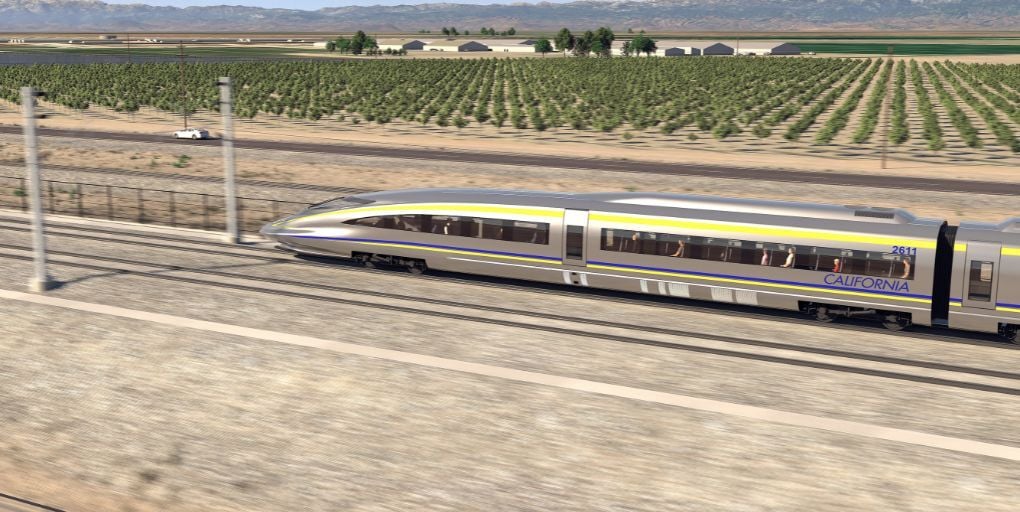
California’s high-speed rail project may not be carrying passengers yet, but according to the state inspector general, some of its consultants were certainly getting around. An investigation found that the California High-Speed Rail Authority approved at least $685,500 in payments to four consulting firms without first properly approving the travel and expenses, including nearly $600,000 in questionable reimbursements over a two-year period. Among the expenses identified were rideshare trips to gyms, a nightclub, a tiki bar, a cigar lounge and even an escape room. Investigators also found premium rides taken to and from a restaurant, bar and nightclub between 9:40 p.m. and 2:30 a.m., repeated rides to Planet Fitness locations even after a supervisor specifically wrote that the state does not cover rideshare trips to gyms, and $118,000 in international travel despite contracts that explicitly prohibited international travel. The inspector general made several recommendations aimed at tightening oversight of travel and expense reimbursements, and another evaluation of the rail authority’s finances is planned after next March. The California High-Speed Rail Authority disputed part of the inspector general’s interpretation of its responsibilities, arguing it did not need to justify each consultant trip, an interpretation the inspector general called “fundamentally incorrect.” California’s high-speed rail project has faced years of delays, rising costs and controversy, but this one may be difficult to explain to taxpayers. The train may not be taking anybody to a tiki bar, cigar lounge or Planet Fitness yet, but apparently Uber was happy to fill in

.jpg?width=150&name=jerry-headshot.jpg%20(1).jpg)