
Each week I bring you the top stories in the auto industry along with my commentary or sometimes amusing thoughts about the craziness that goes on in the world of cars.
Stories you’ll find today:
- ALASKA HAS A HIGHWAY SO TOUGH, RENTAL CAR COMPANIES SAY NO THANKS
- POLICE SEIZE THE WRONG CAR, THEN THE TOW TRUCK HELPS TOTAL IT
- WHAT'S REALLY HIDING IN THE TRUNK OF A POLICE CAR?
- AVIS CHARGES CUSTOMER $4,300 FOR DRIVING 18,000 MILES IN ONE WEEK
ALASKA HAS A HIGHWAY SO TOUGH, RENTAL CAR COMPANIES SAY NO THANKS
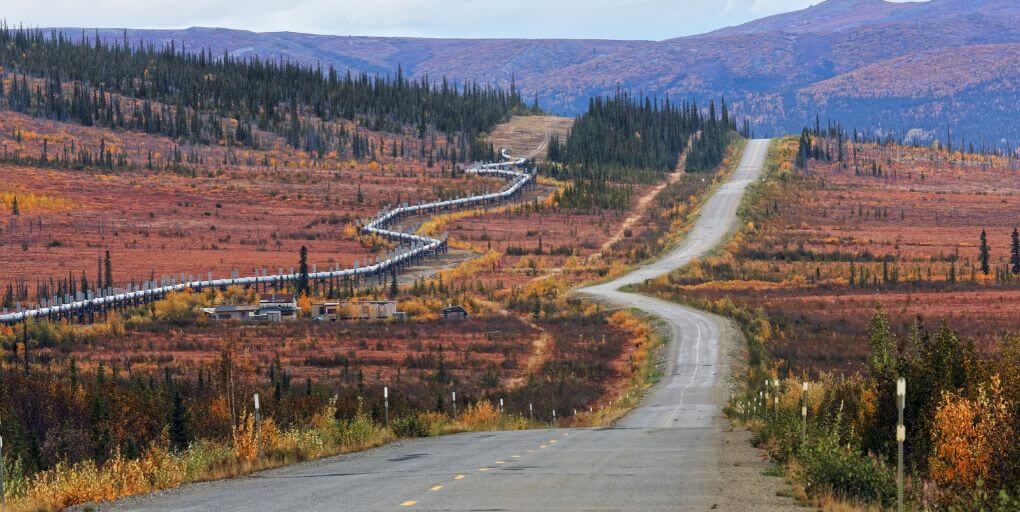
If you're planning an Alaskan vacation and thinking about renting a car to explore the wilderness, there's one road you might want to cross off your itinerary. It's the Dalton Highway, a 414-mile stretch running from Livengood, north of Fairbanks, all the way to Deadhorse near the Arctic Ocean. According to the Alaska Department of Transportation, the highway is so remote and unforgiving that most rental car companies either prohibit driving on it or won't cover damage sustained there. And once you understand the conditions, it's pretty easy to see why. Much of the highway is dirt and gravel, with enormous commercial trucks hauling supplies to the Prudhoe Bay oil fields. There's a roughly 240-mile stretch without a gas station, and cell phone service is practically nonexistent along much of the route. Winter conditions can begin as early as August and last into June, with snow, ice, avalanches and temperatures that can plunge to extraordinary lows. Then there's the wildlife, including wolves, grizzly bears and, farther north, polar bears. If your vehicle breaks down, don't expect AAA to arrive in 20 minutes. Jalopnik reports that one towing company charges $200 for the first half-hour, plus mileage, and another $75 for each additional half-hour. Stranded motorists can sometimes wait more than 24 hours for assistance. The road is open to the public year-round, and its spectacular scenery attracts adventurous travelers, but the state recommends carrying extra fuel, food, water, warm clothing, spare tires and emergency supplies. A few specialty rental companies, including Alaska 4x4 Rentals, do permit travel on the Dalton Highway, but most mainstream companies want no part of it. I've always believed a good road trip should involve a little adventure, but when the rental agreement basically says you're on your own if a polar bear eats the bumper, I might reconsider my route.
POLICE SEIZE THE WRONG CAR, THEN THE TOW TRUCK HELPS TOTAL IT
A Richmond, Virginia, woman learned the hard way that being innocent doesn't necessarily mean your car is safe from the police, especially when a Flock surveillance camera gets involved. In a report, Richmond television station WWBT, police investigating a shooting used Flock's license-plate camera network to search for a vehicle matching a general description because they didn't have the suspect's license plate number. That search led them to Rosalyn Crump's 2012 Hyundai Elantra. Around 2 a.m., officers arrived and began looking through the car's windows with flashlights. Crump told them she had been at her mother's house the previous day and had returned home before her children got off the school bus. Body-camera footage even captured one officer questioning whether the car was involved because of the child seats and other belongings inside, but another officer suggested those items could have been placed there deliberately. Police had the Hyundai towed and impounded anyway. Within hours, investigators identified another similar-looking vehicle believed to be connected to the shooting, but Crump says she wasn't notified that her car had been released until four days later. When she went to retrieve it, she discovered the towing company had damaged the front bumper badly enough to leave the car undrivable. Seibert's Towing accepted responsibility for $2,212.30 in body repairs, but a subsequent mechanical inspection revealed damaged tie rods and ball joints, pushing the repair estimate above $6,000. The towing company disputes responsibility for the mechanical damage, but its insurer and Crump agree the Hyundai is now a total loss. Meanwhile, Crump has struggled to get to work and reportedly lost one of her jobs. Here's what bothers me about this story: The camera didn't necessarily identify the wrong vehicle. Police searched using a broad description, selected a possible match and apparently gave that information more weight than the evidence in front of them. Technology can be a wonderful tool for law enforcement, but it shouldn't replace actual police work. Crump started with a running car, cooperated with officers and ended up with a totaled Hyundai. That's one heck of a price to pay for somebody else's mistake.
WHAT'S REALLY HIDING IN THE TRUNK OF A POLICE CAR?
Have you ever wondered what police officers carry around in the trunks of their patrol cars? According to Jalopnik, the answer is a lot more than you might expect, and it certainly isn't just a spare tire and a set of jumper cables. Depending on the department and an officer's assignment, a police car can be a rolling emergency room, crime laboratory, traffic-control center and equipment locker all rolled into one. Highway patrol officers may carry traffic cones, flares and crash investigation equipment, while officers assigned to urban areas might have helmets, bullet-resistant vests and other tactical gear. Many patrol cars also carry fire extinguishers, first-aid supplies, trauma kits for serious bleeding, blankets and naloxone, commonly known by the brand name Narcan, which can reverse opioid overdoses. Some even carry automated external defibrillators, or AEDs, that can deliver an electrical shock to help restore a normal heart rhythm during certain cardiac emergencies. Then there's the equipment you probably won't find in your family SUV: tire-deflation devices commonly called stop sticks, bolt cutters, sledgehammers, battering rams and even ballistic blankets designed to provide protection from gunfire. Officers assigned to investigate crimes may carry evidence bags, crime scene tape and collection supplies, while firearms stored in the trunk are generally secured in dedicated racks or compartments. One of the more heartwarming discoveries involves the Franklin, Tennessee, Police Department, where donated stuffed animals are carried by some officers to comfort children involved in accidents or other frightening situations. Of course, there's no universal packing list, and equipment varies considerably from department to department. Having spent time in law enforcement myself, I can tell you that being prepared for the unexpected is a pretty important part of the job. Still, it's remarkable how much equipment officers may need to carry. And to think, most of us can't even keep our trunks organized enough to find the ice scraper when we need it.
AVIS CHARGES CUSTOMER $4,300 FOR DRIVING 18,000 MILES IN ONE WEEK
Rental cars sometimes get driven pretty hard, but Avis apparently thought one customer had managed to defy the laws of physics. According to Toronto's CityNews, Yuehao Huang rented a car in Montreal for a weeklong family trip through eastern Canada, visiting Mont Tremblant, Ottawa and Quebec before returning the vehicle. Huang says he drove approximately 870 miles, which sounds perfectly reasonable for a vacation. Avis, however, claimed he had exceeded his prepaid mileage allowance by nearly 18,000 miles and slapped an additional $4,300 charge on his credit card. Now, I'm pretty good at math, and that would mean Huang averaged roughly 107 miles per hour, nonstop, 24 hours a day, for seven straight days. No stopping for gasoline, no meals, no bathroom breaks and apparently no sleeping. Huang disputed the charge and even provided tracking data from his phone documenting his actual travels. Avis initially agreed to investigate, but weeks passed without a resolution. He contacted the company again, resubmitted his dispute and eventually challenged the charge through American Express, only to have Avis maintain that the charges were valid. Finally, Huang contacted CityNews, and wouldn't you know it, just one day after the television station contacted Avis, the company discovered a data-entry error. Avis apologized, announced it was processing a refund and said it would reinforce its procedures to prevent similar mistakes. Amazingly, Jalopnik reports this wasn't the company's first mathematical miracle. Another customer previously received a $6,000 charge for supposedly driving 23,000 miles in three days, which would require averaging approximately 333 mph. Look, mistakes happen in every business, and I've always believed companies deserve a chance to correct them. But when your computer says a customer drove 18,000 miles in a week, somebody ought to reach for a calculator before reaching for the customer's credit card. At those speeds, Avis shouldn't be charging for excess mileage. It should be calling NASCAR.
Photo: Dalton Highway, south of the Arctic Circle, Alaska. Fotogro/Shutterstock.com.