
Federal safety regulators are putting autonomous vehicle companies on notice: if their driverless cars cannot safely deal with police, firefighters and ambulances, the technology still has work to do.
On July 8th, National Highway Traffic Safety Administration Administrator Jonathan Morrison issued a public call to action to driverless automated driving system developers warning that the agency has seen a “clear pattern” of autonomous vehicles interfering with law enforcement and other first responders. You can read the full letter here.
The concern is not theoretical. NHTSA said it has documented incidents in which autonomous vehicles drove into active emergency scenes, blocked ambulances or firefighters, or failed to properly respond to flashing lights, flares, smoke, fire and traffic cones. Morrison’s message was direct: an autonomous vehicle that cannot safely interact with first responders is a danger to the public.
In its letter, NHTSA said it will meet with driverless vehicle developers by the end of July to hear what steps they plan to take to address the issue. The agency also said it will continue to use its enforcement authority against companies that fail to deal with significant safety concerns.
In other words, Washington is not just asking robotaxis to use better manners. It is telling the companies behind them to fix a problem that can have real consequences when seconds matter.
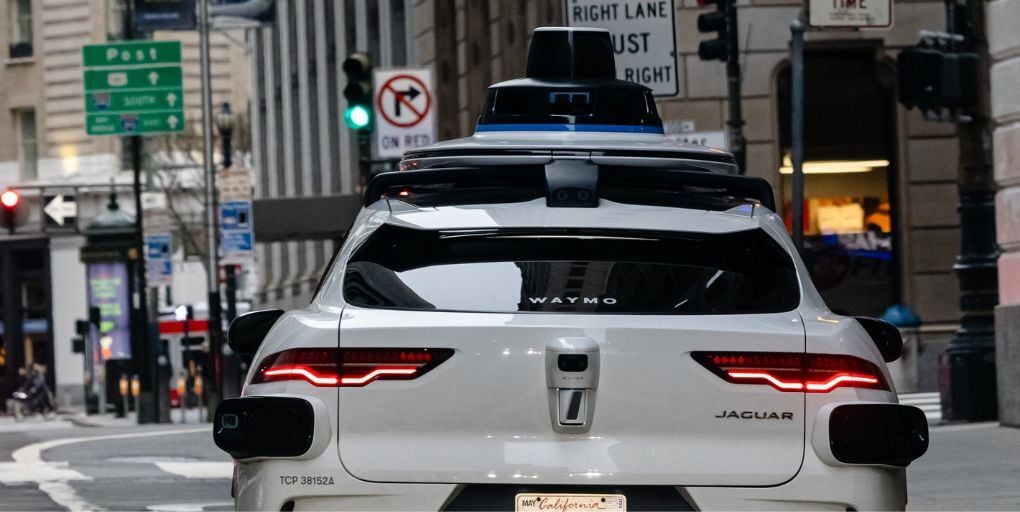
NHTSA did not name specific companies in the letter and did not identify specific incidents. However, Reuters notes that local media in Texas reported a late-May incident in Dallas involving a Waymo self-driving vehicle that partially blocked a route being used by fire trucks responding to an apartment fire. Reuters also reported that Waymo did not immediately respond to a request for comment.
The warning comes as driverless vehicle operations continue to expand in several U.S. markets. Waymo, owned by Alphabet, is one of the best-known companies in the space, while Amazon’s Zoox and Tesla are also tied to the broader autonomous vehicle race.
Reuters also reported that both NHTSA and the National Transportation Safety Board are investigating separate incidents involving Waymo vehicles. One involved Waymo vehicles passing stopped school buses with lights activated in violation of Texas law. Another involved a January 23 incident in Santa Monica, California, in which a self-driving Waymo struck a 9-year-old girl in a school zone as she ran from behind a double-parked SUV toward school.
Morrison’s letter acknowledged the potential benefits of automated vehicles, including the possibility of reducing human error and improving roadway safety. NHTSA also said it continues to support autonomous vehicle innovation, including efforts to remove regulatory barriers, develop safety standards and update federal motor vehicle safety rules for automated vehicles.
Still, the agency made clear that emergency scenes are not rare “edge cases” that can be figured out later. They are part of everyday driving. Human drivers are expected to yield to emergency vehicles, obey police direction and avoid active fire or crash scenes. NHTSA’s message is that driverless vehicles must be able to do the same.
That is the real-world test for this technology. It is one thing for an autonomous vehicle to handle a normal sunny-day route. It is another to understand flashing lights, hand signals, smoke, fire trucks, blocked lanes and a firefighter who needs the road cleared immediately.
At that moment, “Please reboot your robotaxi” is not much of an emergency response plan.