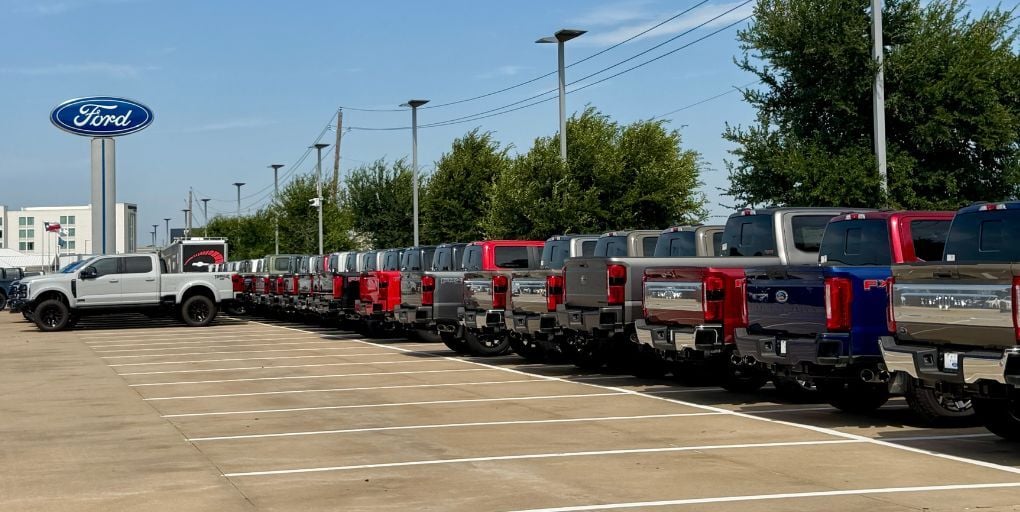

New-vehicle inventories tightened in July as sales outpaced the arrival of replacement vehicles, but the market is nowhere near returning to the empty-lot conditions of the pandemic era. Cox Automotive reported that 2.73 million new vehicles were available at the beginning of August, a 3.5% decline from a month earlier and roughly even with the year-ago level.
If you are wondering why this matters to you, this is the biggest reason automakers put on incentives. A 75-day supply of new cars is considered acceptable and if it stays that way or drops, that will have a huge effect on September incentives.
According to Cox Automotive’s vAuto Live Market View data, the industry entered August with a 75-day supply, down from a revised 82 days at the beginning of July. The change reflected a meaningful pickup in business: July new-vehicle sales increased 8.5% from June and 2.9% from July 2025. In other words, buyers were moving vehicles off dealer lots faster than automakers were putting them back.
That distinction matters because days’ supply reflects both the number of vehicles available and the recent sales pace. July brought movement on both sides of the equation: the physical inventory count declined while sales accelerated. The result was a leaner market, but not one in which dealers suddenly ran short of vehicles.
Some of the strongest movement came in the industry’s biggest-volume segments. Cox Automotive said midsize SUV inventory declined by nearly 14 days during July. Full-size truck supply dropped by 10 days as sales in the segment climbed nearly 16%. Those results suggest demand remained resilient even with affordability continuing to challenge many shoppers.
Prices, however, did not jump as inventory contracted. Cox Automotive put the average new-vehicle listing price at $49,249 at the end of July, unchanged from June and 1.6% higher than a year earlier. Kelley Blue Book, a Cox Automotive company, reported that July’s average transaction price reached $49,855, up 1.9% year over year. The average manufacturer’s suggested retail price was $51,621, also 1.9% above its year-earlier level.
Automakers did pull back on incentives for a second consecutive month. Cox Automotive said average incentive spending declined to $3,192 per vehicle, equal to 6.4% of the average transaction price. That was down from 7% in June and 7.3% in July 2025. Discounts remained more generous in several popular segments, however, averaging 8.6% of transaction prices for full-size pickups, 7.8% for compact SUVs and 6.8% for midsize SUVs.
Inventory continued to vary considerably by manufacturer. Cox Automotive said Stellantis made additional progress reducing its days’ supply during July, although continuing production limited the rate of improvement as the automaker worked through elevated stock and refreshed its product lineup. Toyota, Lexus and Honda remained among the brands with the leanest inventories in the industry.
Electric vehicles did not share fully in the broader market’s stronger pace. Cox Automotive reported that EV sales rose 2.7% from June, well below the overall market’s 8.5% increase. EV days’ supply consequently declined by only 2.1 days, while supply for internal-combustion and hybrid vehicles tightened by 6.5 days.
Automakers also appear to be taking a cautious approach to the 2027 model year. Model-year 2027 vehicles represented 5.6% of available inventory in July, up from 3.3% a month earlier. Even so, dealers had only about half as many 2027 models as they had 2026 models at the same time last year, according to Cox Automotive.
Fresh 2027 arrivals contributed to higher supplies in two major segments. Full-size SUV inventory increased by 3.7 days during July, while full-size luxury SUV supply rose by 9.4 days. Most other segments moved in the opposite direction.
Taken together, the data point to a market becoming better balanced rather than genuinely supply-starved. Inventory remains close to last year’s level, pricing has been stable, and shoppers still have choices. The notable change is that stronger demand is now trimming excess stock without yet setting off another round of broad price increases—a development buyers and dealers can both welcome.

.jpg?width=150&name=jerry-headshot.jpg%20(1).jpg)