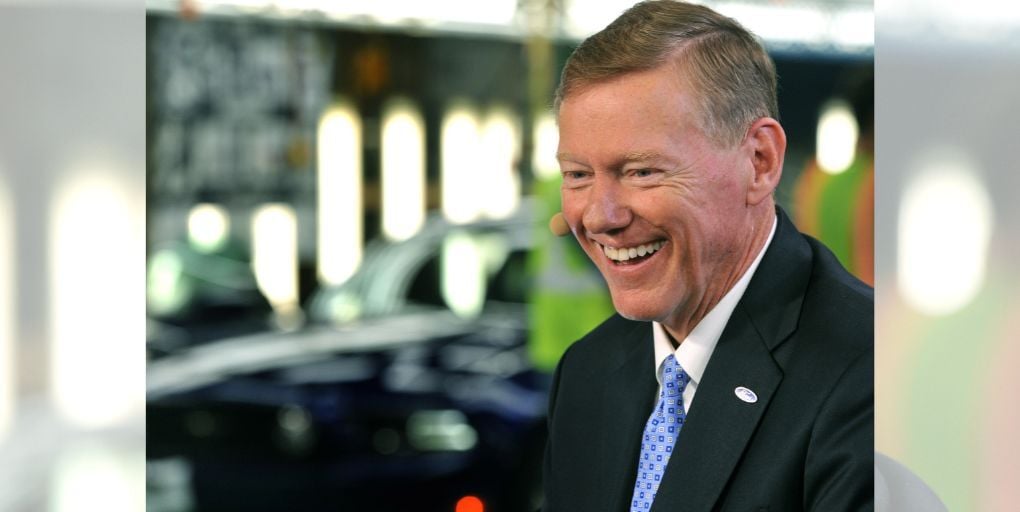

Maybe you haven’t heard his name before, but Alan Mulally did not come from the automobile business. When Ford named him president and CEO in 2006, he came from Boeing, where he had helped lead development of the 777 and later ran Boeing Commercial Airplanes. There were plenty of people inside and outside Ford who wondered whether an airplane executive could possibly understand the car business, its dealers, its unions, its century of tradition, and all the personalities that came with it.
I had already sold my dealerships and left the retail automobile business by then, so I never worked with Alan and never sat across from him as a Ford dealer or as Ford National Dealer Council Chairman. I served under the curse of Jac Nassar. I did, however, follow Alan's career and every move he made very closely. I also had the opportunity to spend an hour interviewing him in 2012 when he passed through Dallas at Love Field. I have interviewed a lot of important people over the years, but that hour stayed with me because Mulally had an unusual combination of confidence, optimism, discipline, and humility. He had led enormous organizations, yet he did not carry himself as though he was the only intelligent person in the room.
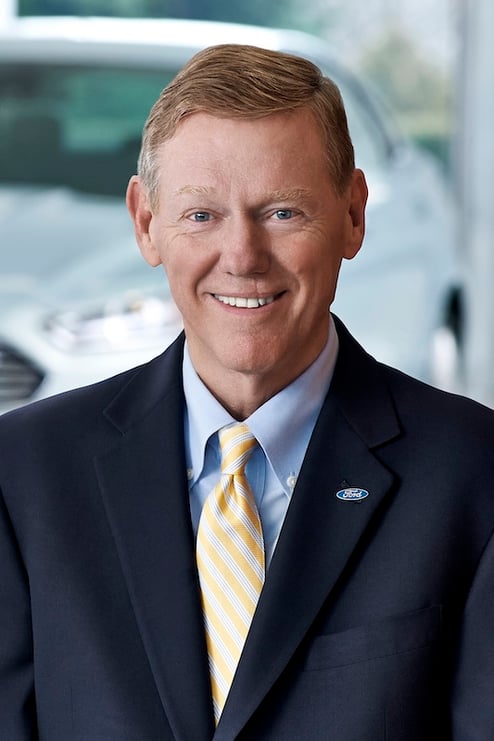 Photo: Former Ford CEO Alan Mulally. Ford (2014).
Mulally arrived at Ford when the company was in serious trouble. Ford lost $12.6 billion in 2006, its operations were fragmented around the world, and different regions often developed different vehicles and protected their own turf. The company had accumulated brands, products, facilities, and layers of management that made it harder to move quickly. Ford had a proud history, but pride alone was not going to save it.
One of Mulally’s boldest moves came almost immediately. Ford raised $23.5 billion in new liquidity, secured by virtually all of the company’s major assets. It was an enormous gamble, and at the time many people saw it as a sign of desperation. Mulally saw it as the financial runway Ford needed to restructure the company and keep investing in new products, even if the economy became much worse.
The economy did become much worse.
When the financial crisis hit and vehicle sales collapsed, General Motors and Chrysler entered government-supported bankruptcies. Ford suffered terribly too, but it did not go through bankruptcy or accept the same federal rescue funding. The financing Mulally arranged before the crisis gave Ford options at a time when options were in very short supply. That taught me one of the first great lessons I took from him: you do not prepare for the storm after the rain starts.
That lesson applies in business and in life. When things are going well, it is easy to assume they will continue going well. That is when people overextend themselves, companies become careless, and leaders postpone difficult decisions. Mulally did not wait for Ford’s circumstances to dictate the plan. He acted while he still had enough control to create choices for the future.
His turnaround strategy became known as “One Ford.” The idea sounded simple: one team, one plan, one goal, with everyone working together to build a complete family of competitive vehicles for customers around the world. In practice, it meant dismantling the internal kingdoms that had developed over decades. Ford could no longer afford to have different regions duplicating engineering work, protecting their own products, and competing with one another for resources. Mulally sold off Jaguar and Land Rover, later sold Volvo, reduced Ford’s Mazda interest, and concentrated the company’s energy on rebuilding the Ford brand.
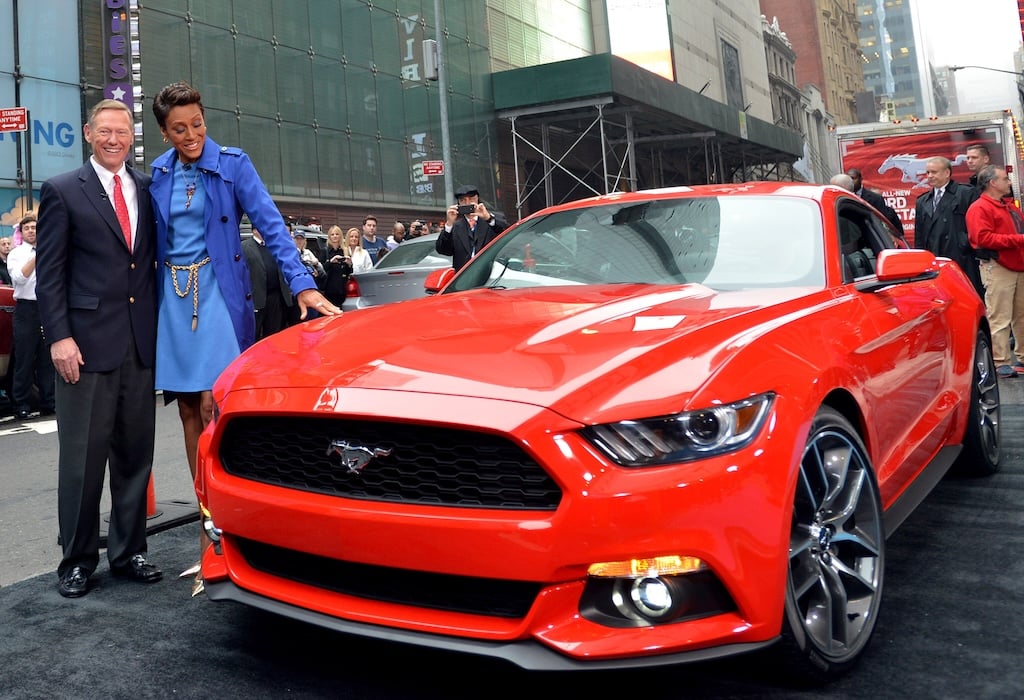
What impressed me was not merely that he had a plan. Every company has plans. Mulally made sure everybody knew the plan, understood the plan, and was measured against the same plan. He held weekly Business Plan Review meetings where senior leaders reported their progress using a simple color system. Green meant the plan was on track, yellow indicated concern, and red meant there was a serious problem.
At first, almost everything reportedly showed green, even though Ford was losing billions of dollars. That told Mulally something important: the executives were afraid to tell the truth. They had been conditioned to believe that admitting a problem would make them the problem, and they'd be shown the door.
When Mark Fields finally presented an item marked red, Mulally did not attack him, embarrass him, or begin looking for someone to blame. He applauded. Then he asked the team how they could help.
That may be the most important leadership lesson I learned from Alan Mulally. If people are punished for bringing you bad news, eventually they will stop bringing it. The bad news will still exist; you simply will not know about it until it becomes a crisis. Mulally created an environment where problems could be exposed, discussed, and solved without turning every meeting into a hunt for the guilty party.
Looking back on my dealership years, I can see how valuable that principle is. A dealer cannot fix a customer complaint nobody reports, an inventory problem managers try to hide, or an expense that gets buried until the end of the month. I always wanted people to bring me problems, but Mulally helped me understand the other half of that equation: a leader must respond in a way that makes people willing to bring the next problem too.
That lesson follows me onto the radio every Saturday. Callers sometimes begin by apologizing because they made a mistake or failed to ask a question before signing the papers. I cannot help them by making them feel foolish. I need the truth about what happened, because only then can we determine whether there is a solution. The same principle guides this newsletter. When facts do not support what I initially believed, the facts have to win. Protecting my pride would not help the reader who depends on me for an honest answer.
Mulally also understood the value of keeping a complicated organization focused on a few clear priorities. Ford had thousands of problems, but attempting to solve all of them independently would have created more confusion. “One Ford” gave the entire company a common direction. That affected the vehicles too, as Ford increasingly developed global platforms and products instead of creating unrelated models for every market. Resources could be concentrated on making fewer products better.
I have carried that lesson into my own work. The Car Pro Show covers an enormous range of subjects: new vehicles, used vehicles, financing, leasing, insurance, maintenance, recalls, dealers, warranties, and consumer protection. It would be easy to get buried in the details and lose sight of the mission. The mission is actually quite simple: help people make better automotive decisions by giving them straight talk and honest answers. When I am deciding whether to discuss a subject on the air or publish something in this newsletter, that basic purpose still serves as my compass.
Mulally’s optimism was another quality I admired, but it was not blind optimism. He did not pretend Ford’s problems were smaller than they were. He put them on the screen every week for everyone to see. His optimism came from believing that honest people, working from the same facts and toward the same goal, could solve difficult problems together. That is very different from simply telling everyone to remain positive while the building burns.
By 2010, Ford reported net income of $6.6 billion. By the time Mulally retired in 2014, the company had recorded 19 consecutive profitable quarters. Ford had survived one of the worst periods in the history of the automobile industry, improved its products, strengthened its brand, and changed a corporate culture many people once believed could not be changed.
Alan Mulally did not accomplish that by being the loudest person in every meeting or pretending he had every answer. He created clarity, demanded honesty, encouraged teamwork, and kept everyone focused on the customer and the plan. He proved that a leader can be demanding without being demeaning and optimistic without ignoring reality.
I spent only one hour with Alan Mulally at Love Field, but I continued learning from him long after that interview ended. His example reminded me to prepare before trouble arrives, to make it safe for people to tell the truth, to put the mission ahead of individual egos, and to remember that leadership is not about having all the answers. It is about creating an environment where the right answers can emerge.
Alan turns 81 on August 4th, and I guarantee you he still has the energy of someone half his age. He is still a much sought after speaker and although his methods of running a business seem to have faded in Dearborn, I have no doubt in my mind Alan could walk in there today and make it a better car company, and he could do it quickly.
One hour of my life, the one with Alan Mulally, had a profound effect on me. I’ve met many famous people, a couple of Presidents of the United States, and lots of CEOs. I will never forget his firm handshake, his engaging smile, and how he tried to put me at ease. We had scheduled a half-hour interview, but we were still talking after an hour. It seemed like 15 minutes at the most and what I got out of it will last me a lifetime.
Alan’s lessons affected the way I viewed business, the way I approached life, and the responsibility I feel every time the red on-air light comes on in the radio studio. I may never have worked for Alan Mulally, but I consider him one of my teachers.
The best lessons sometimes come from people who never knew they were teaching you.
Straight Talk and Honest Answers — always.
-Jerry
.jpg?width=150&name=jerry-headshot.jpg%20(1).jpg)