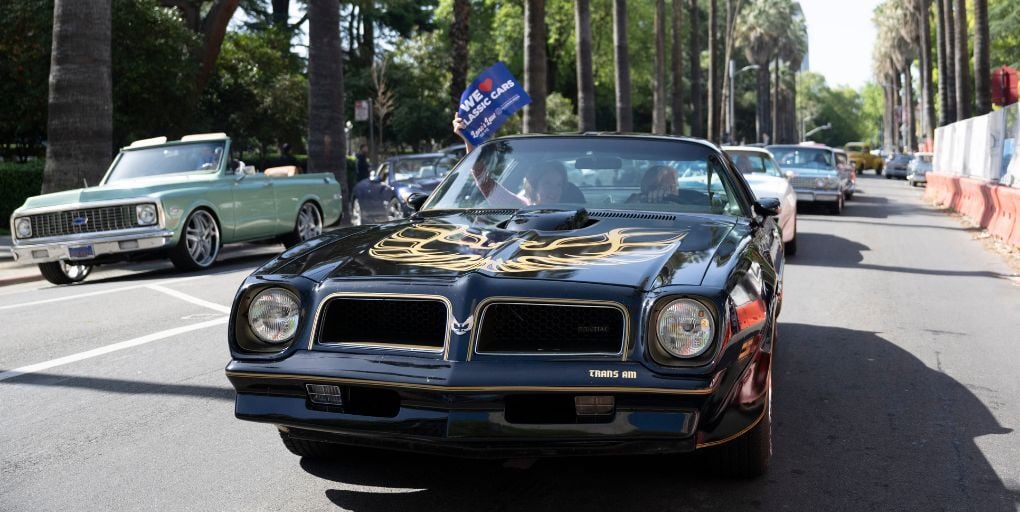

Jay Leno’s long-running effort to modernize California’s smog testing rules for classic vehicles is gaining momentum, and this time the movement has picked up support from one of the most influential automotive organizations in the world.
California Senate Bill 1392, commonly known as “Leno’s Law,” would create an exemption from the state’s biennial smog inspection program for certain collector vehicles. The legislation is backed by comedian, television personality, and renowned car collector Jay Leno, who has spent years arguing that California’s current regulations no longer reflect how most classic vehicles are actually used.
The proposal has now received support from the Fédération Internationale de l'Automobile (FIA), the global governing body best known for overseeing Formula 1, the World Endurance Championship, and the World Rally Championship. According to Road & Track, FIA officials recently sent a letter supporting the legislation, calling it a balanced approach that protects both environmental goals and automotive heritage.
For classic car enthusiasts, the issue is straightforward. California currently requires many older vehicles to undergo periodic emissions testing even though most collector cars spend the majority of their lives in garages, are driven only occasionally, and accumulate very few miles each year.
Supporters say the current rules place an unnecessary burden on owners who carefully preserve automotive history. They argue that a 40-year-old collector car that travels a few hundred miles annually contributes little to overall emissions compared with modern daily drivers that log tens of thousands of miles every year.
The latest version of the bill is narrower than earlier proposals. Rather than creating a broad exemption for all older vehicles, SB 1392 establishes an optional pathway for qualifying collector cars and focuses on specific model years. According to CarBuzz, the proposal would update California’s collector vehicle exemptions and potentially affect vehicles from the early 1980s that currently remain subject to testing requirements.
The legislation follows an earlier effort introduced in 2025 that failed to advance despite significant support from enthusiasts and industry groups. That proposal, known as SB 712, was also sponsored by Leno and championed by California State Senator Shannon Grove. While it ultimately stalled, it generated substantial public attention and bipartisan support.
What makes this year’s effort different is the growing coalition behind it.
The Specialty Equipment Market Association (SEMA), which represents thousands of automotive aftermarket businesses, has been heavily involved in pushing the legislation forward. SEMA argues that collector vehicles support restoration shops, paint and body businesses, upholstery specialists, parts manufacturers, and numerous small businesses throughout California.
The bill has also attracted support from California’s lowrider community. According to SEMA, more than 1,700 letters supporting the legislation have been submitted by enthusiasts who believe the measure helps preserve an important part of the state’s automotive culture.
Leno has consistently framed the issue as one of preservation rather than deregulation. His argument is that collector vehicles represent rolling pieces of history and are generally maintained to a much higher standard than ordinary transportation vehicles. He has also pointed out that neighboring states often have more accommodating rules for classic cars, creating inconsistencies that frustrate enthusiasts.
Opponents of expanded exemptions generally argue that California has led the nation in air quality improvements for decades and should be cautious about creating new exceptions. But supporters counter that collector vehicles make up only a tiny fraction of the vehicles on the road and have an almost negligible impact on statewide emissions totals.
For now, the legislation has cleared the California State Senate and is moving through the Assembly process. Whether it ultimately becomes law remains uncertain, but supporters believe the measure has more momentum than any classic car exemption proposal California has seen in years.
If it becomes law, Leno’s Law would mark one of the most significant changes to California’s collector vehicle regulations in decades. More importantly for enthusiasts, it would represent a rare victory in a state where automotive regulations often become a model for the rest of the country.
And with backing now coming not only from car collectors and aftermarket businesses, but also from the organization that governs much of international motorsports, the effort has clearly moved beyond being just another niche enthusiast issue.
It has become a global conversation about preserving automotive history while balancing modern environmental goals.

.jpg?width=150&name=jerry-headshot.jpg%20(1).jpg)