
The U.S. new-vehicle market lost a little momentum in July, but the bigger story was not the modest decline in total sales. It was the continuing shift in what Americans are buying.
U.S. light-vehicle sales totaled an estimated 1.38 million vehicles in July, down 1.4% from July 2025. The seasonally adjusted annual rate, or SAAR, came in at 16.51 million vehicles, down from 16.67 million in June and 16.72 million in July of last year.
While that sounds like the market may be weakening, the broader picture is considerably more stable. July was the fifth consecutive month in which the SAAR was at least 16 million vehicles, the longest such streak in more than five years.
In other words, the market appears to be settling into a fairly consistent annual selling pace of around 16 million vehicles rather than moving into another period of rapid growth.
Affordability remains one of the primary restraints on the market. Vehicle prices, interest rates and monthly payments continue to keep some households out of the new-car market altogether. Retail sales declined 1.3% from a year ago during July, while fleet deliveries were down 2%.
There was also some evidence that retail activity slowed during the final weeks of the month.
One important factor makes the year-over-year comparison somewhat unusual. During the summer of 2025, consumers interested in electric vehicles were beginning to accelerate purchases ahead of the expiration of federal EV incentives in late September. That created an unusually strong comparison for electric vehicles this July.
The result was a dramatically different sales mix.
Hybrids Continue To Gain Ground
If there is one unmistakable theme running through July's numbers, it is the continued strength of hybrids.
Automakers with strong gasoline-electric hybrid lineups generally performed better than those heavily dependent on traditional gasoline vehicles or battery-electric models.
Honda, Hyundai and Kia were among the clearest examples.
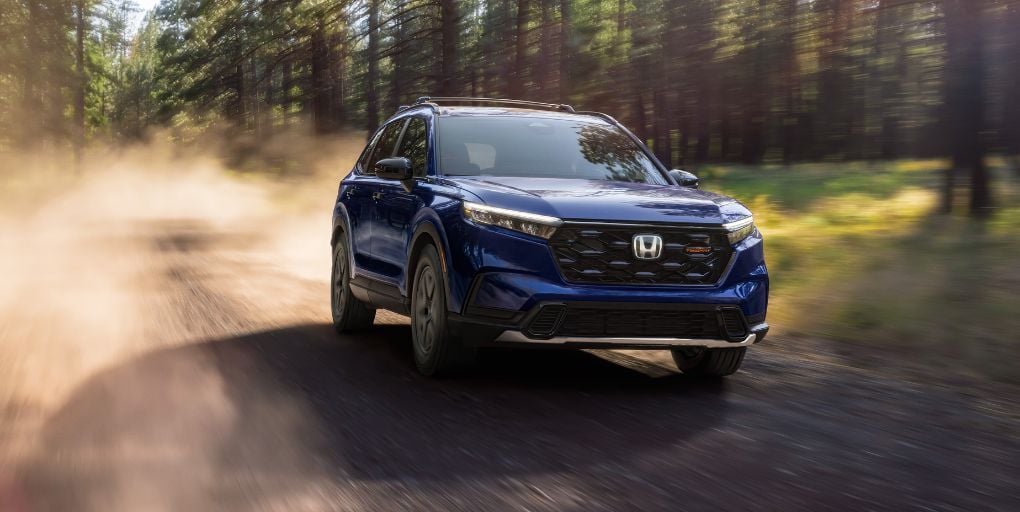
American Honda posted a 12.8% increase in U.S. sales during July, with Honda division sales up 12.3% and Acura up 18.9%.
Honda sold 124,553 vehicles during the month, while Acura added 11,996, bringing American Honda's total to 136,549 vehicles.
Four of Honda's five major models posted double-digit sales gains. Accord sales surged 55%, Civic increased 21%, CR-V rose 19% and HR-V climbed 16%
Honda brand hybrid sales totaled 36,609 vehicles during July, a 15% increase from a year ago and nearly 30% of the brand's overall sales. Accord hybrid sales increased 29%, while CR-V hybrid sales rose 18% to a monthly record of 20,710 vehicles.
Those numbers illustrate just how important hybrids have become to Honda's U.S. operation.
Honda is also dealing with relatively tight inventory, with supplies of some models representing fewer than 20 selling days. That combination of strong demand and limited supply gives the company less reason to rely heavily on incentives to move vehicles.
Acura also had a strong month. Crossover deliveries increased 22%, with the newer ADX and midsize MDX helping overcome weaker RDX results.
July marked the fourth consecutive monthly sales increase for Honda and the third straight monthly gain for Acura.
Hyundai And Kia Set July Records
Hyundai and Kia continued their impressive U.S. sales run.
Hyundai sold 82,480 vehicles in July, an increase of 3.7% from July 2025 and a new July sales record.
Hyundai hybrid sales jumped 35% to a record 22,379 vehicles.
The Tucson was especially strong, with sales rising 20% to 19,714 vehicles, also a July record. That helped compensate for weaker results from Hyundai's other major crossovers, the Santa Fe and Palisade.
Genesis, which is included with Hyundai Motor America, sold 6,947 vehicles in July, up 3.9%. That extended Genesis' sales-growth streak to 22 consecutive months.
The GV70 and GV80 crossovers each posted 10% gains, overcoming weaker sales of the G70 sedan.
Combined Hyundai Motor America sales, including Genesis, totaled 89,427 vehicles, up 3.7%.
Kia sold 75,857 vehicles in July, up 6.7% from a year earlier and also a July record.
Kia's hybrid sales soared 108%.
Five Kia models established July U.S. sales records: the Sportage, Carnival, Telluride, Seltos and K4.
Combined Hyundai-Kia sales totaled 165,284 vehicles in July, up 5% from 157,353 a year earlier.
Both Hyundai and Kia have now increased sales for three consecutive months. After each company posted record U.S. results in 2025, both remain on pace for another record year in 2026.
That is particularly notable considering that the overall U.S. market declined during July.
EV Sales Tell A Very Different Story
Battery-electric vehicles were much weaker.
Hyundai's primary EV models were down at least 35% from July 2025, while Kia's two EVs also posted year-over-year declines.
Again, some perspective is necessary. EV demand was already beginning to accelerate at this point last year as shoppers moved purchases forward to take advantage of federal incentives before their September expiration.
Ford experienced an even steeper EV decline.
Ford Motor Co. sales fell 10.3% in July to 168,920 vehicles. Ford brand sales dropped 9.2% to 163,820, while Lincoln deliveries plunged 35.9% to 5,100.
Ford's EV sales were down 75%.
Even Ford's hybrid sales declined, falling 25%.
Ford Motor and Ford brand sales have now declined during every month of 2026, while Lincoln deliveries have dropped for five consecutive months.
Part of Ford's decline reflects deliberate changes in its business, including the phaseout of certain models and a reduction in lower-margin rental-fleet business as the company prepares for a series of future product introductions.
Still, Ford's most important product also faced challenges.
F-Series sales declined 6.5% as Ford continued recovering from the disruption involving the Novelis aluminum plant. With the F-Series representing such an enormous share of Ford's U.S. business, even a relatively modest percentage decline can significantly affect the company's overall results.
Toyota Slips As RAV4 Supplies Tighten
Toyota Motor North America sales slipped 0.8% in July to 216,361 vehicles.
Toyota division sales totaled 185,960, down 0.3%, while Lexus sales fell 3.3% to 30,401.
The decline was not caused by a lack of demand across the entire Toyota lineup. In fact, Toyota's electrified vehicle business remained exceptionally strong.
Sales of electrified Toyota-brand vehicles, the overwhelming majority of them hybrids, increased 31%.
Toyota's biggest problem continues to be having enough vehicles available to sell.
The company and its dealers have some of the lowest inventory levels in the industry, frequently representing less than a month's supply.
That issue is particularly noticeable with the Toyota RAV4.
RAV4 sales dropped 21% in July and are now down 34% for the year as Toyota transitions to a redesigned model being launched across three assembly plants.
Other important Toyota trucks and SUVs also declined.
Tacoma sales fell 4.8%, 4Runner dropped 8.4% and Tundra declined 12%.
Toyota's passenger cars, however, had a much better month.
Camry sales increased 17%, while Corolla sales rose 13%.
Prius was the exception, falling 24%.
For all the discussion over the disappearance of passenger cars from the American marketplace, strong July gains from both the Camry and Corolla are another reminder that Americans will still buy traditional cars when manufacturers offer the right products.
Subaru Posts Another Gain
Subaru sales increased 0.8% during July to 54,454 vehicles, compared with 54,035 a year earlier.
That marked the company's third consecutive monthly increase.
The Forester was the standout performer.
Forester sales jumped 34% to 15,873 vehicles, helping offset weaker results for the Crosstrek and Outback.
Despite the recent improvement, Subaru's year-to-date sales remain down 3.7%.
Through the first seven months of 2026, Subaru sold 361,794 vehicles compared with 375,810 during the same period last year.
Mazda Has A Difficult Month
Mazda sales fell 13% in July to 39,180 vehicles, compared with 45,057 in July 2025.
It was the fifth month this year in which Mazda posted a sales decline.
Mazda's results were heavily influenced by weaker crossover sales.
The CX-5, Mazda's top-selling vehicle and a model being redesigned for 2026, declined 22% in July. CX-5 sales are now down 12% for the year.
Overall Mazda light-truck sales fell 18%.
There was one notable bright spot: Mazda passenger-car sales increased 50%.
Once again, the numbers suggest that passenger cars may not be quite as dead as some people in the auto industry would have us believe.
Mazda has sold 241,014 vehicles through the first seven months of 2026, down 5.6% from 255,355 during the comparable period last year.
Incentives Are Starting To Increase
Another development worth watching is the return of heavier incentives on gasoline-powered and hybrid vehicles.
Average incentive spending on gasoline and hybrid models was projected to rise by $578 in July, an increase of 22%, to $3,181 per vehicle.
EV incentives moved in the opposite direction but remained enormous.
Average EV incentives were projected at $10,092, down $759, or 7%, from a year ago.
Across the entire new-vehicle market, average incentives were expected to equal 6.7% of sticker price, an increase of 0.4 percentage points from July 2025.
Automakers are using everything from low-interest financing to delayed first payments and employee-pricing-type promotions to keep consumers shopping.
That is something buyers should watch closely during the second half of the year.
If sales remain around the current 16-million annual pace while inventories improve, competition among manufacturers could increase. That generally means better incentives, provided automakers do not respond by cutting production enough to keep inventories artificially tight.
What July Tells Us
July reinforces several trends that have been building throughout 2026.
First, the U.S. auto market remains remarkably stable. A 16.51-million SAAR is healthy by historical standards even if sales are not growing substantially.
Second, affordability remains the ceiling preventing the market from moving materially higher. There are still plenty of consumers who would like to replace their vehicles but cannot comfortably justify today's transaction prices, borrowing costs or monthly payments.
Third, hybrids are clearly in the sweet spot of the market right now.
Honda, Hyundai, Kia and Toyota all demonstrated the strength of consumer interest in hybrid vehicles during July. Buyers can get substantially better fuel economy without changing the way they drive, worrying about charging infrastructure or planning longer trips around charging stops.
For a growing number of consumers, that appears to be exactly what they want.
Meanwhile, EV sales are facing difficult year-over-year comparisons after last year's incentive-driven buying surge.
Finally, passenger cars continue to show signs of life. Camry sales rose 17%, Corolla increased 13%, Accord jumped 55%, Civic was up 21% and Mazda's total car sales increased 50%.
SUVs and trucks still dominate the U.S. market, and that isn't changing anytime soon, but I continue to believe there is more demand for traditional cars than some automakers have been willing to acknowledge.
July offered more evidence of it.
A true July ranking of every automaker selling vehicles in the United States is no longer possible using monthly reports alone. A number of major automakers report U.S. sales only quarterly, meaning they do not release stand-alone July totals. Their July sales will instead be included when third-quarter results are reported.
Here are your winners & losers for July 2026 versus July 2025 and how they fared. Based on automakers that still report sales monthly:
- Toyota: 185,960 FLAT
- Ford: 163,820 Down 9%
- Honda: 124,553 Up 12%
- Hyundai: 82,480 Up 4%
- Kia: 75,857 Up 7%
- Subaru: 54,454 Up 1%
- Mazda: 39,180 Down 13%
- Lexus: 30,401 Down 3%
- Acura: 11,996 Up 19%
- Genesis: 6,947 Up 4%
- Lincoln: 5,100 Down 35%
Photo: Honda.

.jpg?width=150&name=jerry-headshot.jpg%20(1).jpg)