
Small cars and high-performance vehicles continue to show some of the highest driver death rates on American roads, according to a new analysis from the Insurance Institute for Highway Safety.
IIHS examined real-world fatality data for 2023-model vehicles and equivalent earlier models, finding that more than half of the vehicles with the 20 highest driver death rates were small cars, sports cars or muscle cars. At the other end of the spectrum, SUVs dominated the list of vehicles with the lowest driver death rates.
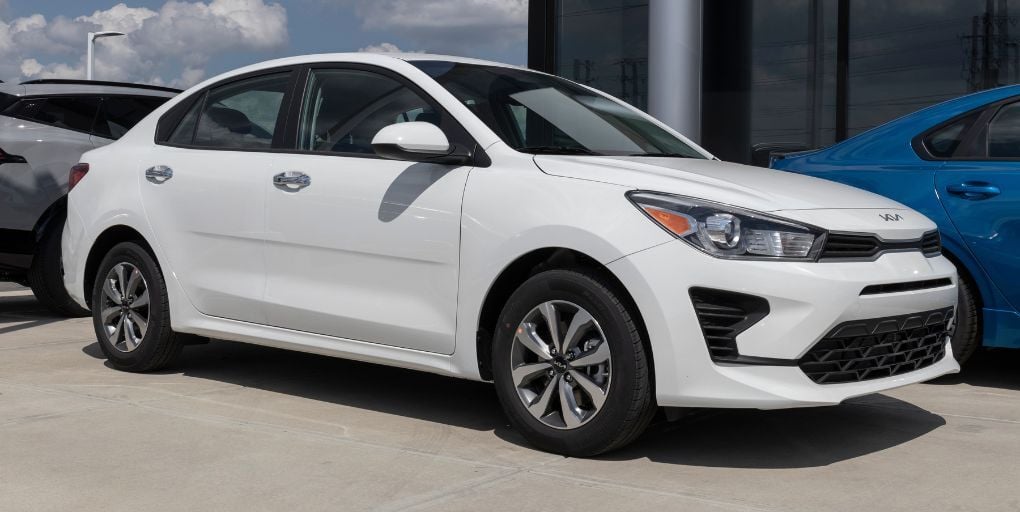
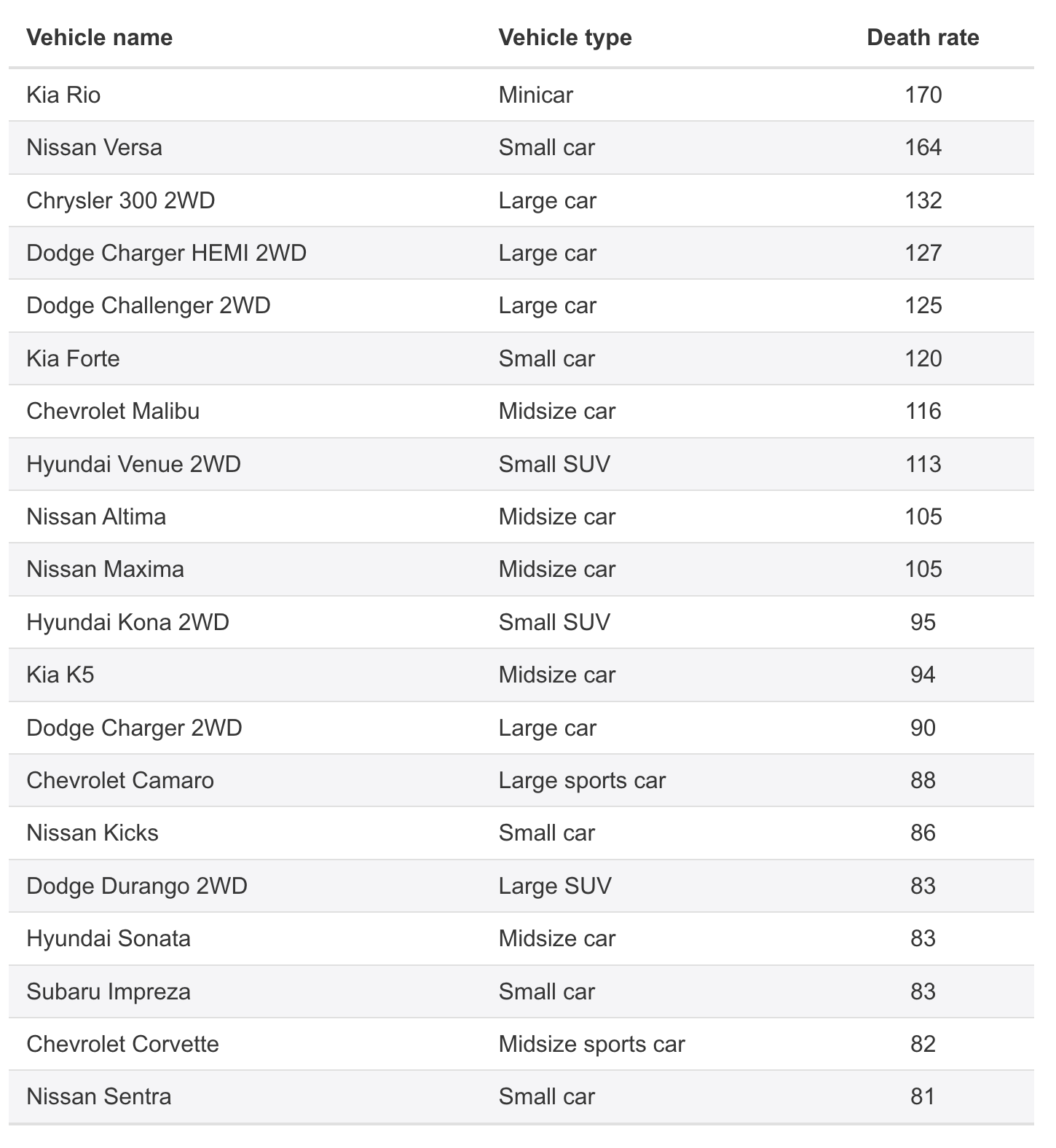
The Kia Rio, which ended production following the 2023 model-year, recorded the highest driver death rate in the IIHS study, at 170 deaths per million registered vehicle years. It was followed by the Nissan Versa at 164. Other vehicles near the top of the list included the Chrysler 300 two-wheel drive at 132, Dodge Charger HEMI two-wheel drive at 127, Dodge Challenger two-wheel drive at 125 and Kia Forte at 120.
The Chevrolet Malibu recorded 116 driver deaths per million registered vehicle years, followed by the Hyundai Venue two-wheel drive at 113. The Nissan Altima and Nissan Maxima were both at 105.
Performance cars also appeared prominently. The Chevrolet Camaro had a driver death rate of 88, while the Chevrolet Corvette recorded 82 deaths per million registered vehicle years.
IIHS President David Harkey said vehicle size remains an important factor because occupants of smaller vehicles are at a disadvantage when they collide with larger pickups and SUVs. For sports and muscle cars, IIHS said engine power and the way the vehicles are driven also play an important role.
Across all vehicle makes, models, sizes and classes, IIHS calculated an average driver death rate of 37 per million registered vehicle years.
Minicars were substantially higher, averaging 158. Small cars averaged 79 and midsize cars 67. Large cars averaged 104. Midsize and large sports cars averaged 73 and 75, respectively.
SUVs generally performed much better for their own drivers. Midsize SUVs averaged 24 driver deaths per million registered vehicle years, while large SUVs averaged 26 and very large SUVs 20. Large luxury SUVs had an average rate of just 10.
Eighteen of the 20 models with the lowest driver death rates were SUVs. Six vehicles recorded a driver death rate of zero in the IIHS analysis: the four-wheel-drive Audi Q7, BMW X7, Chevrolet Tahoe and Mercedes-Benz GLB-Class; the two-wheel-drive Mercedes-Benz GLE-Class; and the four-wheel-drive Toyota Tundra CrewMax.
However, protecting the people inside a vehicle is only part of the story.
For the second time, IIHS also calculated what it calls the “other-driver death rate,” measuring drivers killed in other vehicles involved in crashes with each model. Here the results highlighted the risk posed by some of the largest vehicles on the road.
Ten of the 20 vehicles with the highest other-driver death rates were large or very large pickups. The Ram 3500 crew cab long bed four-wheel drive topped the list at 204 deaths per million registered vehicle years. The Dodge Charger HEMI two-wheel drive was second at 161, followed by the regular two-wheel-drive Charger at 136 and Chevrolet Silverado 3500 crew cab four-wheel drive at 126.
Very large pickups as a class averaged 110 other-driver deaths per million registered vehicle years, more than double the overall average of 53.
Several vehicles showed up on both undesirable lists. The Chevrolet Camaro, Chevrolet Malibu and two-wheel-drive versions of the Dodge Charger and Charger HEMI were among models with both high driver death rates and high death rates for drivers of other vehicles.
IIHS cautions that these numbers should not be viewed as vehicle crash-test scores.
The death rates are based on actual driving experience and therefore reflect not only vehicle design, crashworthiness and crash-avoidance technology, but also differences in how vehicles are driven and who drives them. IIHS adjusts the figures for factors including driver age and gender, but not for variables such as miles driven or driving speed.
The latest analysis uses fatalities occurring from 2021 through 2024. It includes 2023-model vehicles as well as substantially identical models dating as far back as 2020 when doing so provided a larger and more reliable sample. Fatality information comes from the federal Fatality Analysis Reporting System, while vehicle registration data comes from Mobility Global.
The takeaway from IIHS is that vehicle size, power, crashworthiness and safety technology all matter — but they do not tell the entire story. Real-world safety is also heavily influenced by what happens after the driver gets behind the wheel.
IIHS: Highest rates of driver deaths
Deaths per million registered vehicle years, 2023 and equivalent earlier models, 2021-2024:
*Graphic source: IIHS.
To see which vehicles had the lowest death rates and additional analysis visit the Insurance Institute of Highway Safety website

.jpg?width=150&name=jerry-headshot.jpg%20(1).jpg)