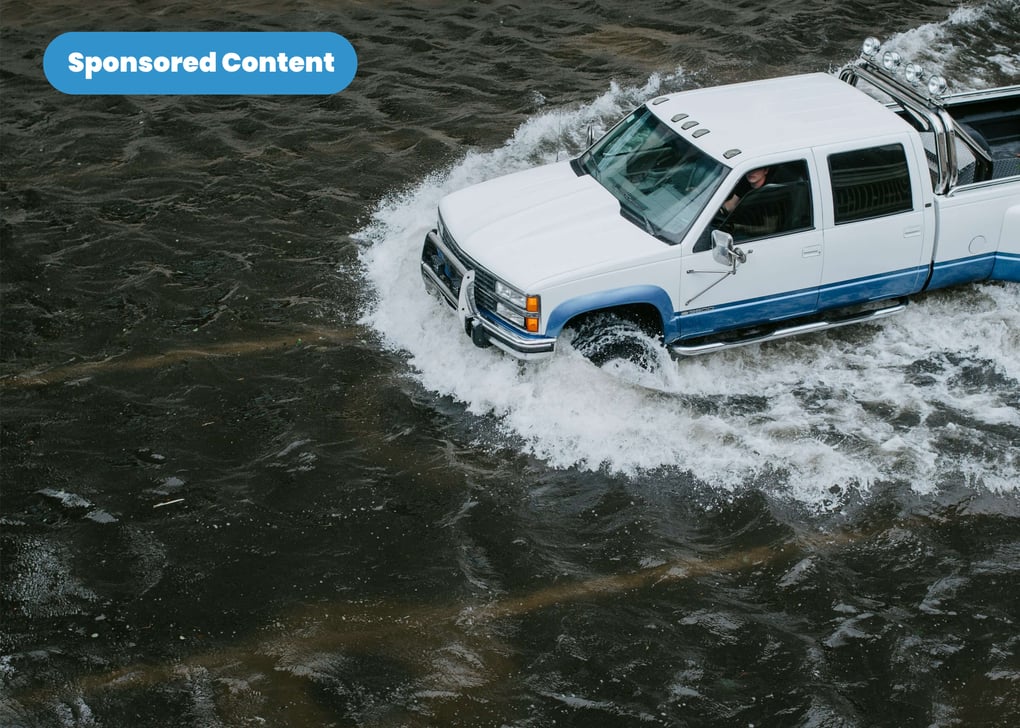


Damage has a home address. New A Better Bid numbers show nearly half of every flood car we sell comes from Florida, and almost half the hail cars roll in from Texas.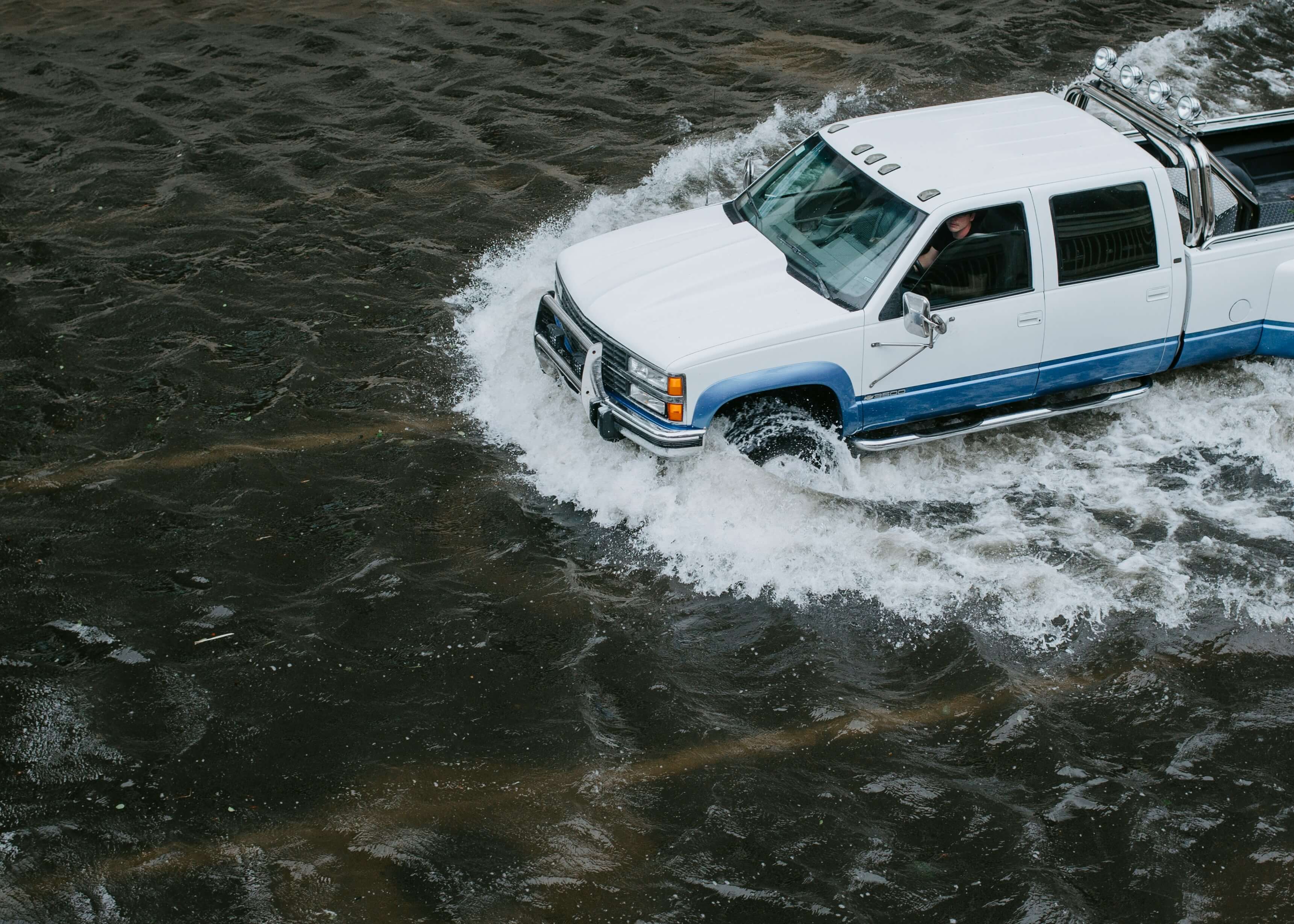
Florida Sends The Flood Cars
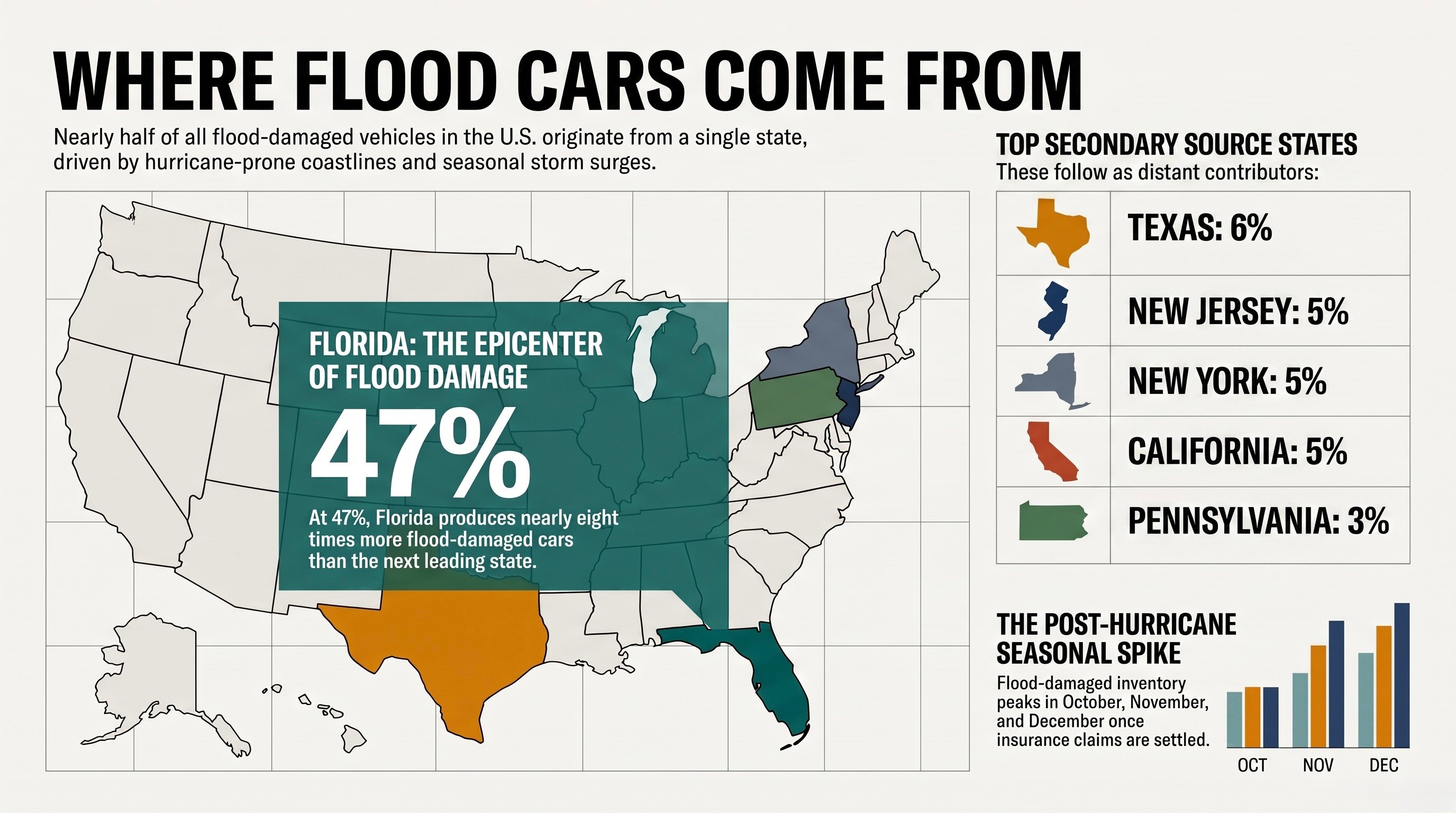
Across more than 30,000 of our own sales from the last five years, nearly half (47%) of every flood-damaged vehicle carried a Florida title. No other state comes close. Texas is a distant second at 6%, followed by New Jersey, New York, and California, each around 5%.
That's not a mystery, it's a coastline. Florida sits in the path of nearly every Atlantic hurricane season, sees regular storm surge, and floods in places that never used to flood. When water reaches a car's floor pan, insurers often write it off rather than gamble on corroded wiring and electronics. Those cars get sold, and they travel.
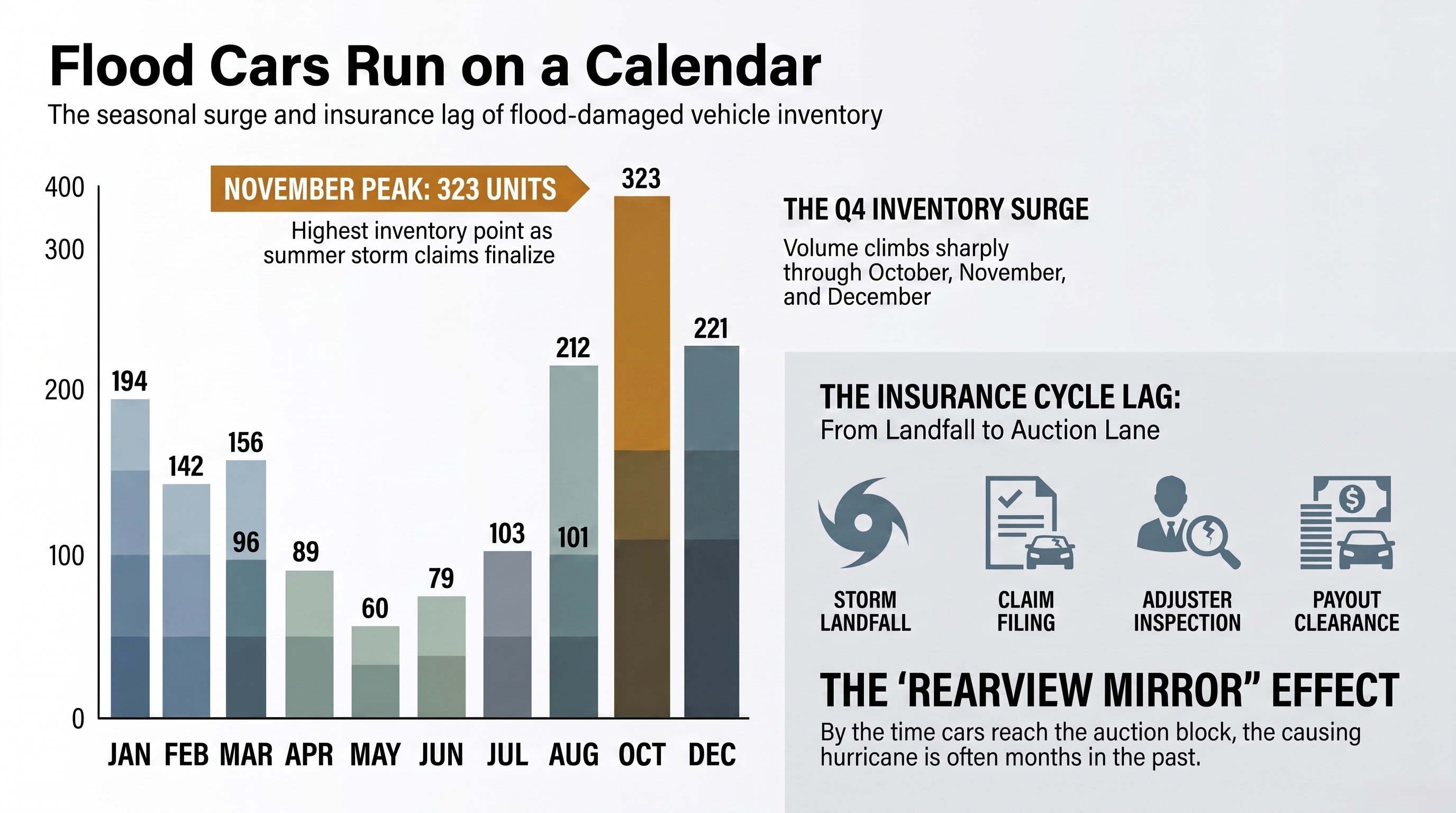
Flooding also has a calendar. Our flood-damaged lots spike hard in October, November, and December, right after peak hurricane season, and then taper off through spring. The cars don't reach the block the week the storm hits. They arrive a few months later, once the claims are settled.
Texas Owns The Hail
Hail damage tells the opposite geographic story. Texas accounts for 45% of every hail-damaged car we sold, followed by Colorado (7%), Oklahoma (5%), and then Kentucky, Minnesota, and Missouri.
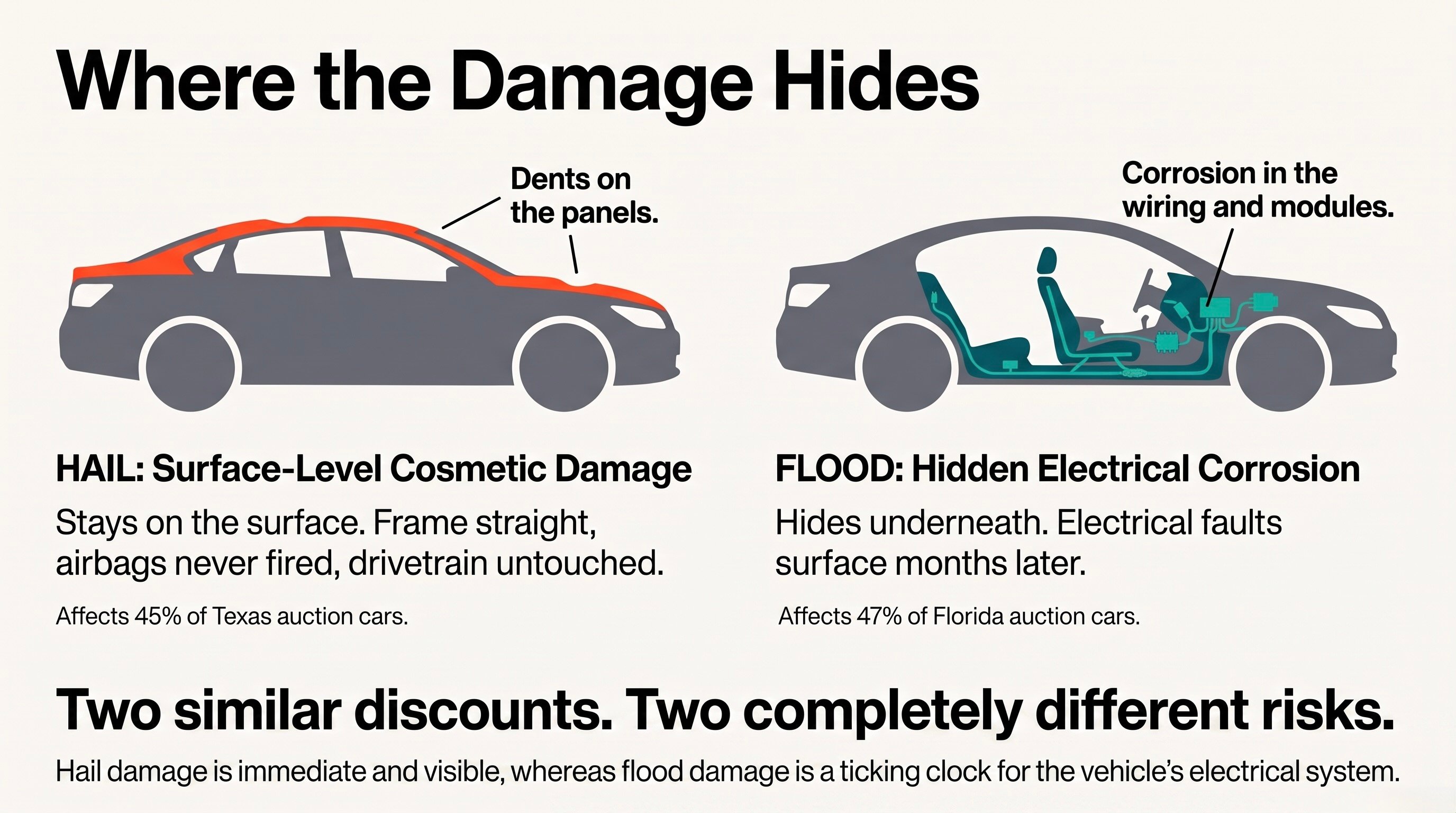
Look at a severe-weather map and the reason is obvious. Texas and the southern plains sit in the heart of hail country, where spring storms drop stones big enough to dimple a roof in seconds. Hail is also unusual among damage types: it's often purely cosmetic. The dents are on the panels, not in the frame, and the car underneath can be mechanically sound.
That combination, heavy volume plus surface-level damage, is why savvy buyers watch hail lots closely.
Flood Cars Run On A Calendar
Geography isn't the only pattern. Flood-damaged lots follow a clear season. In our data they climb sharply through October, November, and December, peaking in November, then fall away through spring and bottom out in early summer.
That lag is the insurance cycle at work. A storm makes landfall in late summer, the claim gets filed, the adjuster inspects, the payout clears, and only then does the car reach an auction lane. By the time a flood car crosses the block, the hurricane that soaked it is months in the rearview mirror and out of the news. Buyers shopping in late fall are, without realizing it, shopping the summer's storms.
Why Buyers Watch The Hail Lots
Here's the part that turns a weather map into a buying strategy. Hail is the rare kind of damage that stays on the surface. A storm can pepper a roof, hood, and trunk lid with dents in under a minute, and an insurer will total the car on cosmetics alone, because paintless dent repair across every panel costs more than the payout. The frame is straight. The airbags never fired. The engine never knew it happened.
Compare that to flood, which is the opposite. Water sits in the harness connectors, the seat rails, the modules under the carpet, and does its damage slowly, over months, long after the car looks and smells fine. A flood car can drive beautifully off the lot and start throwing electrical faults a season later.
Two cars, two similar discounts, two completely different risks. Knowing which state a car came from is the fastest way to guess which one you're looking at, before you ever open the door.
Most Cars Aren't Weather Cars At All
Step back and the weather stories are the minority. Flood accounts for about 6% of our lots, hail about 3%. The most common damage by far is an ordinary collision.
Across five years, the leading categories were:
-
Front-end damage — the single largest group, around 29% of everything
-
Minor dents and scratches
-
Rear-end damage
-
Side damage
-
Normal wear and mechanical issues
In other words, the typical car crossing our block isn't a hurricane refugee. It's a car that hit something, or got hit, in an intersection somewhere, and the insurer decided a repair cost more than the payout. That's the everyday engine of the auction market.
Why The Map Matters When You're Buying
Geography is free information, and most buyers ignore it. Knowing where a car spent its life tells you what to inspect first:
-
A Florida title on a flood-damaged car means look hard at wiring, connectors, seat rails, and the smell of the carpet. Water damage shows up months later, in electronics.
-
A Texas hail car usually means cosmetic panel damage. Check the roof and hood, then the glass, but the drivetrain is often untouched.
-
A northern car brings a different question entirely: road salt, and what it did to the undercarriage.
-
Every car deserves a VIN check, which ties the title, the odometer, and the damage history to that exact vehicle before you bid.
None of this is a reason to avoid the auction lane. It's the reason to walk into it informed. The damage on these cars isn't random. It follows the weather, the roads, and the insurance math, and every one of those forces leaves a trace you can look up before you bid.
Once you can read the map, the listings stop looking like a gamble and start looking like a market. You can tell which cars are cheap because they're broken, and which are cheap because a hailstorm rolled through Dallas on a Tuesday. That second kind is where the value lives, and it crosses our block every week. You can see what's running in A Better Bid current auctions and check the story behind any car before you place a bid.