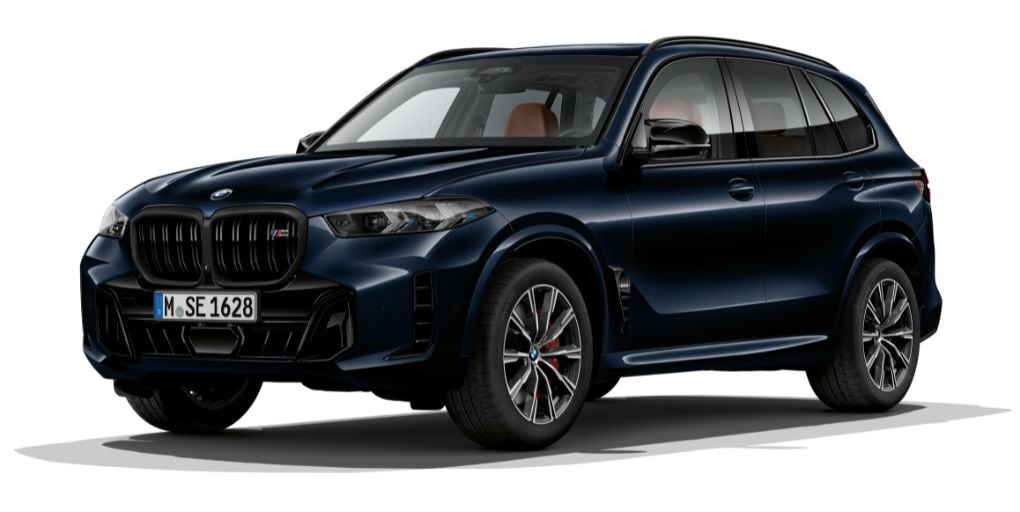

The Federal Bureau of Investigation is reportedly beginning to transition portions of its protective vehicle fleet away from Chevrolet Suburbans and toward armored BMW SUVs, a change that marks a notable shift in the bureau’s long-standing approach to executive and protective transportation.
An FBI spokesperson confirmed to MS NOW, formerly MSNBC, that the bureau has procured armored BMW X5 Protection VR6 sport utility vehicles as part of a routine fleet evaluation process. The spokesperson said the decision followed an internal review of operational needs, vehicle performance and cost considerations, and emphasized that the FBI regularly updates its fleet based on mission requirements and budgetary factors.
For decades, the Federal Bureau of Investigation has relied heavily on full-size Chevrolet Suburbans for protective details, surveillance operations and official travel. The large SUVs — typically heavily modified and armored — have been a common sight in federal motorcades and around senior government officials. The move to BMW vehicles represents a departure from that tradition, both in size and in brand.
According to reporting by Autoblog and other automotive industry publications, the BMW X5 Protection VR6 selected by the FBI is a factory-built armored vehicle designed to meet internationally recognized ballistic protection standards. BMW says the VR6 designation indicates resistance to handgun fire and certain high-powered rifle rounds, achieved through reinforced body structures, armored steel panels and ballistic glass integrated at the factory rather than added later by third-party upfitters.
The FBI has not released detailed specifications for the vehicles it is using, citing security sensitivities, nor has it disclosed how many BMWs were purchased or how broadly they will be deployed within the bureau. Officials also reportedly declined to release contract documents or line-item pricing.
Cost, however, has emerged as a central element of the public discussion surrounding the shift.
Industry estimates cited by Autoblog place the cost of a BMW X5 Protection VR6 in the range of roughly $200,000 to $300,000 per vehicle, depending on configuration and equipment. Multiple reports have cited pricing near the middle of that range — approximately $230,000 to $250,000 — for factory-armored X5s delivered to government customers.
By comparison, armored Chevrolet Suburbans produced for federal use are widely reported to cost significantly more. Conservative estimates place a government-spec armored Suburban at approximately $480,000 per vehicle, according to industry reporting. In some cases, heavily customized or specialized versions produced by GM’s defense division have been reported to cost substantially more, depending on armor level, communications equipment and mission-specific modifications.
The FBI has not publicly confirmed these figures, but a bureau spokesperson told MS NOW that the BMWs were selected in part because they were viewed as a cost-effective option that met the bureau’s security and operational requirements.
The change has prompted questions from lawmakers and government watchdog groups, some of whom have called for greater transparency around the procurement process. Critics have questioned whether domestic alternatives were fully considered and whether a European luxury brand is appropriate for use in federal protective missions.
Supporters of the move note that while BMW is a German-based automaker, the BMW X5 sold in the United States is assembled at the company’s large manufacturing facility in Spartanburg, South Carolina. That plant is BMW’s largest worldwide and employs thousands of U.S. workers, a fact cited by some analysts as mitigating concerns about foreign sourcing.
CBT News reports that others have pointed to operational considerations beyond cost. Full-size Suburbans have become strongly associated with federal law enforcement and executive protection, making them highly recognizable in many settings. The BMW X5, by contrast, blends more easily into civilian traffic, which some security experts say may be advantageous for lower-profile protective movements or surveillance-related travel.
General Motors, the parent company of Chevrolet, did not reportedly respond to requests for comment regarding the FBI’s decision. GM Defense continues to supply vehicles to the U.S. military and other government agencies, including armored and tactical platforms derived from Chevrolet truck architectures.
The FBI’s vehicle transition comes amid broader efforts by federal agencies to reassess fleet composition as costs rise and mission profiles evolve. Rising vehicle prices, longer service lives and increased security requirements have pushed agencies to look more closely at factory-armored solutions rather than heavily modified commercial vehicles.
For now, FBI officials say the move should be viewed as a practical procurement decision rather than a symbolic one. Whether the bureau ultimately expands the use of BMW vehicles across a wider range of roles — or limits them to specific protective assignments — remains unclear.
What is clear is that one of the most recognizable elements of federal law enforcement’s public image is quietly changing, reflecting a combination of budget pressures, security considerations and evolving approaches to government fleet management.
Photo: BMW.