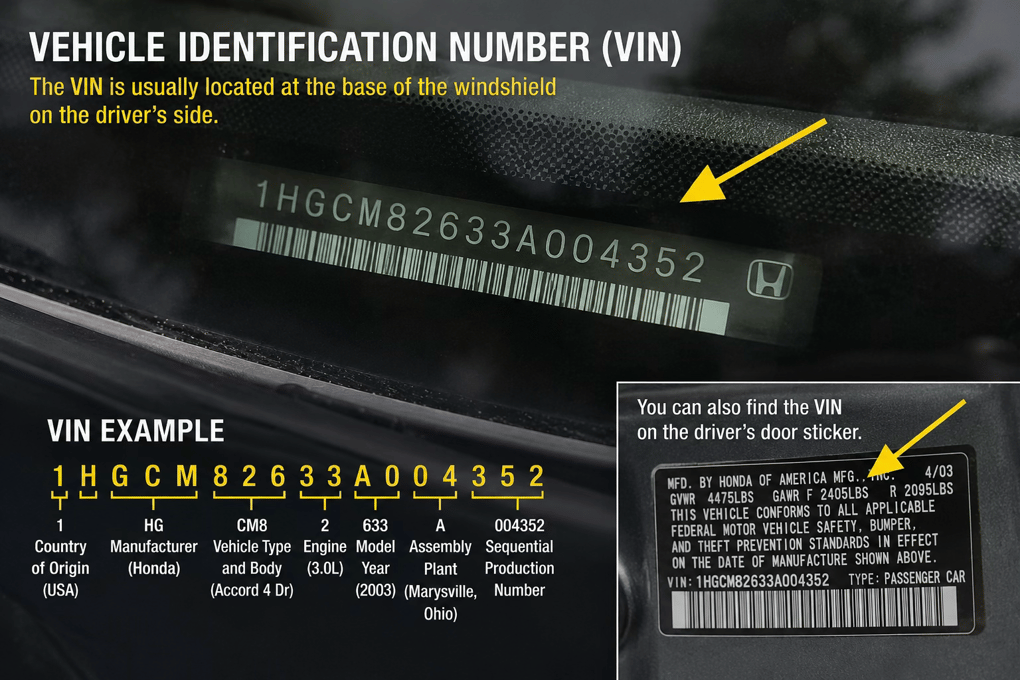

Your VIN may be the most important number you own, yet people have absolutely no idea where to find their VIN until somebody asks for it. Then the hunt begins.
They start digging through the glovebox, insurance card, owner's manual, registration, or windshield, hoping to stumble across those 17 mysterious characters that identify their vehicle.
The funny thing is that your Vehicle Identification Number—or VIN—is probably the most important piece of information attached to your car, truck, or SUV. It's much more than a serial number. Think of it as your vehicle's DNA. No two vehicles built since 1981 have the same VIN, and those 17 characters tell an amazing story.
Most people only think about their VIN after an accident or when renewing their registration. In reality, it's something every vehicle owner should know and keep handy.
Your VIN identifies exactly what your vehicle is. Not just the make and model. It identifies the year it was built, the manufacturer, the country where it was assembled, the engine, body style, restraint system, transmission, and even the plant where it rolled off the assembly line. Manufacturers, insurance companies, repair facilities, dealerships, law enforcement agencies, and state motor vehicle departments all rely on the VIN to make sure they're talking about the exact same vehicle.
That's important because two vehicles that look identical can have completely different engines, transmissions, option packages, and safety equipment. The VIN removes the guesswork.
One of the biggest reasons I encourage people to know their VIN is recalls.
When a manufacturer issues a recall, it almost never affects every vehicle they build. Instead, it affects a specific range of VINs. That's why you should periodically enter your VIN into the National Highway Traffic Safety Administration's recall website. It takes about thirty seconds and tells you whether your vehicle has any open safety recalls that haven't been repaired.
Your VIN also becomes critical when ordering replacement parts.
I've seen people order headlights, brake components, mirrors, and electronic modules based on the year and model of their vehicle, only to discover they received the wrong parts because their vehicle was built with a mid-year engineering change.
A parts department starts with the VIN because it's the most accurate way to identify exactly what belongs on your vehicle.
The VIN is equally important when you're shopping for a used vehicle.
A CARFAX or AutoCheck report is only as good as the VIN entered into it. That single number can reveal title history, previous ownership, accident reports, mileage records, service history in many cases, and whether the vehicle has ever been declared a total loss or issued a salvage title.
It's one of the first things I check when evaluating a used vehicle.
Insurance companies rely heavily on VINs, too.
That one number tells them exactly which safety equipment your vehicle has, which engine it uses, what replacement parts cost, and ultimately helps determine repair estimates and insurance premiums.
Even your smartphone benefits from knowing your VIN.
Many manufacturer apps allow you to add your vehicle simply by entering the VIN. Suddenly you have access to owner's manuals, maintenance schedules, recalls, software updates, warranty information, and connected services without ever searching for paperwork again.
And here's something many people don't realize.
Your VIN can help recover your vehicle if it's stolen. It's also how police departments verify ownership, how lenders identify collateral, and how salvage yards make sure they're dismantling the correct vehicle.
Now let's talk about where to find it.
The easiest place is usually at the base of the windshield on the driver's side, where it's visible from outside the vehicle. You'll also find it on the driver's door jamb, your registration, insurance card, title, and purchase paperwork.
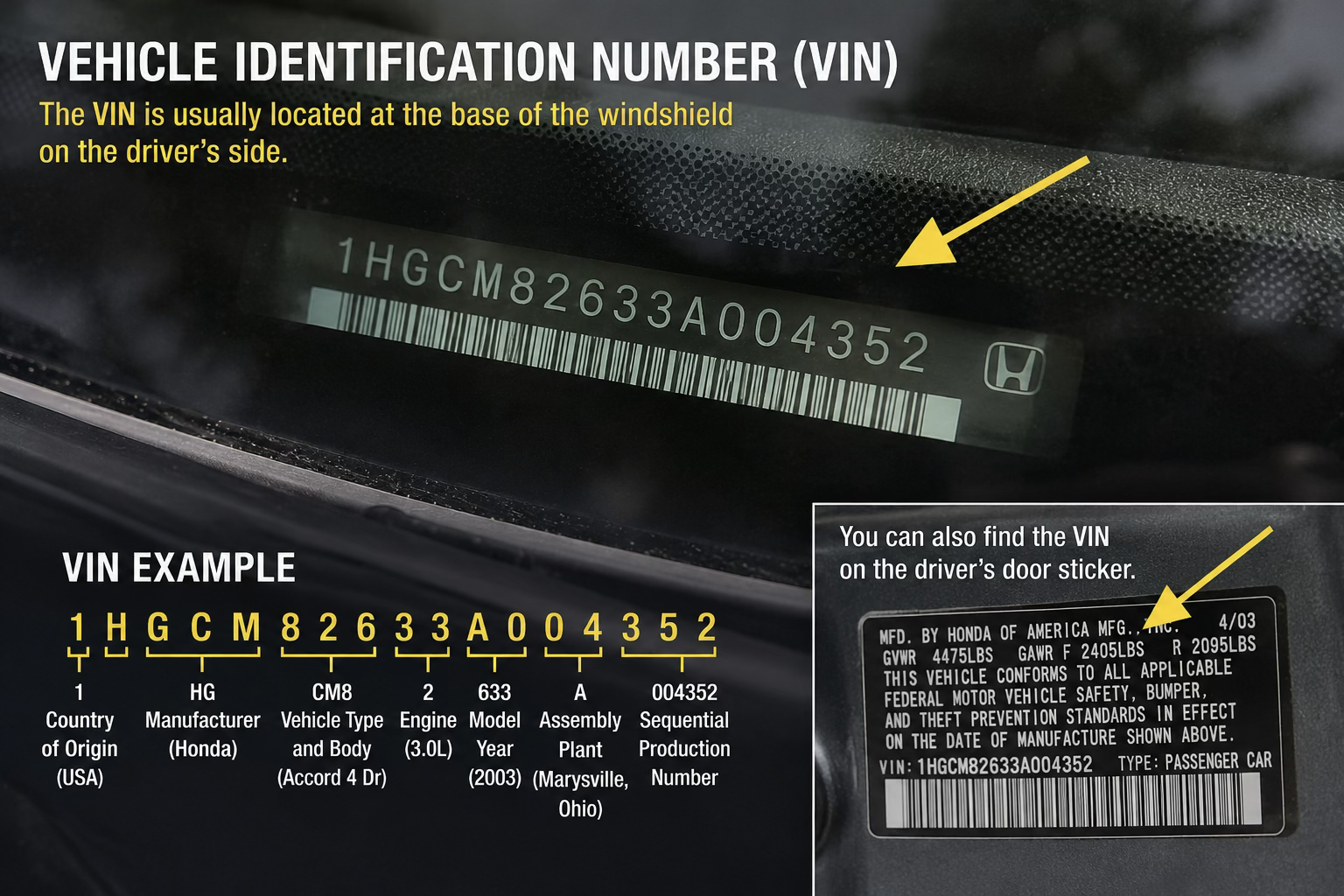 ChatGPT Plus/CarPro.
I recommend taking a clear photo of it with your phone. If your vehicle is ever stolen, involved in an accident, damaged by a natural disaster, or simply needs emergency repairs while you're traveling, you'll have it instantly instead of trying to remember whether the tenth character was an "S" or a "5."
One word of caution: Don't post your VIN on social media. While a VIN isn't as sensitive as your Social Security number, it can still be used by scammers to create fake vehicle listings, fraudulent history reports, or other schemes. Share it only with people or businesses who legitimately need it.
Finally, if you're buying a used vehicle, always make sure the VIN on the dashboard matches the VIN on the driver's door sticker, the title, and the paperwork. If they don't match, walk away until someone can explain exactly why. Mismatched VINs are a major red flag that could indicate paperwork errors, theft, or extensive reconstruction.
Here's the bottom line.
Your VIN is much more than a random string of letters and numbers. It's your vehicle's fingerprint, birth certificate, service record, and identity card all rolled into one.
You may only think about it once or twice a year, but when you really need it, those 17 characters become the most important number associated with your vehicle.
Photo: ChatGPT Plus/CarPro.
.jpg?width=150&name=jerry-headshot.jpg%20(1).jpg)