
Japan’s auto industry is warning of renewed semiconductor shortages stemming from a now escalating trade dispute between between the Netherlands and China over Dutch chipmaker Nexperia that is threatening global vehicle production. Nexperia makes chips used for vehicle basics like power windows and windshield wipers.
The crisis has left automakers scrambling to find chips and check with their suppliers. According to a report in Ford Authority, the Motor & Equipment Manufacturers Association (MEMA) says the auto industry could see significant impacts in two to four weeks. Already, this week Honda announced production slowdowns or suspensions at its plants in North America. Nissan and Mercedes-Benz are also sounding the alarm, but no announced production cuts yet. The shortage also threatens Ford and GM production.
As of last week, Automotive News says Toyota was analyzing the situation, and Mitsubishi Motors is closely monitoring developments and coordinating with suppliers. Subaru's factories were operating normally as of Oct. 23. Volkswagen, which uses Nexperia components in Europe, warned employees earlier this week that production stoppages may occur if the dispute continues.
The Dispute
Automotive News reports that the Japan Automobile Manufacturers Association said in an Oct. 23 statement that several of the country’s automakers have been notified that chip deliveries could no longer be guaranteed. The group said companies are working with suppliers to gauge the potential fallout.
“We have confirmed that a Dutch semiconductor manufacturer has notified parts manufacturers that they may no longer be able to guarantee deliveries,” JAMA Chairman Masanori Katayama said in the release. “We recognize this matter could have a serious impact on the global production operations of our member companies.”
The disruption stems from a dispute between the Netherlands and China over Nexperia, a semiconductor firm based in Nijmegen that packages and tests most of its chips in China. The Dutch government seized control of the company on Sept. 30, citing what it called “serious governance shortcomings” and concerns about the availability of chips critical to European industry. Beijing responded on Oct. 4 by imposing an export ban on Nexperia’s China operations, effectively freezing its shipments.
Nexperia was acquired in 2019 by Wingtech, a Chinese electronics manufacturer that also builds components for mobile phones and computers. The U.S. Bureau of Industry and Security last month extended export controls to companies at least 50 percent owned by entities on the U.S. “Entity List,” a blacklist that already included Wingtech. Those restrictions deepened tensions among Western and Chinese regulators and left automakers uncertain about supply continuity.
The Nexperia conflict has become another flashpoint in the broader technology trade battle between the West and China, where semiconductor access has become a strategic weapon. The Chinese Ministry of Commerce accused the United States of orchestrating the Dutch government’s takeover, describing it as an act of “economic containment.”
Industry leaders said the risk of cascading disruptions is significant. Even a temporary halt in chip supplies could delay vehicle deliveries worldwide and force factories to scale back production, just as global output had begun to stabilize after years of pandemic-related shortages.
Automotive suppliers in both Japan and Europe are now bracing for further turbulence as Nexperia’s legal and political limbo drags on. If the situation isn’t resolved soon, analysts warn that production slowdowns could return to an industry still recovering from the last semiconductor crisis.

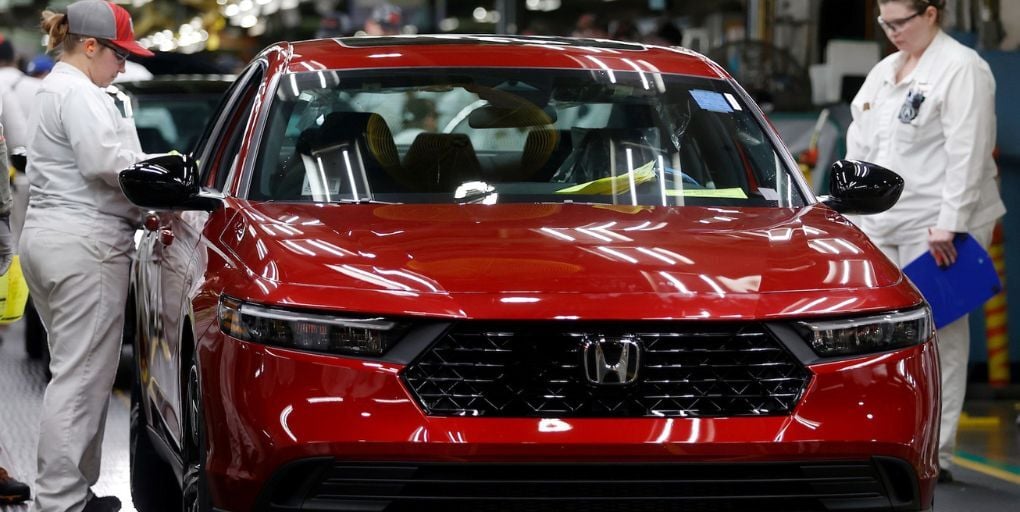
Photo Credit: Honda Anna Engine Plant. Honda.