
Nobody likes a wise guy. You know the type: They are always telling you “I told you so!” I’m not that kind of guy, I hope you know that by now, but in this case, I did indeed tell you-back in 2017. To be more precise, I warned the automakers to slow their roll dumping billions into electric cars when there was no evidence Americans wanted them.
So, when General Motors announced this week that it would take a $1.6 billion write-off tied to its electric vehicle investments, it wasn’t just a financial footnote. It was a huge red flag. GM said about $1.2 billion of that is a non-cash impairment on manufacturing capacity, and another $400 million covers canceled supplier contracts and other costs. This isn’t a minor accounting adjustment; it’s a course correction. Behind the numbers lies a story of ambition colliding with reality.
GM’S $1.6 BILLION DOLLAR LOSS ON EVS—IN PERSPECTIVE
If you had $1.6 billion, you could buy:
• Roughly 22,000 brand-new Chevrolet Silverado pickups—even if each one stickered at $70,000.
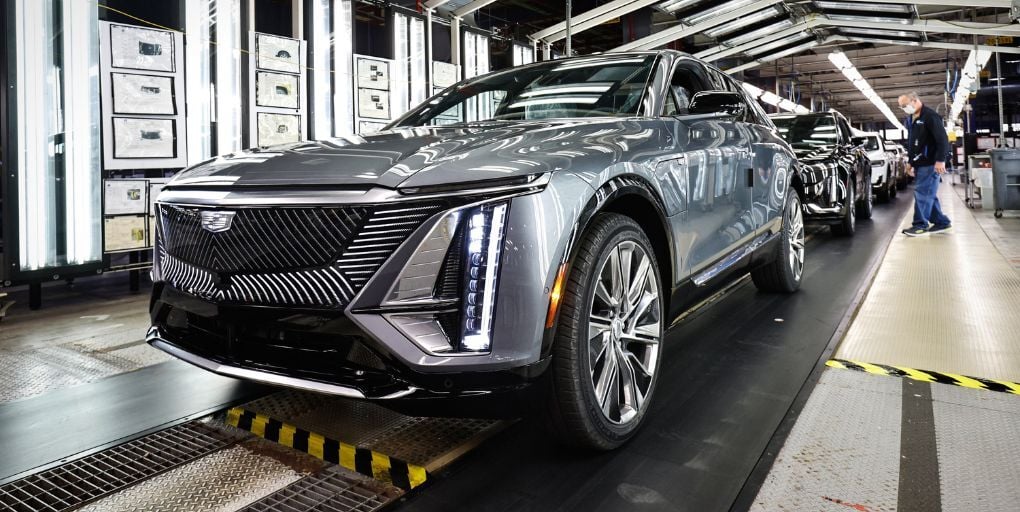
• About 30,000 Cadillac LYRIQs, GM’s own electric SUV that costs around $55,000.
• Every single Corvette built this year—and still have money left over for a private jet to park next to them.
• A small NFL franchise, like the Cincinnati Bengals or Jacksonville Jaguars were valued not long ago.
• Half of the Detroit Tigers, or most of an NHL team.
• Ten years of NASCAR sponsorship at a top-tier team.
• A brand-new assembly plant and still have several hundred million left for R&D.
• Around 40 million barrels of oil—which is more than the U.S. burns in two days.
• Or, as a reminder of scale, enough to buy a fleet of 40 Gulfstream G700 jets or an entire year’s production of Lucid Airs at current sales rates.
In the regulatory filing this week, GM went on to say:
“The reassessment of our EV capacity and manufacturing footprint, including our investments in our battery component manufacturing, is ongoing, and it is reasonably possible that we will recognize additional future material cash and non-cash charges that may adversely affect our results of operations and cash flows in the period in which they are recognized.”
(Translated: There are going to be more losses, we just don’t know how big a bloodbath it is yet.)
Stop The Insanity!
Way back in 2017, I wrote a column titled “Stop the Electric Car Insanity,” where I warned automakers to slow down and let the market decide how fast consumers wanted to transition to electric vehicles. I raised concerns about range anxiety, charging infrastructure, battery recycling, and whether there would be enough demand to absorb a flood of EVs. Fast-forward eight years, and many of those challenges haven’t just lingered—they’ve grown.
GM’s loss makes that clear. The company blamed policy shifts, including the removal of the $7,500 federal EV tax credit and changes to emissions rules. That shouldn’t surprise anyone. The EV market has been heavily propped up by government incentives since day one, and when those fade, so does a big part of the buying motivation.
GM insists it’s not abandoning electric vehicles entirely. Chevrolet, GMC, and Cadillac will continue with their current EV lineups, but the company is reviewing its factory footprint and investment priorities. Translation: GM is hedging its all-electric bet. The shame here is that I’ve said many times on the Car Pro Show that currently, GM was producing the very best EVs on the market.
I Warned Ford’s CEO As Well
This moment reminds me of what I told Ford CEO Jim Farley in my open letter last year. Ford had just admitted it was losing roughly $100,000 on every EV it sold. I said then—and it holds true now—that building a product the public isn’t asking for is not leadership. It’s gambling. I urged him to “dance with the one that brung you”—to remember that Ford’s profitability and brand loyalty were built on trucks, SUVs, and performance cars that people actually want. The same message now applies to GM.
What frustrates me most is how little the industry seems to have learned. Back when automakers were chasing Tesla’s shadow, I said they were sprinting into the future without checking the fuel gauge. Building dozens of EV models before the public truly demanded them was always going to create a glut. It’s basic economics: supply without demand equals losses, and the losses per vehicle were mind-boggling.
So Many Questions Still Unanswered
The same pain points remain. Charging stations are still too few and too unreliable in much of the country. Battery degradation and recycling are still big question marks. Depreciation is brutal—many EVs lose staggering amounts of value after the first year, which is why I tell listeners to LEASE, not purchase, EVs. And outside of early adopters, consumers are hesitant to pay a premium for a product that feels like it’s still in beta testing.
GM’s reversal shows that even the biggest names can get swept up in the wave of optimism that electric cars would take over faster than they have. Reality is different. Buyers still want trucks and SUVs with long range, fast refueling, and affordable price tags. GM’s move back toward hybrids and efficient gas models isn’t regression—it’s realism.
This isn’t the end of electric vehicles. It’s a reset. The industry is realizing that “all-electric by 2035” slogans make for good headlines but don’t always make business sense. Policy changes, consumer hesitation, and infrastructure gaps have turned what was supposed to be a straight road into a winding detour.
Will Automakers Learn From This?
For the auto industry, the lessons are clear: build capacity only when demand justifies it, don’t rely on endless subsidies, and remember that internal combustion and hybrid vehicles still have a long future ahead. The market—not regulators, not press releases—should set the pace. The sudden move toward hybrids by all automakers makes really good sense, I only wish they poured the billions of dollars into hybrids and plug-in hybrids instead of all-electric vehicles.
GM’s $1.6 billion loss is a reminder that even well-intentioned revolutions can get ahead of themselves. Electric vehicles are part of the future, but not the whole future. The goal should never be to push people into a product before they’re ready for it. It should be to make that product good enough—and affordable enough—that they want it on their own.
I’ve talked on air for a number of years about the future losses electric cars would cause. Not because of the cars themselves, but because automakers and our own government was shoving them down our throats. General Motors was the first to fess up to jumping the gun, but there are many more billions of dollars in red ink coming. Who knows the full impact? I certainly don’t, but over 10 billion would not be a surprise. Keep in mind, there have already been billions of dollars of losses written off each quarter over the past decade. Let that sink in.
In Conclusion
I’m not anti-electric, Hell, I leased one myself, and I’ve enjoyed most all of them I’ve reviewed. But I’ve always been anti-hype. Technology should move forward, but it has to be grounded in economics and consumer reality. GM’s accounting charge isn’t just a line on a balance sheet—it’s a warning light. And one that’s been flashing on my dashboard for nearly a decade.

.jpg?width=150&name=jerry-headshot.jpg%20(1).jpg)