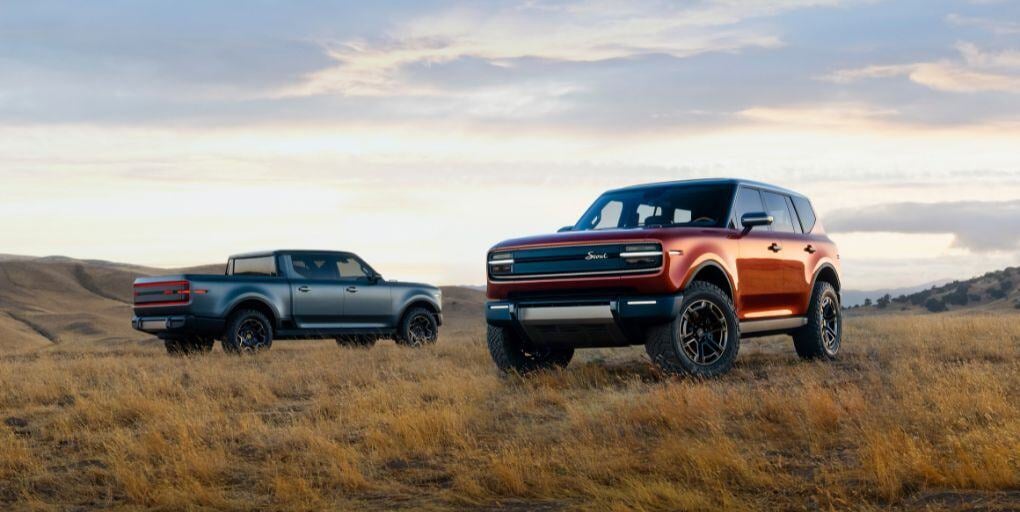

A group of Colorado Volkswagen, Audi and Porsche dealers has filed a lawsuit challenging the state’s approval of a dealer license for Scout Motors, arguing regulators misapplied state law when they authorized the electric-vehicle startup to sell directly to consumers.
According to Automotive News, the lawsuit, filed Jan. 20 in Denver District Court, alleges that the Colorado Department of Revenue’s Division of Motor Vehicles incorrectly concluded that Scout qualifies for statutory exceptions reserved for electric-vehicle-only manufacturers and failed to adequately consider Volkswagen Group’s financial and operational ties to the brand.
Ten Volkswagen, Audi and Porsche dealerships are listed as plaintiffs. The suit notes there are 28 Volkswagen, Audi and Porsche dealerships operating in Colorado and says additional dealers could join the action. The plaintiffs are represented by Richard Sox, managing partner at Bass Sox Mercer of Tallahassee.
At issue is a Dec. 16 vote by the state’s Motor Vehicle Dealer Board approving Scout’s application for a dealer license. The board voted 6-2 in favor of the application. The board includes three new-vehicle dealers, three used-vehicle dealers and three members of the public.
Automotive News reports that Scout argued in its application that it qualified for licensure under two exceptions in Colorado law: that it has no franchised dealers of the same line-make in the state and that it is a manufacturer of only electric vehicles, also with no franchised dealers of the same line-make.
The plaintiffs contend the Division of Motor Vehicles misinterpreted those provisions. They argue that Scout does not meet the “electric-vehicle-only” requirement because the brand plans to sell vehicles equipped with an extended-range electric energy system alongside fully electric versions of its Traveler SUV and Terra pickup.
According to the lawsuit, Scout’s extended-range system should be classified as a plug-in hybrid rather than a pure electric configuration. Extended-range electric vehicles use a gasoline engine solely as a generator to supply electricity to the drive motors once battery energy is depleted, while propulsion remains electric. Plug-in hybrids, by contrast, have a gasoline engine that is mechanically connected to the wheels and can drive the vehicle independently or in combination with an electric motor.
Scout has said its extended-range vehicles will be capable of driving exclusively on electric power and that the gasoline engine will power only a generator. The lawsuit counters that the presence of a gasoline engine disqualifies Scout from exemptions intended for EV-only manufacturers such as Rivian and Lucid.
The suit also focuses on Scout’s relationship with Volkswagen Group. Scout plans to source engines for its extended-range system, known as the Harvester, from Volkswagen Group’s manufacturing operations in Mexico. While Volkswagen Group and Scout have maintained that Scout is and will remain an independent company, the plaintiffs argue otherwise.
The lawsuit alleges Scout is effectively an alter ego of Volkswagen Group and its U.S. affiliates, including Volkswagen Group of America and Audi of America, and should therefore be treated as the same manufacturer for purposes of Colorado dealer law. Volkswagen, Audi, and Porsche are all licensed manufacturers in the state, and Colorado law prohibits a licensed manufacturer from owning, operating or controlling a dealership.
“Scout is so closely tied” to Volkswagen Group entities that regulators should have considered them a single manufacturer when evaluating Scout’s application, the lawsuit states.
According to Automotive News, unlike related legal actions filed in Florida and California, the Colorado case does not name Scout or Volkswagen Group as defendants. Instead, it seeks judicial review of agency action taken by the state.
Automotive News says a spokesperson for the Colorado Department of Revenue’s Specialized Business Group, which includes the Motor Vehicle Dealer Board, said the department does not comment on pending litigation.
The plaintiffs argue that allowing Scout to operate as a direct-to-consumer seller would harm existing Volkswagen, Audi and Porsche franchised dealers in Colorado. They also warn that the decision could set a precedent enabling legacy automakers such as General Motors or Ford to create separate entities to bypass franchise laws.
The lawsuit asks the court to declare the board’s Dec. 16 approval unlawful and to prevent the state from enforcing Scout’s dealer license.
Scout plans to begin vehicle production in late 2027 at a manufacturing plant currently under construction in South Carolina.
In October of 2024, Car Pro Show host Jerry Reynolds had a commentary column on this very subject that you can read here:
➡️ The New Scout VW Lawsuits and Commentary →
Source: Automotive News.

Photo Credit: Scout.