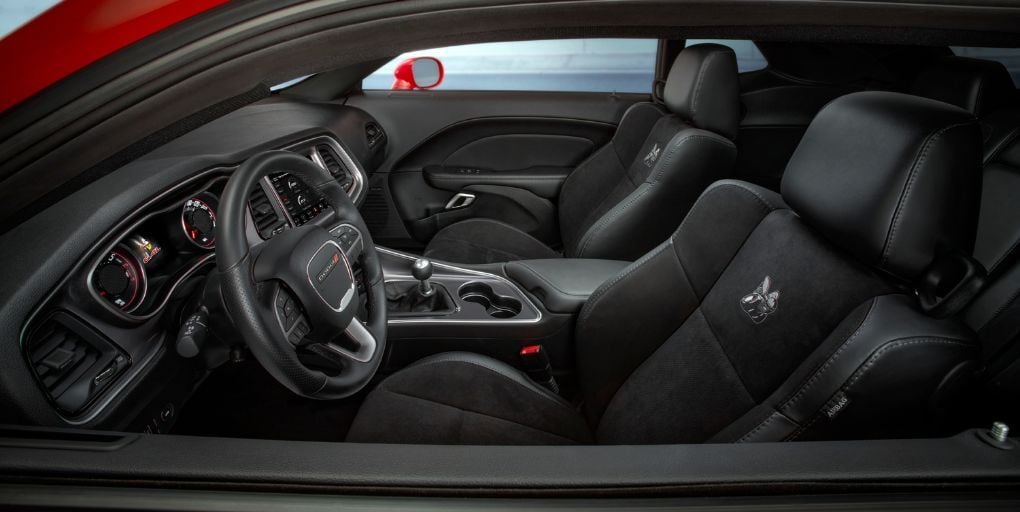

Drivers of certain Chrysler and Dodge muscle cars have filed a proposed class-action lawsuit in federal court in Texas alleging that defective power seat height adjusters can fail in rear-end crashes, potentially increasing the risk of injury.
According to a complaint filed in the U.S. District Court for the Northern District of Texas, plaintiffs claim that FCA US LLC, the American subsidiary of Stellantis, and seat supplier Lear Corporation designed and sold vehicles equipped with power seat height adjusters that contain a structurally weak bracket. The lawsuit was first reported by Law360 and has also been covered by Autoblog and other outlets.
The suit alleges that the bracket within the seat height adjustment mechanism can deform or collapse in certain rear-end collisions, including impacts at speeds as low as approximately 25 mph. When that occurs, the complaint contends, the seat can suddenly drop downward, altering the occupant’s seating position at the moment of impact. Plaintiffs argue that this unexpected downward movement may affect how a driver or passenger interacts with the seat belt and airbag systems, potentially increasing the likelihood or severity of injuries.
The vehicles identified in the complaint include model years 2011 through 2023 of the Dodge Charger, Chrysler 300, and Dodge Challenger, along with certain 2011–2017 Chrysler 200 and 2013–2016 Dodge Dart models. Collectively, the suit alleges that more than 2 million vehicles may be affected.
The plaintiffs, who are Texas residents, seek to represent a nationwide class of current and former owners and lessees of the vehicles at issue. The complaint asserts that the defendants knew or should have known about the alleged defect but failed to disclose it to consumers. Among the claims are allegations of fraudulent concealment and violations of consumer protection laws, including claims brought under federal racketeering statutes and the Texas Deceptive Trade Practices Act.
According to reporting by Law360, the complaint references testing conducted by engineers retained by the plaintiffs. That testing allegedly showed that the seat adjuster bracket could fail during simulated rear-end crash conditions. The lawsuit further claims that the risk of failure may increase when the seat is adjusted to a higher position, though those assertions have not been tested in court.
The plaintiffs are seeking damages, restitution, and other relief, including potential repairs or replacement of the seat components. They are also asking the court to certify the case as a class action, which would allow similarly situated owners nationwide to participate if certification is granted.
As of the latest reports, FCA US LLC has not publicly responded in detail to the allegations in court filings, and no recall related to the seat height adjusters has been announced. Likewise, there has been no public determination by the National Highway Traffic Safety Administration regarding the claims described in the lawsuit.
Because the case is in its early stages, the court has not yet ruled on class certification or on the merits of the claims. The defendants will have an opportunity to respond formally to the complaint, and the litigation process could include motions to dismiss, discovery and potentially expert testimony concerning the seat design and crash performance.
Seat integrity and occupant protection are closely scrutinized elements in vehicle safety design. Modern vehicles are engineered so that seats, seat belts and airbags work together as an integrated system. Any change in occupant position during a crash can alter how those systems function. However, whether the specific seat height adjuster design in these Chrysler and Dodge vehicles presents a safety defect as defined under federal law remains a question for the court and, potentially, federal regulators.
For now, the lawsuit represents an allegation rather than a finding. Owners of the affected models are not subject to a recall and have not been directed by the manufacturer or regulators to take any corrective action. As the case proceeds in federal court, further filings and potential responses from the automaker and supplier are expected to clarify the technical and legal issues at stake.