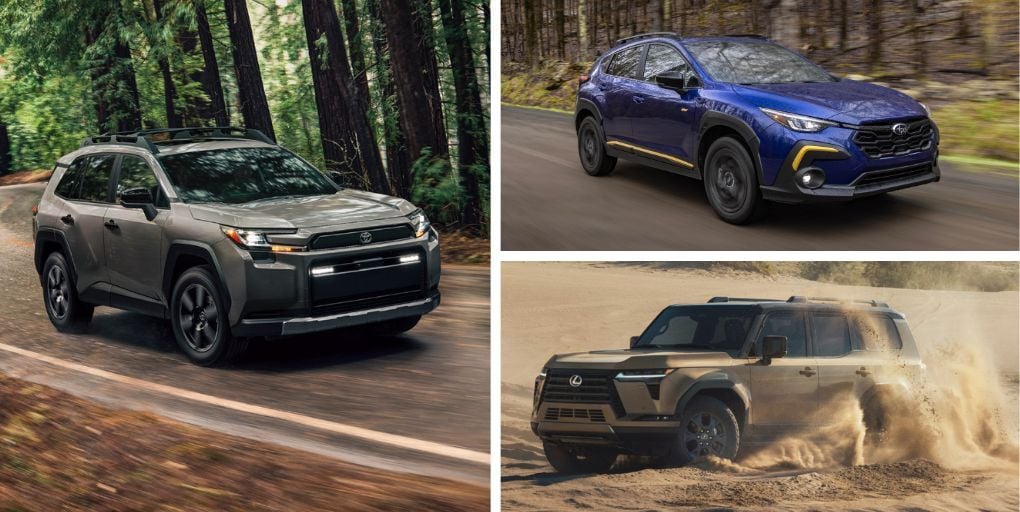

Look, if you listen to the Car Pro Show, you know I am not a fan of Consumer Reports when it comes to car info. However, I know many of you read their articles, so for you, here is their ranking of the most reliable cars for 2026. Bear in mind, these are nothing more than predictions of the future since the 2026’s hasn’t been out but a short time.
I have people question me occasionally about why I don’t like CR. I have not against them on anything but their car info. They make a big deal out of being subscription-funded and not reliant on advertising. The problem there is they have to sensationalize headlines to get and keep people interested. They love to do this in their print editions to get people to pick up and purchase their magazine.
I was outraged in 2012 when they came out advised people not to buy the 2012 Honda Civic. I bet that sold some magazines given the phenomenal track record of Civic. MoneyWatch ran a column literally titled “Honda Civic Fans Fight Back After Consumer Reports Beat Down.” The writer notes that readers and several professional outlets (Edmunds, Cars.com, USA Today) disagreed with CR’s verdict and continued to recommend the Civic for its fuel economy, safety record, and reliability, essentially arguing that CR’s road-test complaints were out of step with the broader press and owner experience. It was.
Then there are the allegations of them rigging the testing they do, again to grab headlines and sell subscriptions and magazines:
Critics have repeatedly accused Consumer Reports of shaping tests to produce dramatic failures, fueling persistent claims that some evaluations were effectively rigged. In the 2010 Toyota sudden-acceleration scare, the magazine was accused of using exaggerated braking procedures and altered pedal-force thresholds, then rerunning tests until it captured a failure it could use to justify a “Don’t Buy” warning. A similar pattern was alleged in the 1996 Isuzu Trooper rollover controversy, where CR reportedly used steering maneuvers outside its own published protocols, dialed in more aggressive inputs than it used on competitors, and then highlighted the single two-wheel event as proof of instability—allegations strong enough that Isuzu sued and argued the test had been set up to fail.
The same themes surfaced in the long-running Suzuki Samurai dispute, with Suzuki charging that CR changed its lane-change procedure mid-test, applied unusually extreme steering inputs, and failed to document similar results on rival vehicles—again suggesting the outcome was predetermined. More recently, Jeep accused CR of creating an avoidance test for the Wrangler JL that no other organization uses, one that triggered wheel lift through nonstandard steering-robot programming and ignored how the vehicle’s stability systems are designed to react.
Taken together, these cases form a pattern critics, including yours truly, point to when they argue that Consumer Reports’ proprietary methods sometimes appear less like neutral testing and more like engineering scenarios tailored to produce headline-friendly failures.
Bear in mind, too, Consumer Report’s reliability study is not based on actual repairs or warranty data from the manufacturers, so it’s just the owner’s opinion. If someone can’t get their Bluetooth to sync with their car, they slam it and an otherwise great car doesn’t make the list? A broken cupholder counts the same as an engine that goes bad? According to their own website, they gathered information from “model years 2000 to 2025 and early 2026.” REALLY? What has any car built 25 years ago have to do with reliability today?
Is CR evil? No, I don’t think so. Is their testing truly subjective? No, I don’t think that is true either. They have to make their studies and headlines engaging and controversial, THAT is what pays the bills and if that means slamming a great car, I think they will do that. So, as I’ve said on the air many times: I’m sure Consumer Report’s gives good information on toasters and refrigerators, but when it comes to cars, there are much better places to get car advice.
For those who want to believe: Consumer Reports recently released its 2026 Automotive Brand Report Card. The detailed snapshot of vehicle quality and long-term reliability arrives at a time when new-car prices remain historically high. CR says its annual analysis, drawn from the nonprofit organization’s extensive vehicle testing program and large-scale owner surveys, is widely used by consumers to compare brands before making a purchase.
The report uses data from approximately 380,000 vehicles covering model years 2000 through 2025, along with several early 2026 models, according to Consumer Reports. Findings combine results from its own road tests with owner experiences and reliability histories, producing a brand-by-brand score intended to give buyers a clear sense of which automakers consistently deliver dependable vehicles.
Overall, CR says its data shows hybrids and EVs remain the most reliable vehicles in the marketplace since they show strong long-term reliability and fewer repair issues than many internal combustion-only models. As far as brands go, Toyota tops the list of rankings, followed by Subaru and Lexus. To learn more and see the full brand rankings list click here.

Photo Credit: Toyota, Subaru, Lexus.
.jpg?width=150&name=jerry-headshot.jpg%20(1).jpg)