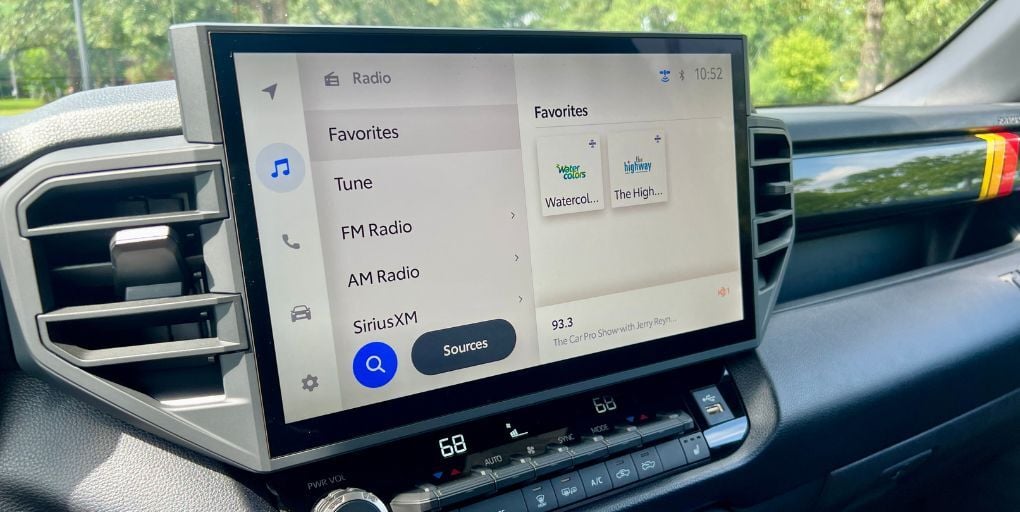

We brought you this story well over two years ago, Help Save AM Radio In Your Car, and it would seem like the wheels of Congress indeed turn slowly. However, this issue has not died and appears to be closer to passage.
More than two-thirds of the U.S. House of Representatives have now signed on to co-sponsor a bill seeking to block automakers from removing AM radios from new vehicles, a move supporters say is essential for public safety and emergency communications.
The legislation, called the AM Radio for Every Vehicle Act, would require automakers to include AM radio as standard equipment in all new vehicles, including electric models, and mandate that access to it be provided free to consumers.
As of mid-September, the measure had attracted 296 co-sponsors in the House, easily surpassing the two-thirds threshold, with members from both parties lining up behind it. In the Senate, a companion bill has secured 61 co-sponsors, also demonstrating bipartisan support and giving the proposal strong momentum in both chambers.
The House Energy and Commerce Committee advanced the bill this week on a 50-1 vote after adopting an amendment that shortens the measure’s sunset period from 10 years to eight. That means the requirement would expire unless renewed by Congress after that time. Rep. Gus Bilirakis, R-Fla., and Rep. Frank Pallone, D-N.J., who are leading the effort, said the change was needed to help ensure passage. Bilirakis told colleagues that eight years is “better than zero,” while Pallone emphasized that in rural and underserved areas, AM remains the most reliable way to broadcast alerts during emergencies, when cell towers and internet connections can fail.
Industry groups have lined up solidly behind the proposal. The National Association of Broadcasters praised the committee’s action, calling AM radio essential to public safety and arguing that every American should have access to it in their vehicle. Religious broadcasters and community organizations also support the bill, citing AM’s role in providing vital information in areas where other media options are limited. Advocates stress that more than 80 million people in the U.S. listen to AM each month and that the band continues to carry local programming, ethnic language stations, farm reports and sports broadcasts that reach audiences other platforms often overlook.
Automakers, meanwhile, have resisted the mandate. Companies including BMW, Mazda, Volkswagen, Tesla and Ford have dropped AM radios from certain electric or hybrid models, citing interference from high-voltage components that can distort signals. Engineers argue that redesigning vehicles to shield AM reception from this interference is costly and unnecessary at a time when other technologies, including FM, satellite radio and digital streaming, provide alternatives. Automakers also say that with consumers relying increasingly on smartphones for entertainment and navigation, AM may not justify its expense in future product planning.
Supporters of the bill counter that alternatives are not enough in a national emergency. Federal officials have long relied on AM stations as the backbone of the Emergency Alert System, pointing out that AM signals can travel hundreds of miles and remain accessible even during widespread power outages. Advocates say that eliminating AM from dashboards would put millions of drivers at risk of missing critical warnings.
The legislation attempts to strike a balance by instructing the Department of Transportation, in consultation with the Federal Communications Commission, to develop rules for compliance and to revisit the technological challenges on a regular basis. The measure would establish a phased-in schedule, requiring larger manufacturers to comply beginning with the 2028 model year, with smaller automakers following in subsequent years. Companies that fail to comply could face penalties, and federal agencies would be directed to report on the law’s impact at intervals.
The push to preserve AM radio has also become a symbolic debate over technology, tradition, and safety. Lawmakers say the issue resonates with constituents who may not listen to AM daily but want it available when disaster strikes. Rural representatives have been especially vocal, pointing out that their districts rely heavily on AM signals that cut through terrain where cell service is unreliable. Urban lawmakers, meanwhile, note that AM carries community and foreign-language programming that keeps diverse populations connected.
With strong backing in both chambers, the measure appears well-positioned for passage. Supporters are pushing for a House floor vote soon, while the Senate is also preparing to act on its version. Lawmakers said they want to move quickly, particularly with the approach of budget deadlines that could otherwise slow consideration.
For now, the bill’s momentum underscores the enduring influence of AM radio on Capitol Hill, even in an era dominated by digital streaming and satellite options. Legislators backing the measure say the old technology remains indispensable when it comes to reaching the public during a crisis, and they are determined to keep it in America’s cars and trucks for years to come.
.jpg?width=150&name=jerry-headshot.jpg%20(1).jpg)