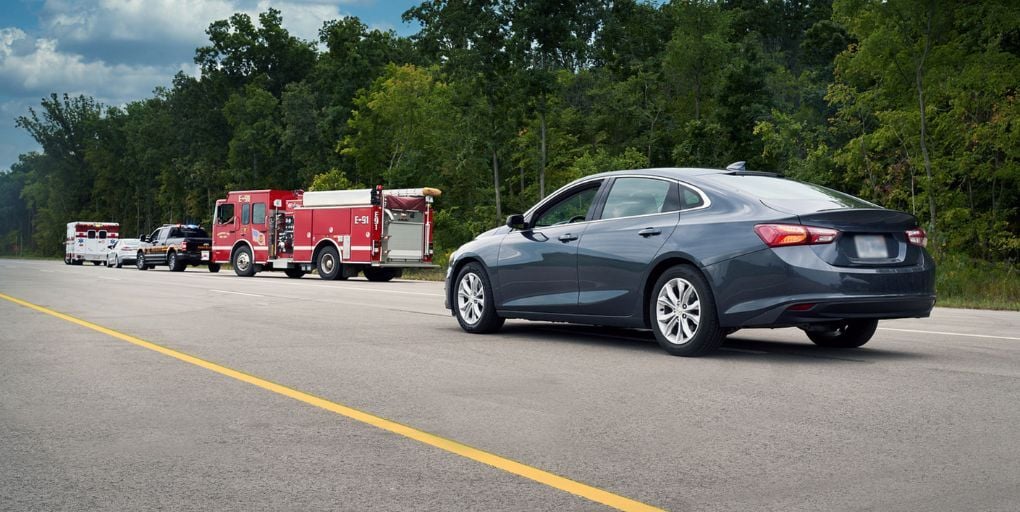

“Slow Down, Move Over" laws are a topic Car Pro Show host Jerry Reynolds is very passionate about. These laws are designed to protect first responders and others like tow truck operators who are helping motorists on the roadside. It's a subject that's very personal to Reynolds - and not just because has was once a police officer himself.
"I wrote about a police officer friend of mine who was killed while on the side of the freeway near my home, " said Car Pro Show host Jerry Reynolds. "As he reached for his ticket book from his motorcycle, he was struck by a van and killed."
You can read his story about Garland Police Officer Ronnie Lerma here →
"Besides saving lives, possibly including your own, moving over and/or slowing down, it is the law," said Reynolds. "I am amazed more people do not realize this, but the fact is, all 50 states have a law that says you must move away from the emergency vehicle, or slow way down."
Unfortunately, a new survey from the AAA Foundation for Traffic Safety (FTS) reveals a dangerous gap between driver awareness of Slow Down, Move Over Laws and their actual roadside behavior.
While more than 90% of drivers reported moving over and/or slowing down the last time they passed a disabled vehicle, tow truck, or police car on the shoulder, previous AAA FTS research found that only 64% of vehicles subject to Slow Down, Move Over laws were observed changing lanes and/or reducing speed; 36% did neither.
Recent roadside fatalities show the deadly consequences when drivers fail to slow down, move over, and stay alert. From 2019 to 2023, AAA says more than 2,100 people were struck and killed while stranded or working on the roadside. In 2025, AAA says it responded to more than 30 million roadside events near active traffic, and 15 service providers were killed in Slow Down, Move Over-related incidents. The danger is compounded by risky driving behaviors: six of those cases involved hit-and-run drivers, and five involved impaired drivers.
“Every roadside stop is a danger zone,” said Gene Boehm, President and CEO of AAA. “The simple decision to slow down and move over saves lives. We all have a responsibility to keep Roadside Heroes safe as they rescue people.”
Additional Survey Findings
- Support is high. When Slow Down, Move Over laws were explained, 90% of drivers supported them, and only 2% opposed them.
- Awareness gaps remain. Only 66% of drivers believed their state law required special action near a stopped police car.
“Many drivers know slowing down or moving over is the right thing to do,” said Dr. David Yang, President and Executive Director of the AAA Foundation for Traffic Safety. “But awareness is not enough. When drivers encounter a vehicle stopped along the roadside, they need to respond right away — because failing to slow down or move over can turn a standard stop into a preventable tragedy.”
Closing the Gap
AAA says the study's findings point to the need for public education across multiple channels. Drivers were most likely to say they would learn about new traffic laws from road signs, but many recalled hearing about them from other sources. Researchers say the data also suggests that drivers who aren't familiar with Slow Down, Move Over laws may respond to different outreach methods, which reinforces the need for awareness campaigns, driver education, enforcement messaging, and community outreach.
What Drivers Should Do
AAA says it urges drivers to slow down early, move over when safe, and pass with extra caution whenever they approach flashing lights, hazard lights, or any stopped vehicle on the roadside. Additional recommendations include:
- Stay focused and drive sober. Keep your phone out of reach, watch the road ahead, and never drive impaired or drowsy.
- Slow down early. Ease off the accelerator as soon as you see flashing lights, hazard lights, or a stopped vehicle, and be prepared to pass by with caution.
- Move over when it is safe. On multi-lane roads, change lanes to give emergency vehicles, tow trucks, utility vehicles, service vehicles, and disabled vehicles more room.
- If you cannot move over, slow down and pass with caution. Reduce your speed to a safe, reasonable pace and proceed carefully unless directed otherwise by emergency personnel. Most states recommend slowing to a speed that is 10 to 20 mph less than the posted speed limit.
“Safe roadside response begins before drivers reach the scene,” said Dr. William Van Tassel, AAA Senior Driver Training Manager. “Drivers should look ahead, move over when safe, slow down when they cannot, and pass carefully. Next time, it could be them stopped on the roadside.”
A total of 5,887 drivers completed the survey in September and October 2025.
Check out each state’s Slow Down, Move Over law here.