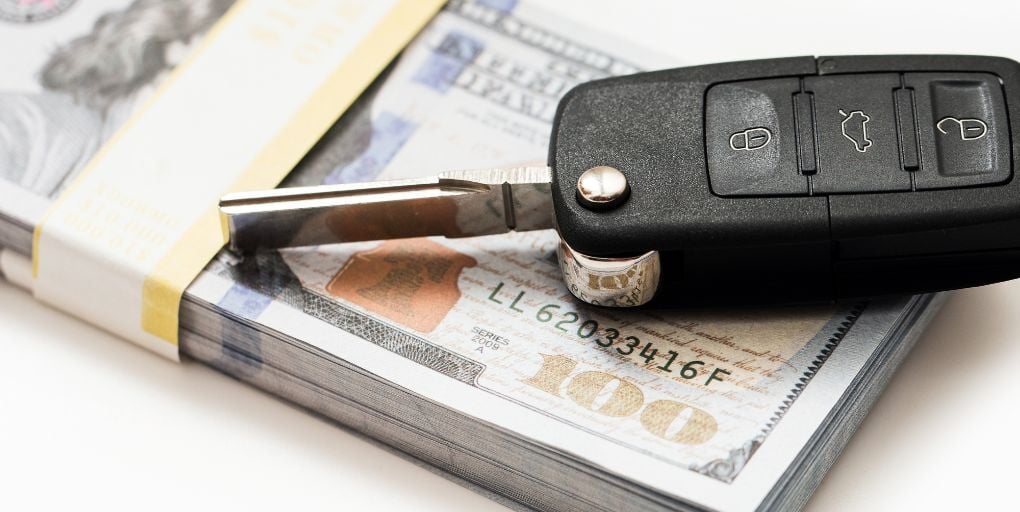

The number of Americans signing up for car loans of $1,000 a month or more has skyrocketed in the past decade, and it shows no signs of slowing down. What used to be an unusual outlier is now becoming common, with nearly one in six new-car buyers agreeing to that steep of a monthly payment.
According to Experian data reported by Automotive News, about 17 percent of new-car buyers from January through July this year signed up for payments of $1,000 or higher. That’s a huge leap from just 2.4 percent in 2015. The trend has grown steadily since 2021, when tight inventories pushed prices higher and loan amounts followed. Even after vehicle supply recovered in 2023, the share of buyers in this category kept climbing.
The vehicles tied to those big payments are mostly pickups and SUVs. More than half—53 percent—of buyers taking on $1,000-plus monthly payments this year drove away in SUVs, while another 37 percent bought pickups. One model in particular stands out: the Ford F-150. Roughly 5 percent of all new buyers paying at least $1,000 a month chose that truck.
Dealers say the payment conversation can go one of two ways. If customers have been following pricing trends, they expect the larger numbers. If not, the sticker shock can be real. Automotive News quotes one automotive general sales manager as saying: “There are some that are very shocked by the payment,” said Cody Anderson, general sales manager at Freedom Ford in Greenville, Texas. “It is not the easiest, just because their payment thought process is five years ago compared to now.”
Experian data shows how quickly things escalated. In 2021, 6.7 percent of buyers agreed to $1,000-plus loans. By 2022, it was 15.5 percent. In 2023, the number edged higher to 16.3 percent, and this year it is holding at 16.6 percent.
The average new-vehicle loan in the second quarter of 2025 financed $41,983 at a 6.8 percent interest rate. That compares to just 3.9 percent in 2015, when the average term length was about 59.5 months. Today, borrowers stretch loans to nearly 68.5 months on average to make payments possible.
Credit profiles have also slipped slightly. In 2015, the average buyer with a $1,000 or higher monthly loan had a credit score of 751. This year, the average is 747. That means higher payments are not just tied to affluent buyers with spotless credit—they are increasingly spread across the broader market.
Analysts say the surge in $1,000-plus loans is a symptom of an affordability crisis in the auto industry. Vehicle prices have climbed to record highs in recent years, while elevated interest rates make every loan more expensive. Even for those with good credit, the combination pushes many deals over the four-figure monthly mark.
The Federal Reserve made its first move to provide some relief in September, cutting its benchmark rate by a quarter of a point. Officials signaled the possibility of another half-point reduction by year’s end, either in two smaller steps or a single larger cut. But finance experts caution the changes won’t make a meaningful dent in auto loan rates in the short term.
Meanwhile, another factor looms over the affordability picture: tariffs. While the industry hasn’t yet seen a sharp price impact, analysts warn tariffs could cost automakers $188 billion over the next three years if they remain in place. Dealers and lenders say any added pressure on vehicle pricing will only push more buyers into the $1,000-plus payment category.
For salespeople, the focus now is on setting realistic expectations early. According to Automotive News, Anderson said the best approach is to be upfront about what payments are likely to look like before a customer locks in on a vehicle. “If you don’t make them aware of it up front and you don’t ask enough questions,” he said, “then a customer might get sticker shock when they find out the payment will be double what they were expecting.”
What was once a rare conversation is now an everyday reality at dealerships across the country. With nearly one in six buyers committing to a four-figure monthly car payment, the trend reflects not just customer choice but the financial pressures reshaping the car market itself.
.jpg?width=150&name=jerry-headshot.jpg%20(1).jpg)