
Forget politics – Repubs against the ‘Crats, women opposed to “insensitive” men, even dogs versus cats.
I don’t care what any of them stand for as long as I get my second round of “free” beer, er, economic-stimulus money.
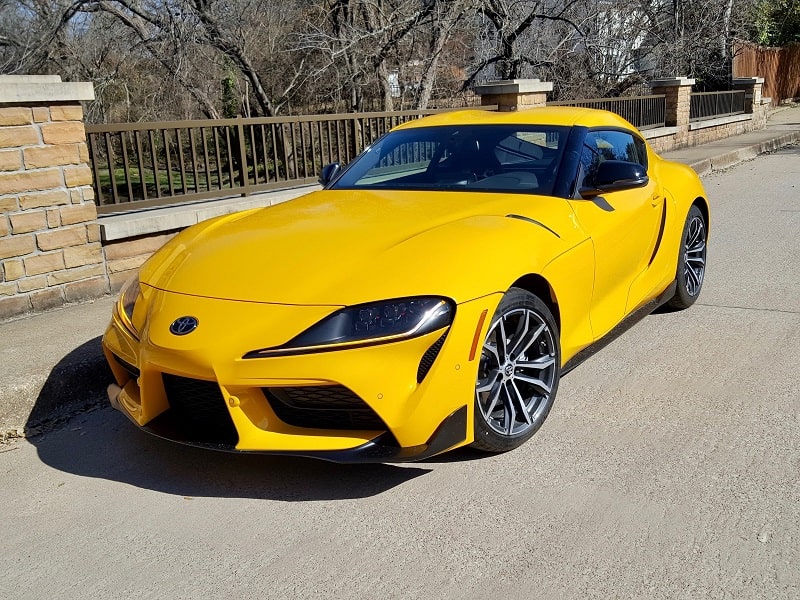
But if you want to see some serious storm-the-palace polarization, ask people what they think of the atomic yellow 2021 Toyota Supra GR I had last week.
Deciding between a new vs. used Supra? We've reviewed it several times since 2020. Here's a list of every Supra we've reviewed.
Everyone over 50 expressed deep reservations on several fronts about the Supra – a two-seat sports car built in collaboration, weirdly, with BMW.
Those younger than 50, though, gave the car enthusiastic “I love that car” reviews by a 5-1 margin over us geezers.
“Better looking than my girlfriend,” one early-20-something noted in what I presume was an example of the insensitive men deal.
As you may recall, the Supra arrived in the U.S. in 1979 as the timid Celica Supra, evolving into a fire-breathing, turbocharged pavement-pounder – think Fast and Furious – in the mid-1990s.
The clumsy-looking sedan faded away in the U.S. in the late ‘90s, leaving a fair number of broken-hearted fans.
Though BMW and Toyota seem to be strange partners – and are – the Supra is an interesting example of the increasing number of automakers that split development costs on low-volume vehicles now.
Toyota probably got the best deal when it ended up with BMW’s excellent four- and six-cylinder engines, as well as much of the platform and suspension that will also underpin the new BMW Z4.
Oddly, from what I can tell, the new Supra somehow emerged as the better-performing of the two vehicles – though its birth appears to have been a bit rough.
Credit: Toyota
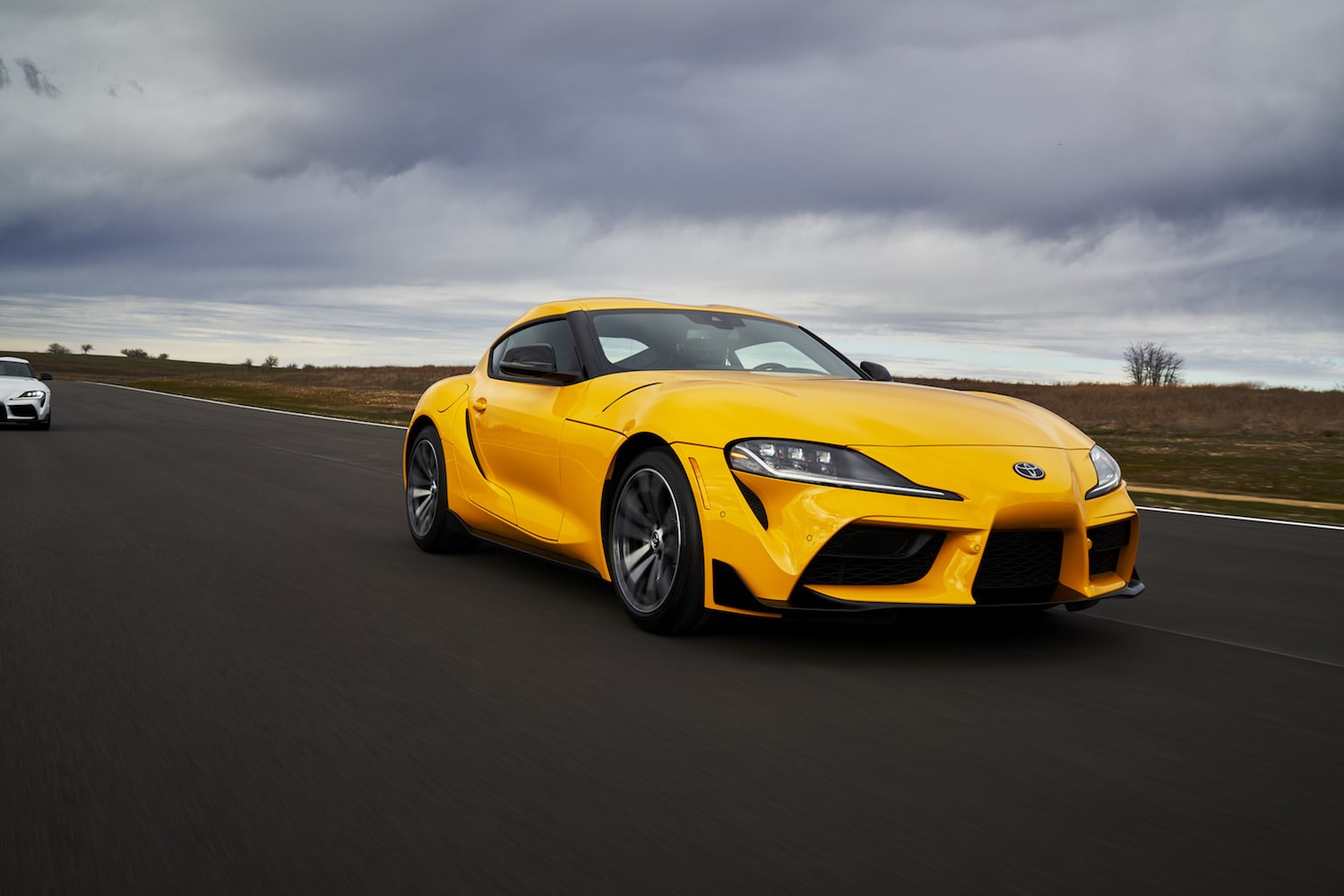
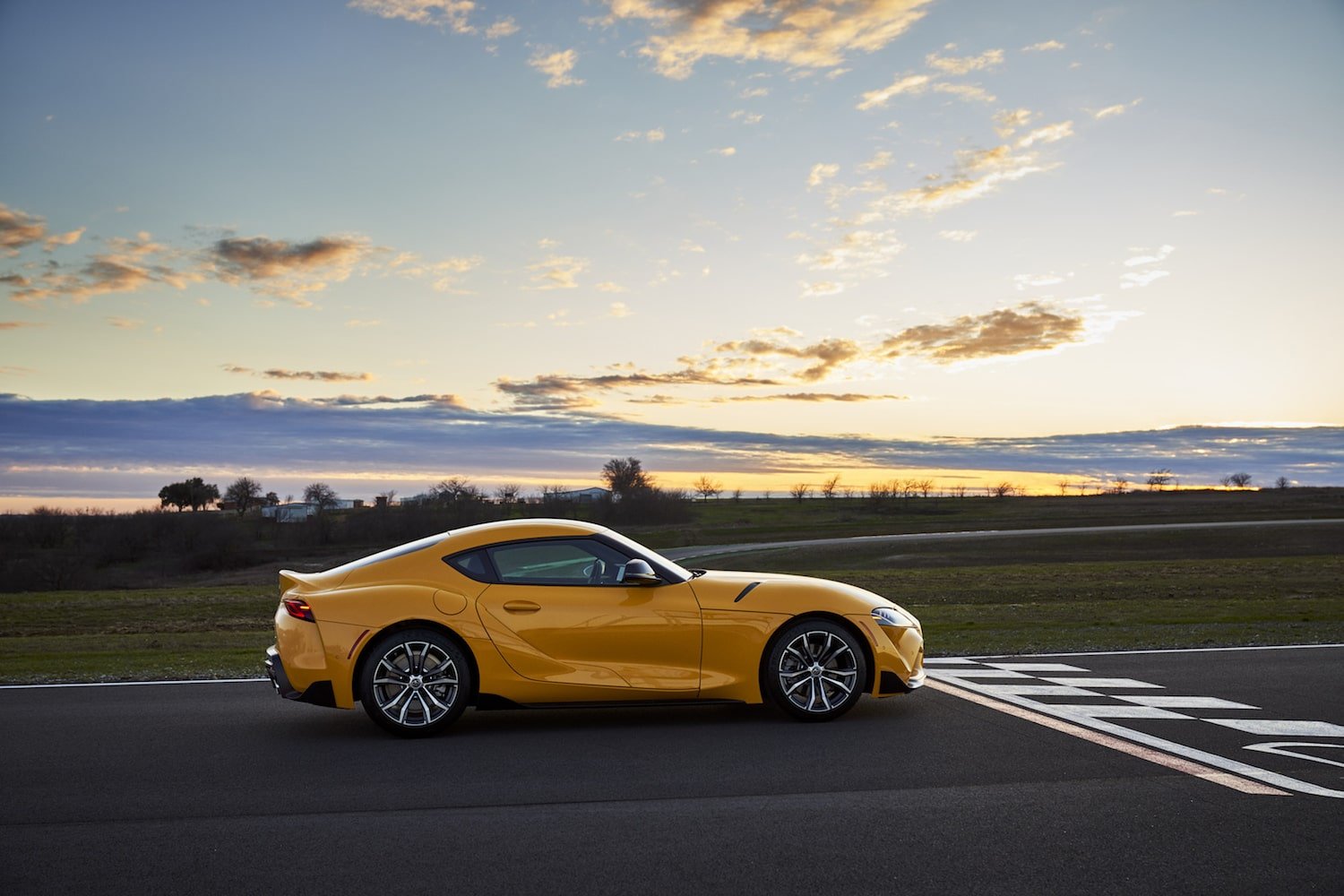
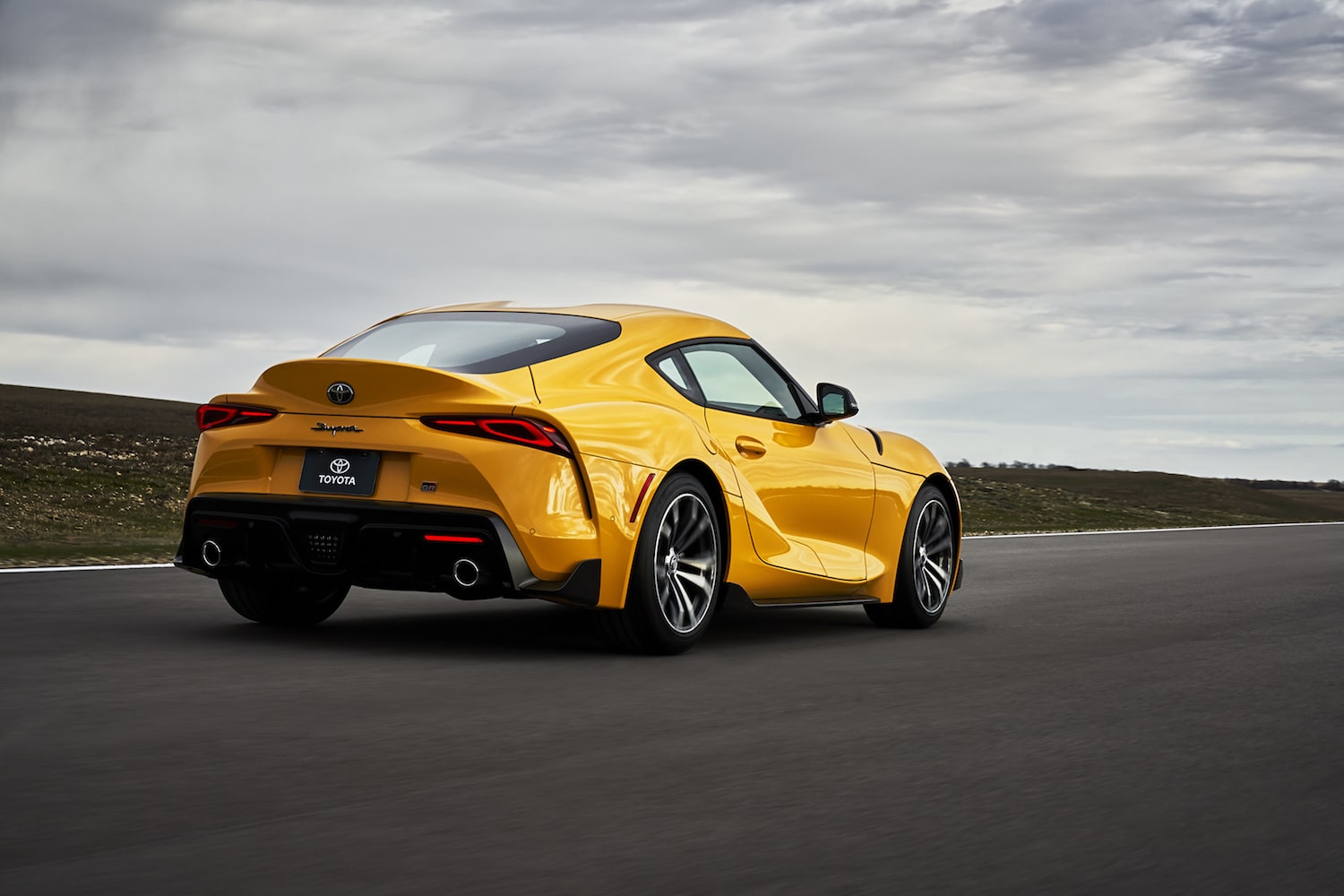
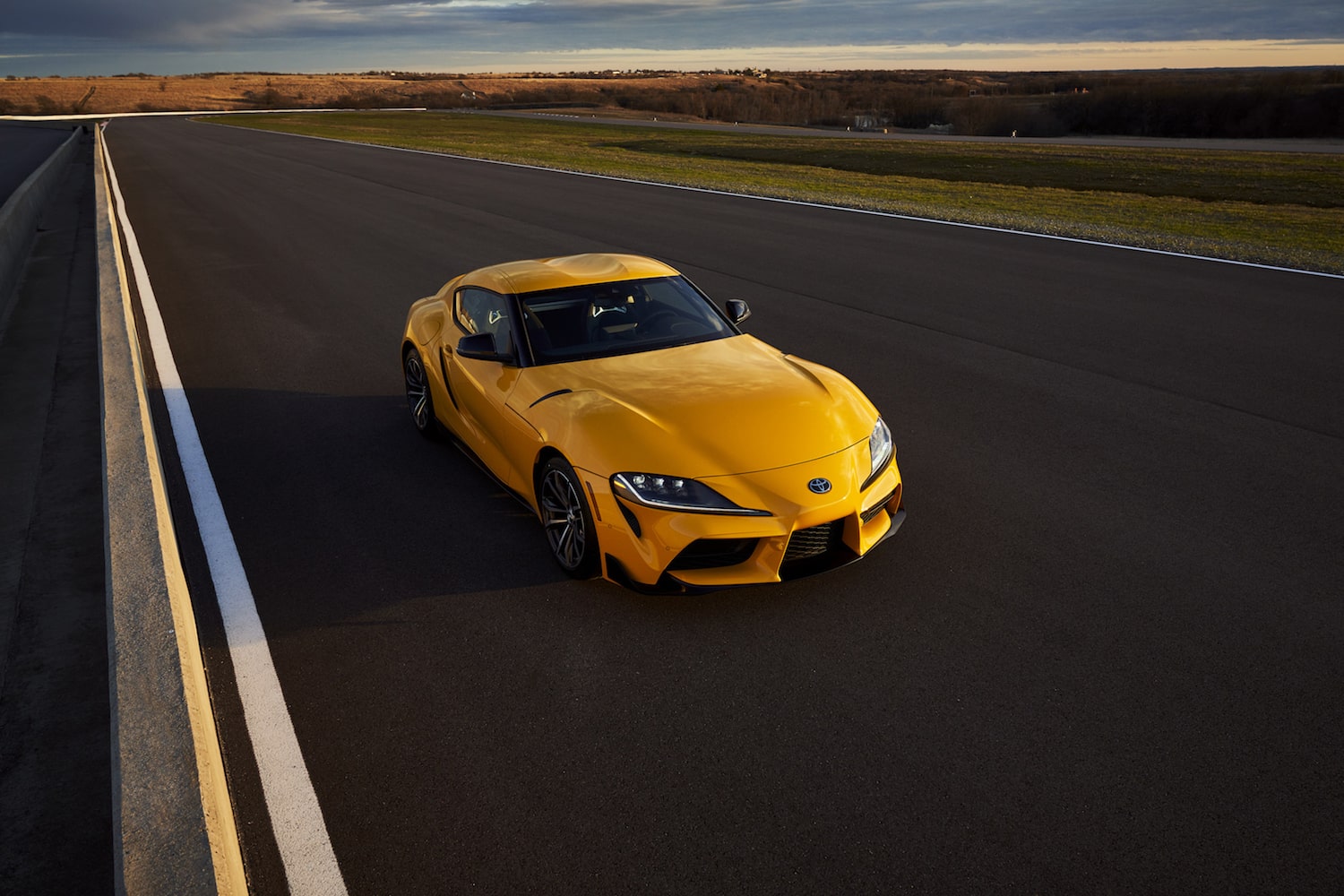
Low and sort of stubby, the two-seat Supra sports-coupe doesn’t resemble any previous Supras – or anything else.
Long, sweeping headlamps kind of dominated a droopy snout topped by a long, powerful-looking hood.
Like the Mazda Miata, the tops of the front fenders stand slightly above the hood, reaffirming the Supra’s sports-car looks.
The sides of the car, though, were busier than Interstate 405 in SoCal with curving fake vents in the Supra’s long doors and production cut-lines in the fenders.
Muscular, bulging back fenders might be the car’s strongest design element, though I also liked the Supra’s hatchback with its smooth, upturned spoiler.
Also adding to the car’s hyped-up high-performance looks were nice-looking 12-spoke aluminum 18-inch wheels wrapped with 255/40 tires up front 275/40s in back.
It’s the real deal. Although my Supra GR was an entry-level vehicle powered by BMW’s turbocharged 2-liter four-cylinder, it didn’t lack for power or growl.
I’ve admired the 2-liter in several BMW vehicles in the last few years and it sizzles even more in the relatively light, 3,300-pound Supra.
BMW keeps the compression and turbo-boost high in the engine, so it pulls hard from a stop and stays angry all the way to 6,000 rpm.
Sixty miles per hour arrives in a very swift 4.7 seconds, according to Car and Driver.
Sure, I’d prefer the Supra’s optional 3-liter BMW straight six, which would be the best six-cylinder engine on the planet if Porsche wasn’t also building extraordinary sixes.
But you don’t give up much with the BMW four, which is bolted to a quick-shifting eight-speed automatic.
And the four reduces the frontal weight of the supremely balanced rear-wheel-drive Supra, which feels as eager as the Miata to rip gracefully into corners.
All I needed was a place with more curves.
The steering felt a little heavy, but provided decent feedback from the road—as you might expect from a serious sports car.
Likewise, the Supra reminded me of its road-eating intent at any speed over 20 mph, contending stiffly with most bumps and even getting darty over some imperfections.
Credit: Toyota

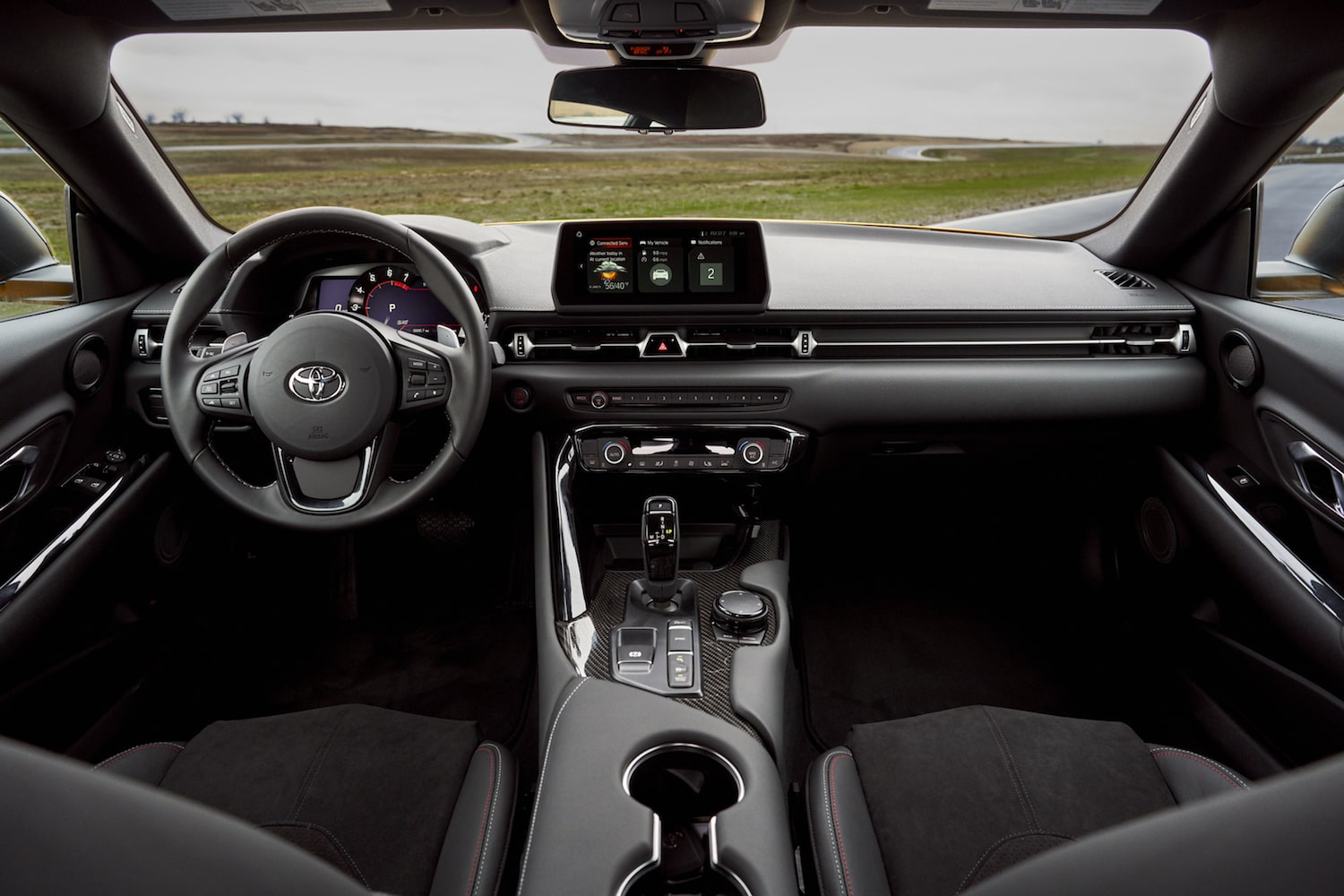
Still, once I had squeezed into the Supra’s tight cockpit, I was happy to stay there for hours.
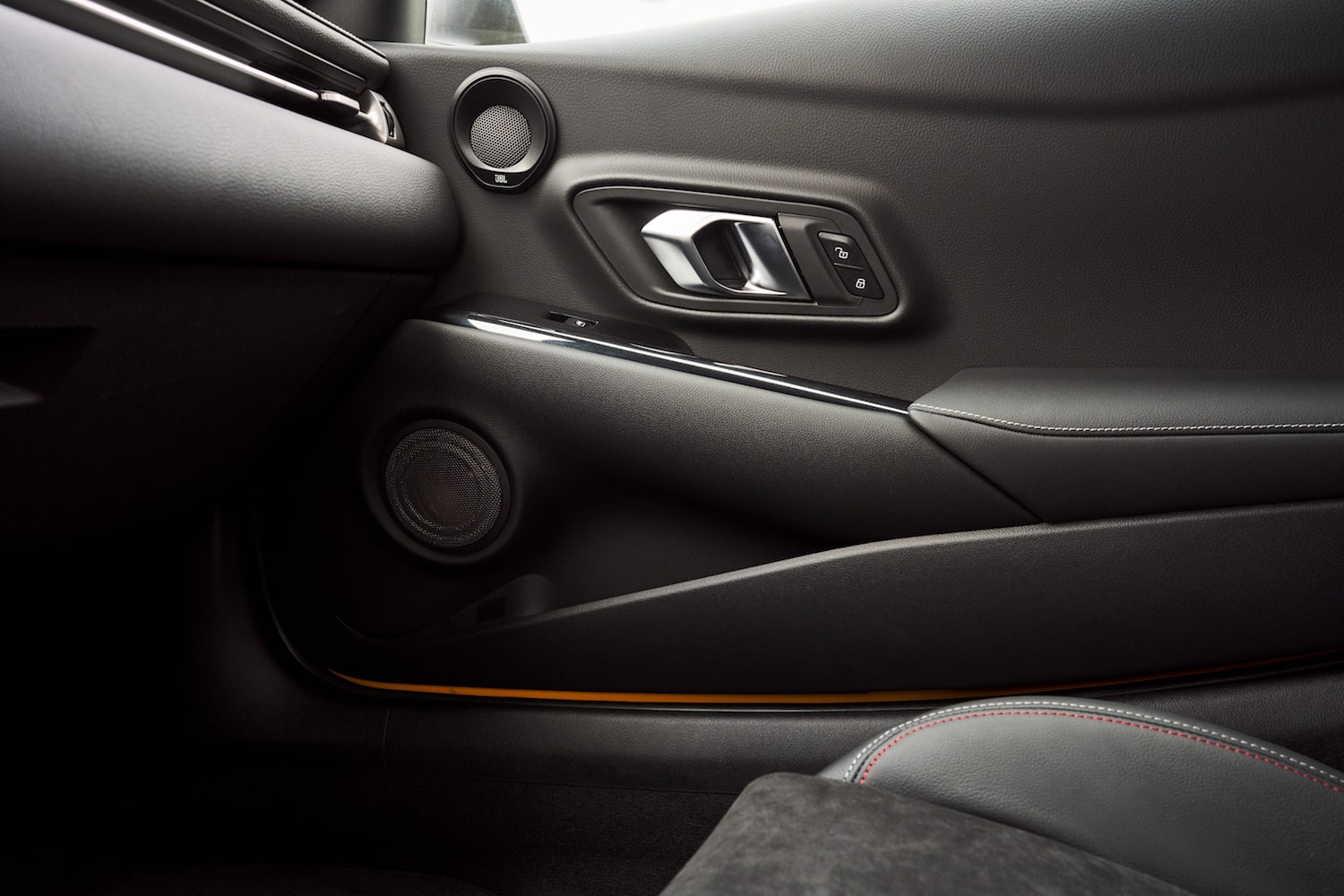
The black interior in my Supra seemed pretty basic for a $48,000 vehicle, but it fit the car’s personality.
Moreover, the plastics and other material felt fairly upscale.
A fairly deep upper dashboard in semi-pliable plastic rolled cleanly down onto a mid-dash dominated by a somewhat strange 8.8-inch info screen.
Of course, with the Supra’s German-Japanese roots, the audio system had to be tuned through the computer.
But that was minor compared with the car’s maddening safety nannies. I came to despise its optional safety and technology package, which included active cruise control, blind-spot sensor, lane-departure sensor and rear cross-traffic assist.
On one occasion, the nannies decided to push me back into my lane when they detected I was drifting – which sounds kind of useful for an aging foot-loose sort of guy.
The problem was I had moved over slightly to give more room to a tractor mowing the freeway right of way.
At least I had a nice bucket seat with leather bolsters and a grippy alcantra center to slump into while I caught my breath.
Personally, I would recommend passing on the nannies, the $3,485 safety and technology package.
However, that was about the only feature in the entry-level Supra’s interior I would ditch.
Next time, Toyota, please send me a Supra with the straight-six engine in it. All will be forgiven with the nannies.
2021 Toyota Supra GR 2.0
- What I liked most: The Supra’s impressive straight-line performance and handling.
- What I would change: The styling and the safety nannies.
- MSRP: Base price, $42,990; as equipped, $48,040.
- Official color: Nitro Yellow.
- Fuel economy: 25 miles per gallon in the city, 32 on the highway and 28 mpg combined with filler on the right.
- Odometer reading when tested: 244 miles.
- Spare tire: None.
- Weight: Approximately 3,300 pounds.
- Length-width-height: 172.5 inches long/73 inches wide/50.9 inches tall.
- Fuel-tank capacity: 13.7 gallons.
- Towing capacity: Not applicable.
- 2021 Toyota Supra GR in a few words: A serious, high-performance sports car in spite of the odd garb.
- Warranty: Three-year, 36,000-mile overall warranty and five-year, 60,000-mile powertrain protection.
- Final assembly location: Graz, Austria.
- Manufacturer’s website: Toyota
- Up next: 2021 Lexus RX450h F Sport