When the Slate pickup was introduced in April 2025, it instantly became one of the most talked-about vehicles in the automotive world. It wasn't because it was the fastest, the fanciest or the most high-tech. In fact, it was just the opposite.
Slate's entire philosophy is based on simplicity. Instead of loading its truck with giant touchscreens, luxury features and dozens of trim levels, the startup designed an affordable, American-built electric pickup that buyers can customize over time. It's a bold strategy in a market where the average new vehicle now costs nearly $50,000.
Now, the Jeff Bezos-backed company has reached an important milestone.
Earlier this week, Slate officially opened its order books, converting its $50 refundable reservations into firm preorders backed by a $300 non-refundable deposit. Customers who placed early reservations receive priority production slots, while new buyers can still place orders but will likely wait longer for delivery. According to Slate, customers will finalize their truck configurations and purchase accessories closer to the time their vehicles are built.
The company also revealed pricing for its highly anticipated electric pickup. Rather than the sub-$20,000 figure that generated headlines when the truck was first introduced, the base model is now expected to start in the mid-$20,000 range. That change isn't surprising. The original price assumed buyers would qualify for the federal EV tax credit that has since been eliminated, making a higher sticker price inevitable.
Even with the higher price, the Slate remains one of the least expensive electric pickups planned for the U.S. market.
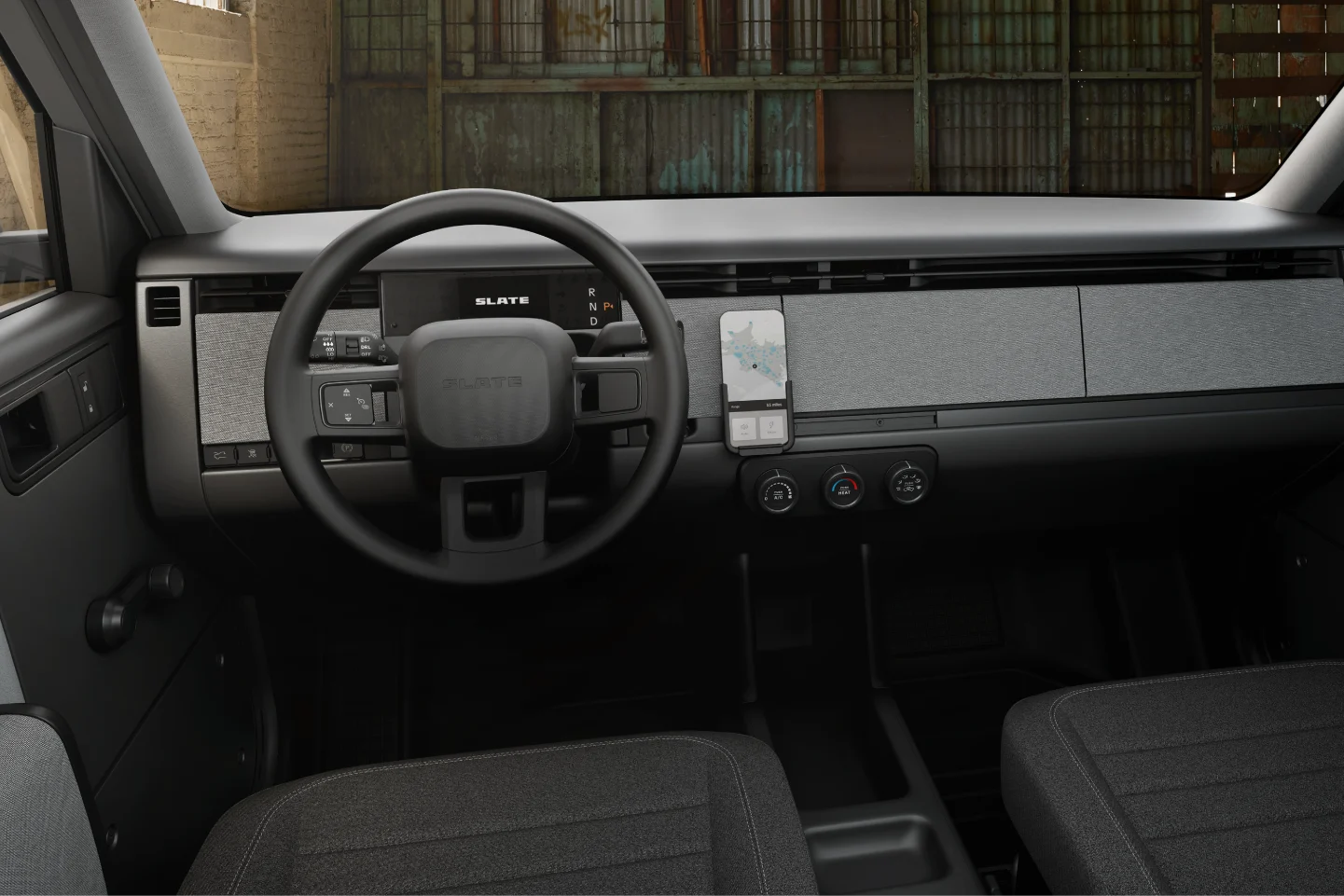
The truck itself is unlike anything else available today. Every Slate starts as the same basic two-seat, rear-wheel-drive pickup with a minimalist interior. There are no power windows, no built-in infotainment screen, and no traditional painted body. Instead, Slate uses durable molded composite body panels and expects owners to use their own smartphone or tablet for navigation and entertainment.
The company believes buyers would rather spend money on features they actually want instead of paying for equipment they'll never use.
Customization is the centerpiece of the entire business model. Slate plans to offer hundreds of factory accessories, allowing owners to personalize their trucks after purchase. Perhaps the most unusual option is a factory-engineered kit that converts the pickup into a five-passenger SUV, giving owners the flexibility to change the vehicle as their needs change.
Interest in the truck remains strong. Slate says it has received more than 160,000 reservations since introducing the vehicle. Reservations are not sales, of course, and history has shown that not every reservation holder ultimately becomes a customer. Still, it's an impressive level of interest for a company that has yet to deliver its first vehicle.
Financially, Slate appears to be on solid footing. Earlier this year, the company announced it had raised an additional $650 million in funding to support production. Manufacturing will take place at its factory in Warsaw, Indiana, where Slate plans to invest roughly $400 million and create more than 2,000 jobs as production ramps up.
Of course, the hardest part is still ahead.
The automotive industry is littered with startups that generated enormous excitement before struggling to build vehicles in meaningful numbers. Designing a prototype is one thing. Producing thousands of vehicles with consistent quality, establishing service networks, managing suppliers and delivering on schedule is something else entirely.
That's why the next several months will determine whether Slate becomes another interesting automotive footnote or a legitimate new automaker.
For now, the company appears to be doing what it said it would do. It has secured significant financing, built a manufacturing facility, generated more than 160,000 reservations, opened preorders and continues to target the first customer deliveries before the end of 2026. Those are tangible accomplishments, but the real test begins when production starts and customers begin taking delivery.
If Slate can successfully execute its plan, it may prove there's still room in today's market for an affordable, no-frills pickup that focuses on value instead of excess. In an era when new vehicles seem to get larger, more complicated and more expensive every year, that might be the company's biggest innovation of all.
To get your order in, click here
Photo Credit: Slate